I had a patient last week brought into the Pediatric ED for an allergic reaction. The child had known allergies, and by the EMR, had been prescribed an EpiPen by the Pediatrician – but mom said she didn’t have one at home to use. “We have insurance, but when I tried to fill the prescription, they wanted $620! I just can’t afford that,” she apologetically told me. I sat there in disbelief, assuming she had crappy insurance.
Flash forward three days later when the news hits the mainstream media:
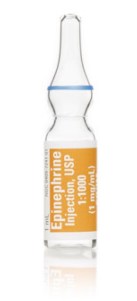
AEMTs and Paramedics, better check that drug box twice for your 1:1000 epi vials because you’ll be using them more often for anaphylaxis as parents and patients increasingly forgo the EpiPen. With a $400-$650 price tag (with insurance), and a 1 year expiration date, can you blame them? I certainly don’t. So brush up on your local protocols, and stay vigilant. For a good review on anaphylaxis, check out this post.
Emergency Department (ED) Implications
As with prehospital providers, we too need to be ready with the IM epinephrine. It’s always been recommended after EpiPen administration for patients to come to the ED to be observed for 4-6 hours in case they need a redose of epinephrine. As patients increasingly skip that first dose, we should expect more potential for respiratory distress and need for difficult airway management.
EpiPen Alternative
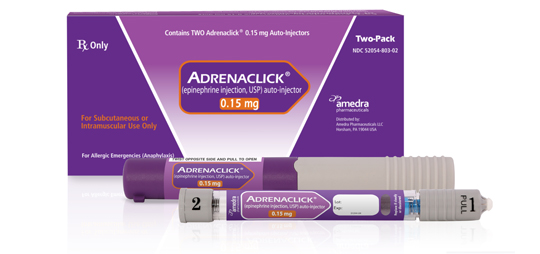
Thanks to the Facebook Group EM Docs, I learned of AdrenaClick, a reasonable alternative we can prescribe for patients with severe allergies. The mechanism of delivery is slightly different than the EpiPen (two caps to remove instead of one), but given that it’s 1/4 the cost – it’s what I’ll be prescribing moving forward. AdrenaClick has a good training video on their website with detailed instructions for use. With a coupon from GoodRx, AdrenaClick is available for as low as $141.67 at Wal-Mart. It’s still more than the original $57 cost of an EpiPen when acquired by Mylan, but better than current EpiPen prices.
If you want to learn more about the skyrocketing prices of the EpiPen and the not-so-coincidental tie to congressional mandates requiring EpiPens (like AEDs) in schools, check out this article on Bloomberg.
<Disclaimer> And, of course, I do not endorse the efficacy of, nor am I paid by AdrenaClick. They just happen to be the only other comparable epi auto-injector on the market right now. <Disclaimer />
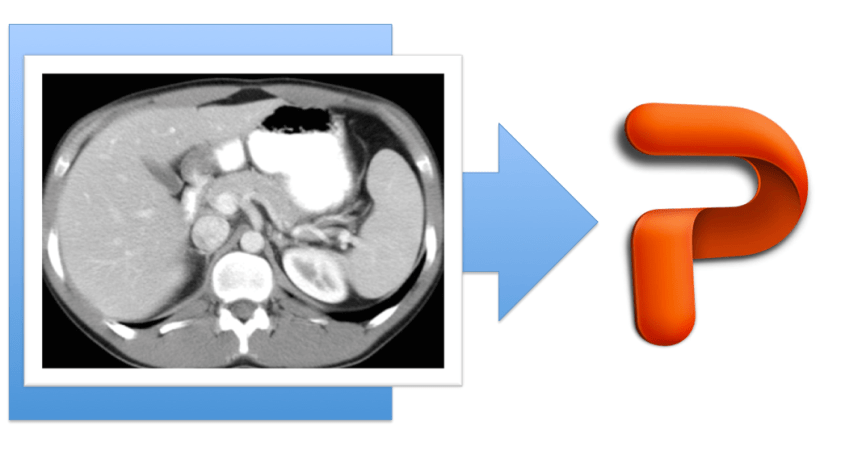
If you work in the medical field, you’ve likely had to present a patient case report. You do a chart review, gather the physical exam and lab data, but often importing the CT scans, ultrasounds, MRIs and other video imaging for display in your PowerPoint can be a time-consuming and frustrating task.
I recently discovered an easy way to include multimedia medical images into PowerPoint in a fairly easy way. This process works on a Mac. For PCs, I’ve been told Pacstacker is the best available option for importing radiology imaging into PowerPoint.
You’ll need access to 3 things to get started. Make sure you have each of these available on the same Mac:
The radiology image you want to capture, with the ability to scroll through
QuickTime includes a feature similar to the “Print Screen” feature. Instead of capturing just one image that instant, it captures your desktop activity in a selected area over time. The result is a video file you can import into PowerPoint or other presentation software.
Step 1: Open up your Radiology imaging viewer and select the scan you wish to include.
Step 2: Open QuickTime. From the File menu, select “New Screen Recording.”
Step 3: When the “Screen Recording” box pops up, click the red circular button to begin.
Step 4: A tan box will appear, asking you either click once to record the full screen, or drag and select with your mouse the portion of your screen you want included in your screen capture. For capturing radiology images, you’ll want to make sure you include only the image and exclude any personal identifiers to be HIPAA compliant.
Step 5: While recording, scroll through your imaging study making sure to include everything you want to display. I recommend scrolling through by clicking the arrows on the keyboard rather than using the mouse, as the cursor may accidentally enter the image field and therefore appear in your presentation.
Step 6: Click the “Stop” button to stop recording your screen capture. The button is somewhat hidden in the bar at the top of the screen. It’s the circular icon with the square in the middle that you see in the image below (right side of the screen, leftmost).
Step 7: After you click “Stop,” you’ll be prompted to save your video to your computer. Remember the location; you’ll need to find it later when you import your video into PowerPoint.
Step 8: Open your PowerPoint presentation. To import your imaging study, Go to Insert>Movie>Movie from File. Then find your file and click OK.
Step 9: Your imaging study is now imported into PowerPoint as a video. You can scroll backward and forward as needed during your presentation. To preview your video, start your presentation and click the triangular “Play” button on the bottom left. Note: if you click anywhere else on the slide, it will advance to your next slide, not start your video.
PowerPoint has improved over the years, and videos are now automatically embedded with your presentation when you save your .PPTx file. You may need to save your presentation file to DropBox, Google Drive or another cloud storage app as the file size is usually too large to send via email.
So that’s it – a previously arduous task made surprisingly simple. I hope this saves you some stress and time.
In our lives, “tubing” has two distinct meanings… this and this:
Prior to moving to Richmond, I’d been river tubing just once. It involved finding a rental company, making reservations, and forking over a lot of cash. So, when I came to Richmond and learned people tube on their own, I was intrigued. Turns out, it’s not as difficult as you might think. Just use this simple guide to help plan your tubing adventure.
Buy yourself some tubes
While there are tons of options out there, we’ve had good luck with the Intex brand available on Amazon.com. You don’t have to spend a lot of money to get something fun and reliable. There are many options, including single, double and cooler tubs, or our new favorite, tubes that connect.
Double Tube
Cooler Tube
Connecting Tube
The other piece of equipment you should seriously consider is a life jacket. Depending where you decide to tube and the level of the river, life jackets may be required. There are some great alternatives to the huge orange foam things from the 70s and 80s.
Old Life Jacket
Today’s Life Jacket
Also, if you don’t have tubes that connect, you’ll want to bring along a sturdy rope so you can tie your team together to float as a group.
Plan the Route
The route we enjoy most runs from Pony Pasture to Reedy Creek and is a 3 to 4 hour float that takes you down 2.5 miles of beautiful James River scenery. Float time will vary with the water level, so be sure to check it and plan accordingly.
You’ll need at least two cars to execute the required drop-off and drive back. First, plug Reedy Creek (4190 Riverside Dr, Richmond, VA 23225) into your GPS. Have both cars meet there. Pile all of your tubes (deflated), coolers and friends into one car and lock the other one up safely. It will stay behind at Reedy Creek.
Next, enter Pony Pasture (7200 Riverside Dr, Richmond, VA 23225) into your GPS. When you get there, you can pull up to unload all your stuff and blow up your tubes, but you may have to parallel park in the neighborhood as the lot is often full. Don’t forget to lock your car!
Launch!
A few important tips:
Stay to the right – the rapids tend to be on the left in the James.
Butts up! – lift your bottom up when going over rapids to help ensure you don’t get stuck.
Be careful when walking on the bottom. There are major, abrupt drop offs as there are rocks lining the bottom.
I REPEAT: The rapids past Reedy Creek are intense, dangerous and not fit for amateurs in innertubes. Don’t do it, or you may end up a Trauma patient in the ED with us!
Don’t Miss the Take Out
After floating underneath the train bridge in the photo above, you should start keeping a lookout for the Reedy Creek Take Out. The James will fork temporarily, and it’s important you stay to the right if you want to end up anywhere near your car. There’s a sign you can’t miss that says “TAKE OUT” with a big arrow guiding you to the right. Don’t go left. Even an UberXL won’t be large enough to fit your whole crew plus all your gear if you miss it.
When you exit the water and walk up, you’ll see the Reedy Creek parking lot where you left your other car. Time to deflate the tubes and pile everyone in this car to head back to Pony Pasture and grab the other car.
Capture the Fun
If you don’t have a waterproof camera or a GoPro, you can easily take pictures or videos with your SmartPhone with the help of a $10 Joto Waterproof phone case.
So that’s it. Grab your tubes, +/- a life jacket, cooler and some friends, and get ready for an awesome afternoon on your schedule.
This recipe is a staple at nearly every event my mom and I host. It’s easy to make, requiring no actual cooking. It’s always a hit, palatable to both adults and kids.
Tangier Island has always been a place of intrigue in my mind – a mythical island of less than 500 people, disconnected from daily life. When we were young, my sister took an overnight boat trip there with family friends. A hurricane led to a near stranding and peaked my interest in visiting. In medical school, we learned of Tangier Disease, a genetic disorder causing reduced levels of HDL (good cholesterol), named after the island’s inhabitants who have a rather shallow genetic pool.
So when Amir suggested a day trip, I Googled “tangier ferry” and discovered Tangier Rappahannock Cruises, a 2 hour ferry service that leaves from the coastal fishing town of Reedville, VA. I recommend selecting the same-day return trip, and skipping the suggested lunch at the Chesapeake House (more on that in a bit). Total cost round-trip for the two of us was just $57.24 including all taxes and fees. While you can just show up at the dock and buy tickets the same day, I recommend booking online to save yourself time and ensure your reservation.
We sat on the bow to get the best vantage point of blue skies and glassy seas. Osprey, fishing boats and crumbling barns float by, demanding the attention of your camera lens. I, as usual, captured them through the lens of my iPhone, Amir through his Canon DSLR.
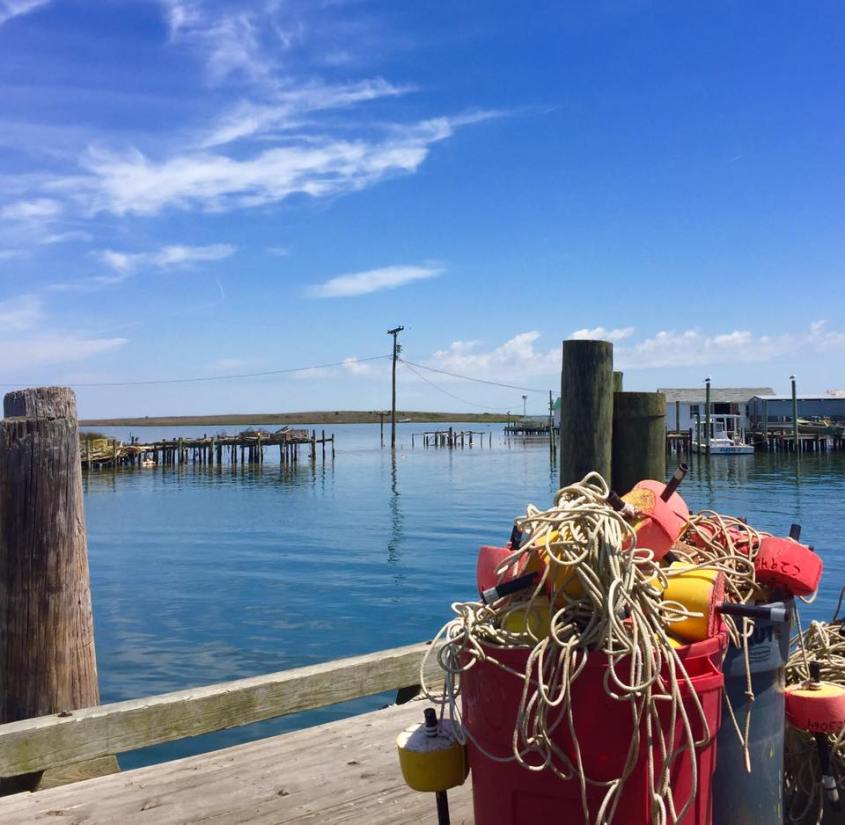
Tangier soon turned from a distant mirage to a beautiful green world just ahead. The skyline was low, consisting mostly of simple two-story houses with a rare deviation in height for a church steeple and a water tower. As we entered the man-made channel lined with little white houses and docks, our ship’s captain revealed that Tangier is the world’s source for soft shell crabs. The crabbers live in these tiny white shacks – shacks that are filled with blue crabs, checked diligently on the hour in anticipation of the golden moment when the crab molts its shell. The crab is then scooped up and placed on ice or into a freezer and sold to restaurants for a feast later that day. It’s a practice as unique as the island itself.
We stepped off the boat and onto the dock, the end of which was lined with locals in golf carts offering 15 minute tours of the island, and friendly women with sun-aged skin offering coupons for the best lunch spots (there are only 7). We opted to skip the carts and create our own walking tour.
Instantly we were struck by the strange collision of worlds. Tangier is part what you would expect – fishermen, boats, flip flops and simple life at a slow pace – everything I love about Chesapeake Bay living. But it’s also part Cuba, part 3rd world country. For an isolated island, bringing goods in is expensive, so you see signs of old everywhere you turn. 1970s motorbikes, rusted chain link fences, refrigerators from 3 generations past. If you want new and shiny, this is not the place for you.
And while old often equates with charm, there’s something a bit off in Tangier. Like bringing things to the island, disposing of them is also a costly task. So, garbage is everywhere – broken down golf carts, bottomless boats, and 20 year old Pepsi cans littering the land and the water. It makes you cringe. It doesn’t fit. A proud people so dependent upon nature for their existence, so careless in protecting it.
For a half second my mind contemplated the missed opportunity – “What if they just picked up the trash?” “What if they had some eco-friendly activities?” I imaged the potential for increased tourism, and the subsequent revenue that could benefit this island and its people. And then I wondered, maybe this is deliberate.
We decided to try Fisherman’s Corner for lunch. We entered the brightly painted, simple square building to find a bustling room tightly packed with tables of both tourists and locals. The menu was typical Chesapeake Bay fare – she crab soup, crab dip, fried shrimp, crab cakes and soft shell crabs. Clearly we had to try the soft shells. The food was simple, home-cooked and a tad pricy, but delicious. My soft shell crab was sandwiched between two slices of white Wonder bread. While I was initially skeptical of my minimalist bun, when topped with the zesty tartar sauce, the flavors combined perfectly. We skipped dessert since we’d already cheated and devoured hand-dipped ice cream cones on our earlier walk.
Soft shell crab sandwich at Fisherman’s Corner | Tangier, VAWe continued our ambulatory tour of the island, scoping out the picturesque little houses and the oddly placed graveyards in each front yard. Tangier is only 4 feet above sea level and losing 10-15 feet of land mass per year, so space is limited. A brief scan of graves reveals repeating names – Crockett, Pruett, Pruett, Crockett, Crockett. I begin to better understand the origins of Tangier Disease.
There are two churches, one fire station, one police officer and one school. On an island with 450 people, you make do. The sign outside the fire station explains that until very recently, every household was provided with a single leather bucket. When a fire broke out, the entire town would arrive and form a bucket brigade. I wondered what hurricane preparations took place today.
In just 3 short hours, we’d experienced 90% of what Tangier has to offer. We heard a dialect I can only describe best as Old English garble. We marveled at the eccentric locals like bird watchers spotting a never-before-seen species. Tangier is a dichotomy of beautiful and ugly, but special none-the-less.













 In a medium bowl, stir the taco seasoning into the sour cream.