Category: Food & Drink

Switzerland Day 17: Chocolate, Chocolate…and More Chocolate

This morning we packed up our chalet—another Airbnb win—and somehow managed to squeeze ourselves and all of our luggage back into the Hyundai Santa Fe. I’m still not entirely convinced the laws of physics weren’t temporarily suspended.

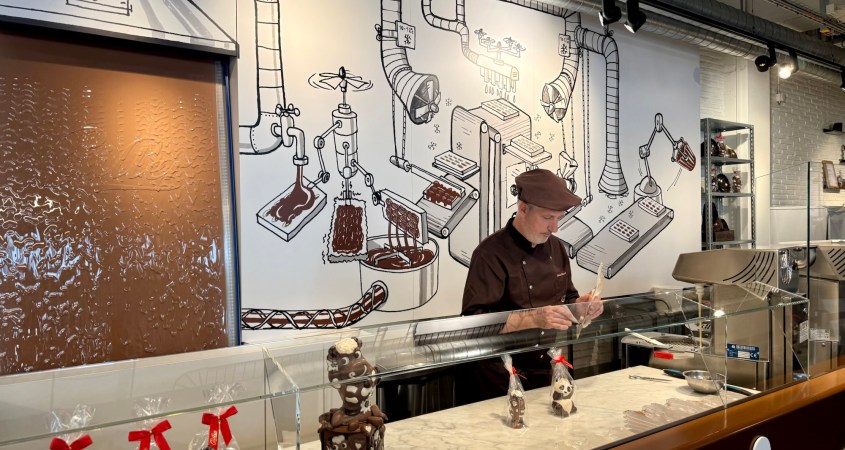
Before this trip, the one thing Lidia repeatedly said she wanted to do in Switzerland was tour a chocolate factory. She’s a bit of a chocoholic, so visiting Maison Cailler was at the very top of her Swiss bucket list. Fortunately, it was perfectly positioned to break up our drive from Les Collons to the Zurich airport.
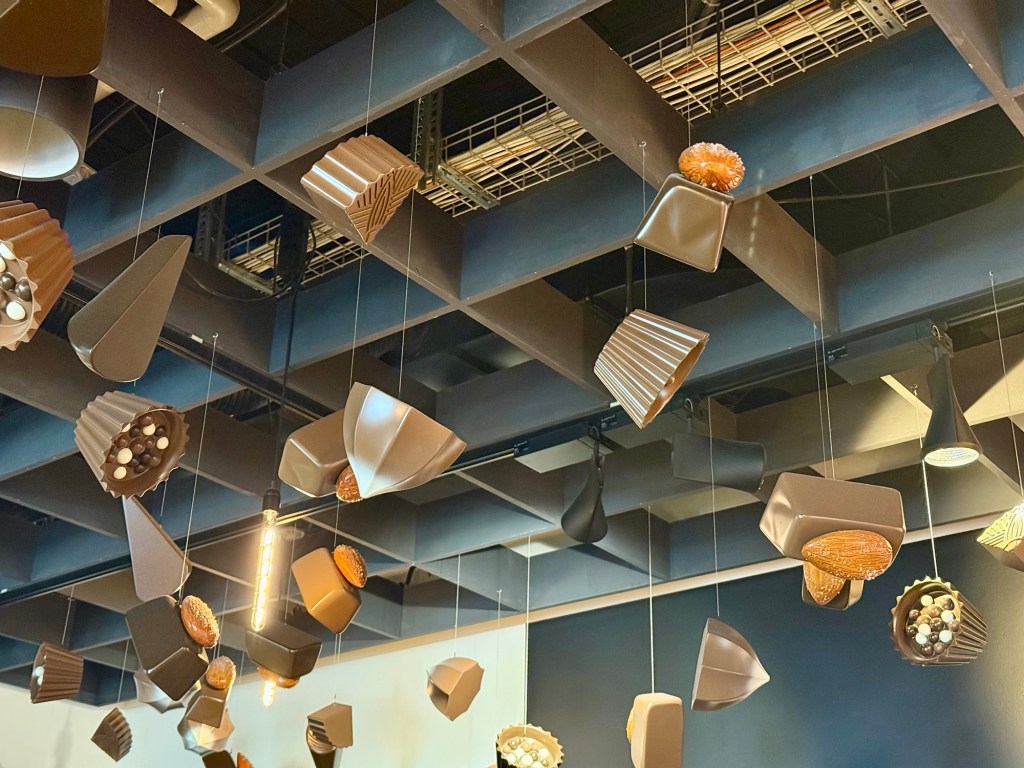
Admission to the tour is 17 CHF (about $21 USD) for adults, 7 CHF (about $9 USD) for children ages 6–17, and free for children under 5—a pretty reasonable price considering how much chocolate was waiting for us at the end.

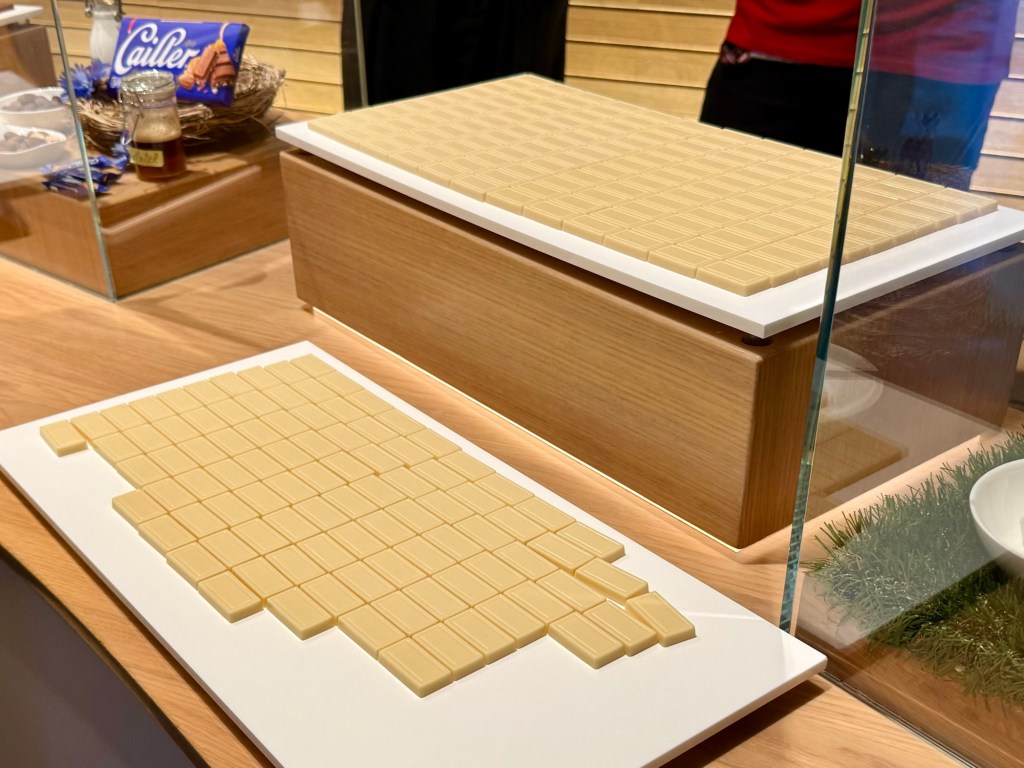
Chocolate replica of Maison Cailler

The museum itself is exceptionally well done. Upon entering, you’re handed an audio guide in the language of your choice. As you move through the exhibits, you simply hold it to your ear and tap it against each display to hear the next chapter of the story. Rather than listening to a generic narrator, you hear from the people actually involved in making the chocolate—from machine operators and chocolatiers to the artisans who still hand-decorate many of the confections.

The tour begins thousands of years ago with the Aztecs, who considered cacao a sacred gift from the gods. Their chocolate looked nothing like the sweet treat we know today. It was a bitter, frothy drink flavored with spices and reserved primarily for nobility and warriors. In the early 1500s, the Spanish conquistador Hernán Cortés brought cacao back to Europe after encountering it in the Americas. Once Europeans began adding sugar, cinnamon, and vanilla, chocolate quickly became a luxury enjoyed by royalty across the continent.

One of eight sequential rooms

The Swiss entered the story much later—but completely changed it. During the 1800s, Swiss chocolatiers transformed chocolate from an occasional luxury into the smooth, creamy confection we know today. Daniel Peter developed milk chocolate using condensed milk created by his neighbor, Henri Nestlé, while Rodolphe Lindt invented the conching process that gives chocolate its silky texture. François-Louis Cailler, the founder of Maison Cailler, was one of Switzerland’s chocolate pioneers, opening the country’s first mechanized chocolate factory and helping establish Switzerland’s worldwide reputation for producing exceptional chocolate.

Chocolate sculpture

After the educational portion of the tour, the real fun began.

Your admission ticket includes unlimited chocolate samples.

There is only one rule: you have to eat them there. No stuffing handfuls into your purse. No filling your pockets. No strategically loading up your backpack.

(I’m looking at you, Amir.)
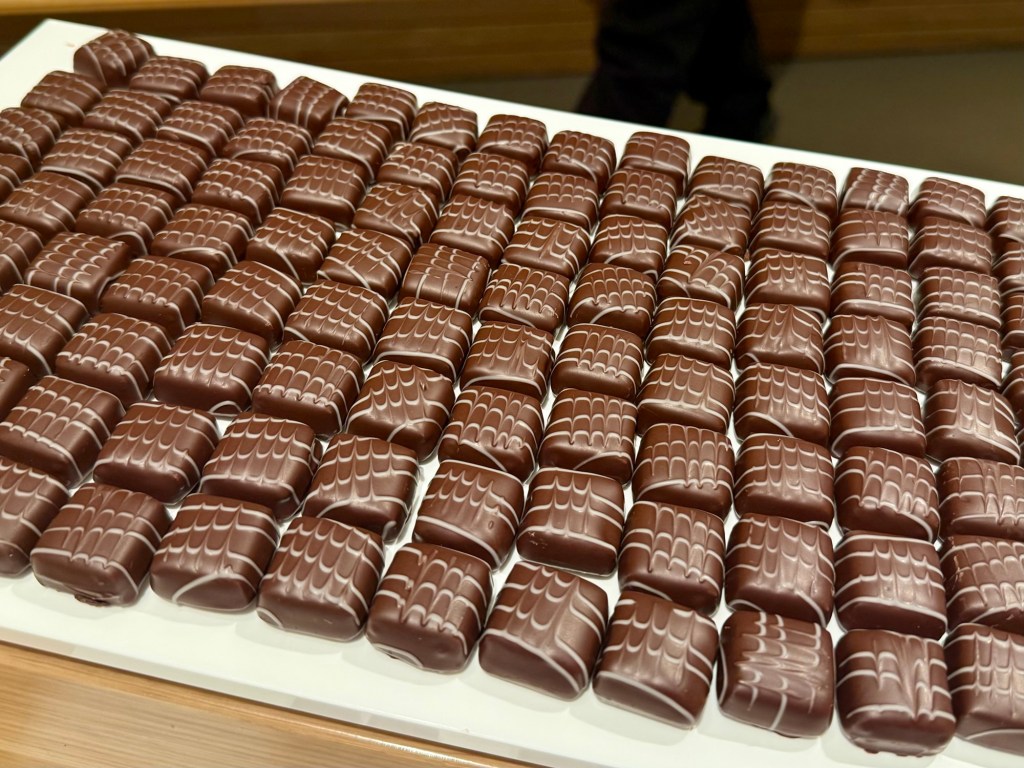
#1BigSister and I attacked the tasting room together. We started responsibly with small rectangles of white chocolate before moving on to creamy milk chocolate squares, hazelnut-filled logs, and adorable milk chocolate cups filled with white chocolate. Somewhere around that point, I realized I had reached my chocolate limit—a sentence I never imagined I’d say. I found myself desperately wishing for a cold glass of milk and actually saying, “No thanks,” to more chocolate. There simply wasn’t enough room left to give the dark chocolate the attention it deserved.

As if unlimited chocolate tasting wasn’t enough, the tour conveniently ends inside the enormous chocolate store.

Amir grabbed a shopping basket and immediately began filling it with such enthusiasm that it looked like he was competing in one of those game shows where contestants have 60 seconds to throw as much as possible into their cart. Chocolate bars. Truffles. Gift boxes. Assorted pralines. If it contained chocolate, it somehow found its way into the basket.

Needless to say, we may have picked up a few gifts for a few special people back home in Virginia.

…assuming Amir doesn’t eat them before we get there.
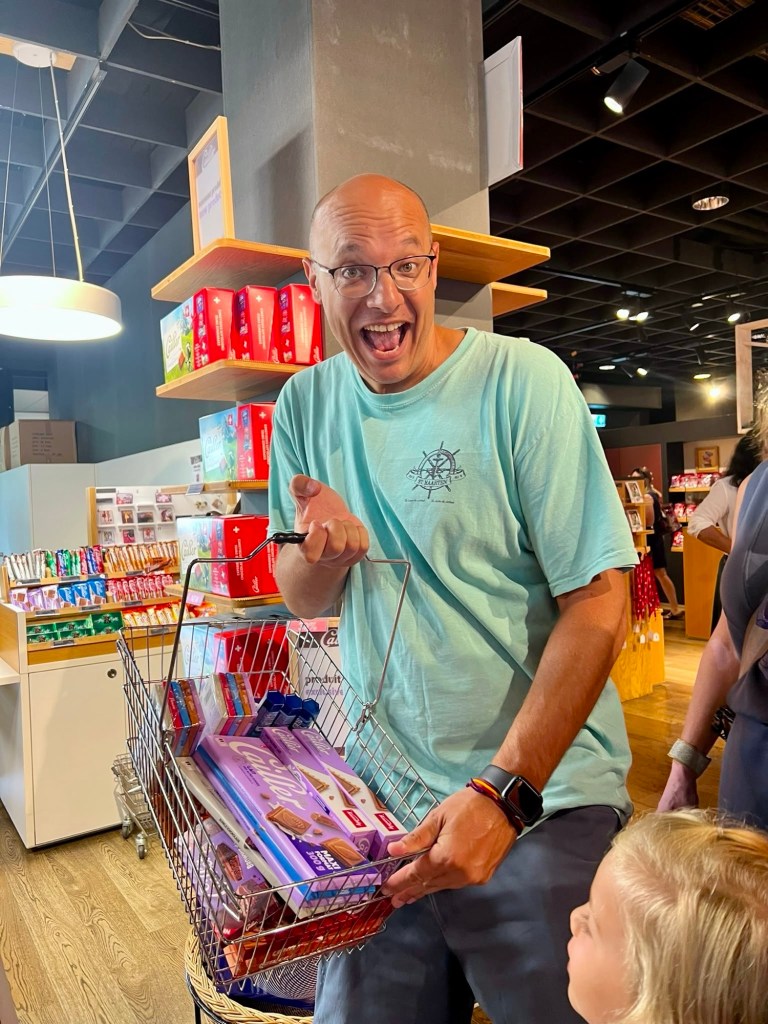
Supermarket Sweep of Chocolate

We hit a bit of traffic after the chocolate factory on our way to Zurich. One fender bender involving a car and a camper van added about an hour to our drive. Fortunately, we had bananas in the car to keep everyone from getting too hangry, and they bought us just enough patience to make it into the city.
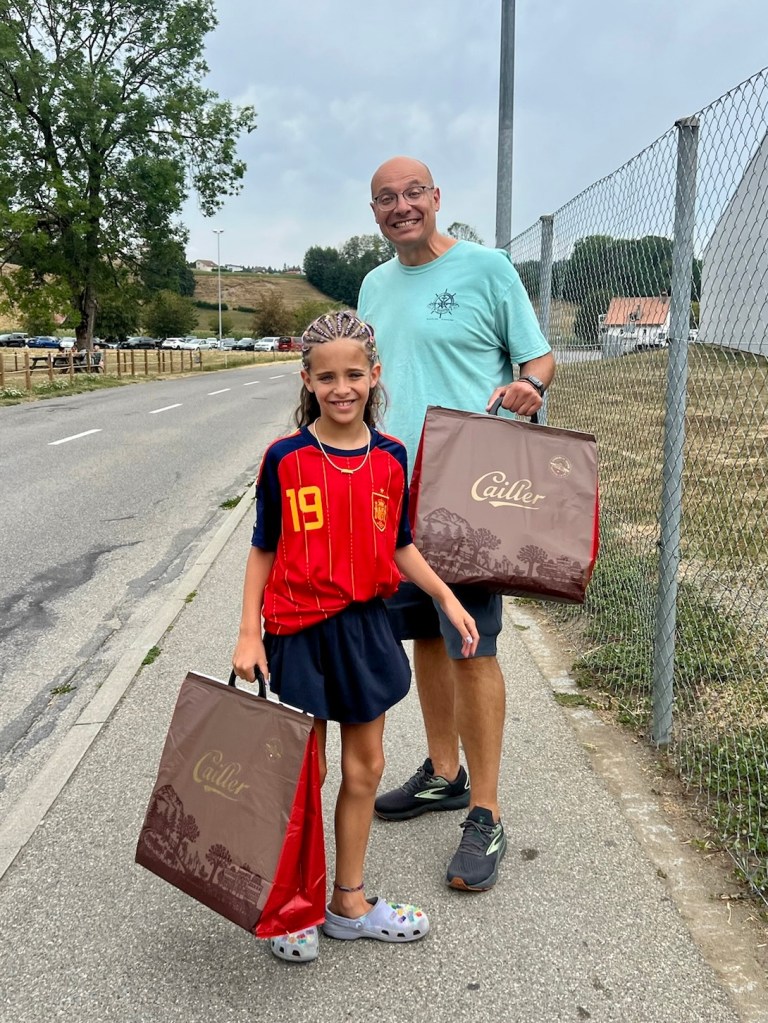
Is there anything left in the store?

For dinner, we set our sights on Hiltl, the world’s oldest continually operating vegetarian restaurant, as a nod to #1BigSister. She had been incredibly patient this trip. Spain is a paradise for meat lovers—jamón, chorizo, and every variety of sausage imaginable—but not exactly a vegetarian’s dream. She’s eaten more pasta with red sauce over the past two weeks than she probably cares to see again. Switzerland hasn’t been much easier, so tonight was her night.

Hiltl Vegetarian Buffet in Zürich

The restaurant was heaven for her. The all-vegetarian buffet featured cuisine from around the world: Japanese udon noodles, tofu curry, falafel, vegan chicken nuggets, French fries, grilled vegetables, fresh fruit, desserts, and countless other dishes. There had to be over a hundred options. The concept was simple—you filled your plate, took it to the register, and paid by weight.

Hiltl Vegetarian Buffet in Zürich

We were a little nervous the kids would enthusiastically pile their plates high only to leave most of it behind, but much to our surprise, every one of them cleaned their plate. Everyone was impressed by how convincing the vegetarian chicken nuggets were. We capped off dinner by sharing a dessert plate before making our way to the hotel.

Hiltl Vegetarian Buffet in Zürich

Tonight we checked into the Holiday Inn Express near the airport, and I have to say, it’s probably the nicest Holiday Inn Express I’ve ever stayed in. Over the years, I’ve accumulated quite a stash of IHG points from staying at the Holiday Inn Express in South Hill while working shifts at VCU Health Community Memorial Hospital. Those points paid for all three of our rooms tonight, making the stay completely free.

The hospitality was exceptional. At check-in they welcomed us with complimentary beers, hot chocolate, Coke Zero, and what seemed like an endless supply of Swiss chocolate. Check-in was effortless, and after a long day of driving, that was exactly what we needed.

Breakfast is included tomorrow morning, although with a 4:00 a.m. wake-up and a 4:30 departure, I’m not sure we’ll be eating much. We’ll certainly take advantage of the coffee. From Zurich we’ll fly to Brussels, then onward to Dulles before making the final drive back to Richmond. Travel days home are always long. Between the time change, customs, baggage claim, and then several more hours on I-95, it’s a marathon. Thankfully, we were able to book lay-flat business class seats for the overnight flight, which should hopefully allow us to arrive with at least a little sleep under our belts.

Cailler Chocolate Museum & Factory

Switzerland has been a fascinating country. More than once I found myself asking ChatGPT to explain some aspect of Swiss culture, beginning with the language. Switzerland has four national languages—German, French, Italian, and Romansh—and the country’s commitment to neutrality extends beyond international politics. Even domestically, they work hard not to favor one linguistic or cultural group over another. I even learned why Switzerland’s internet domain is “.ch” instead of something like “.sw.” It comes from the country’s Latin name, Confoederatio Helvetica, avoiding preference for any one of the country’s major languages.
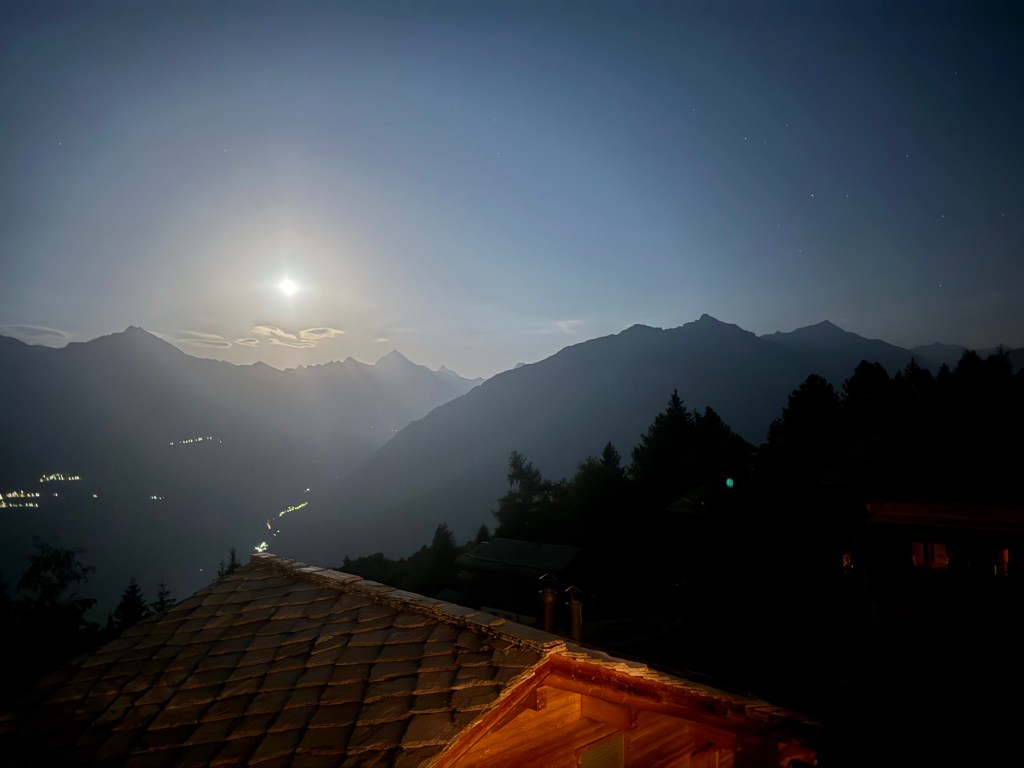
Nighttime at Les Collons

The scenery here has been breathtaking. Everything seems to function with remarkable efficiency. At times, the people have seemed a bit reserved, although that’s probably an unfair comparison after spending nearly two weeks in Spain being welcomed as family by Lidia’s parents, relatives, and lifelong friends. Switzerland, in its own way, has been incredibly family-friendly. There are activities everywhere for children, transportation is seamless, everything feels clean and organized, and traveling here with three kids has been far less stressful than I expected.

I’m looking forward to tomorrow’s flight home. Airplanes have always been a place of reflection for me. There’s something about being suspended somewhere between one place and another that makes it easier to process everything you’ve experienced. Every vacation has a re-entry period, but after an 18-day adventure through Spain and Switzerland, stepping back into everyday life will feel especially strange. Fortunately, I have at least a day or two before returning to work, giving me time to unpack, catch my breath, organize the house, and ease back into reality.
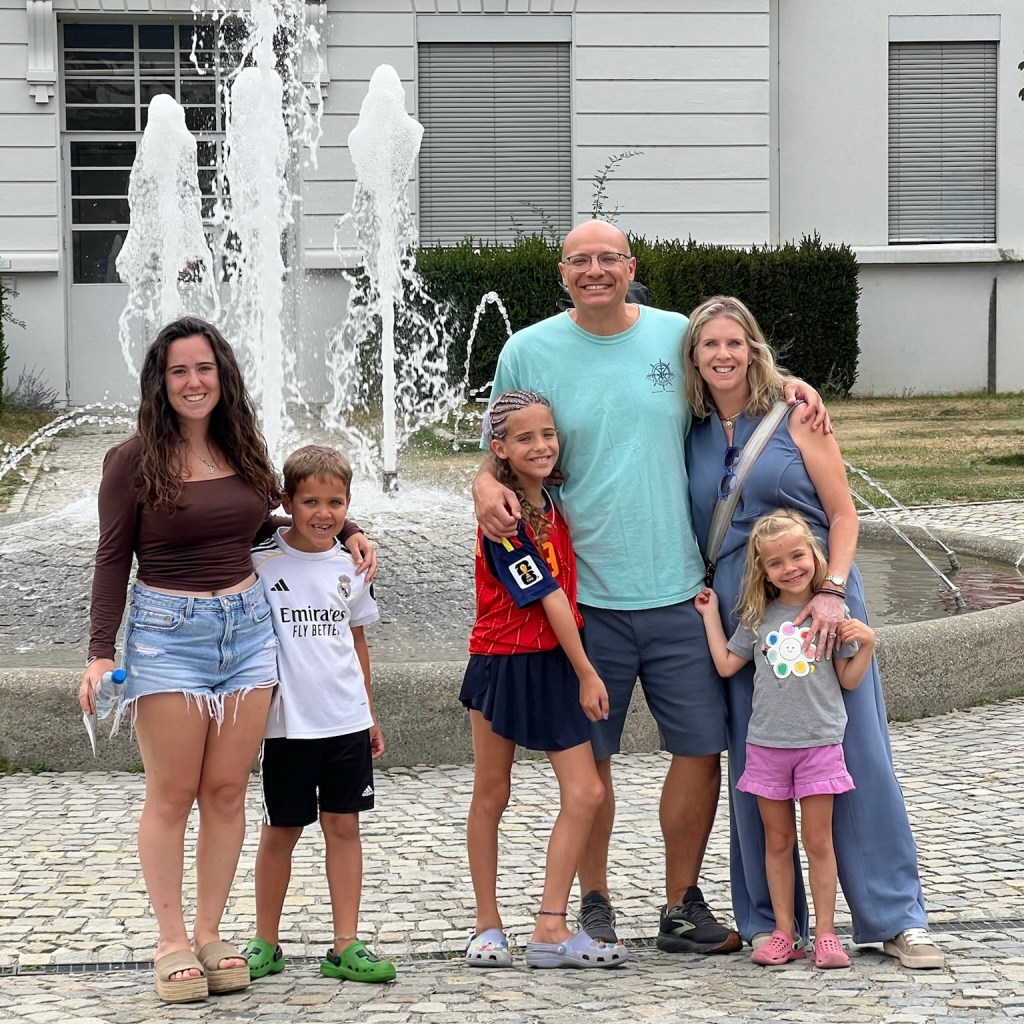
I may write a short post tomorrow about the trip home, although travel days rarely make for particularly exciting reading. Before we wrap up this adventure, though, I want to thank a few people.

First, Amir deserves enormous credit. He was the principal architect of this entire trip, handling nearly all of the flights, almost all of the lodging, the rental cars, and the endless logistics required to move six people through two countries over eighteen days. Trips like this don’t just happen. They require months of planning, flexibility, spreadsheets, patience, and countless hours behind the scenes. He created something truly special for all of us, and these are memories our children will carry with them for the rest of their lives.

Second, thank you to Lidia and her family and friends in Autol. They welcomed us with open arms and treated us like family from the moment we arrived. They shared their homes, their meals, their traditions, their stories, and their culture. They taught us about Rioja wines, mushroom farming, village festivals, and the rhythm of everyday life in northern Spain. They gave us an authentic experience that no guidebook, tour company, or hotel ever could.

And finally, thank you to everyone who’s followed along with these daily posts. I originally started writing them simply so our family would remember the little moments years from now, but knowing so many of you have been reading along has made it even more enjoyable.

Now, if you’ll excuse me, I have #1LittleSister to wrestle into bed before our 4:00 a.m. alarm goes off.

Thanks for coming along on this adventure. Until the next one.

~Steph

Day 14: Alarm Fatigue, Ski Lifts and Evolène

As an emergency physician, I’ve probably developed a little too much alarm fatigue. So when the fire alarm started blaring through the chalet at 6:30 a.m., my first thought wasn’t, We should evacuate. It was, Is this thing actually real?

Fortunately, it wasn’t.

Unfortunately, we were all awake.

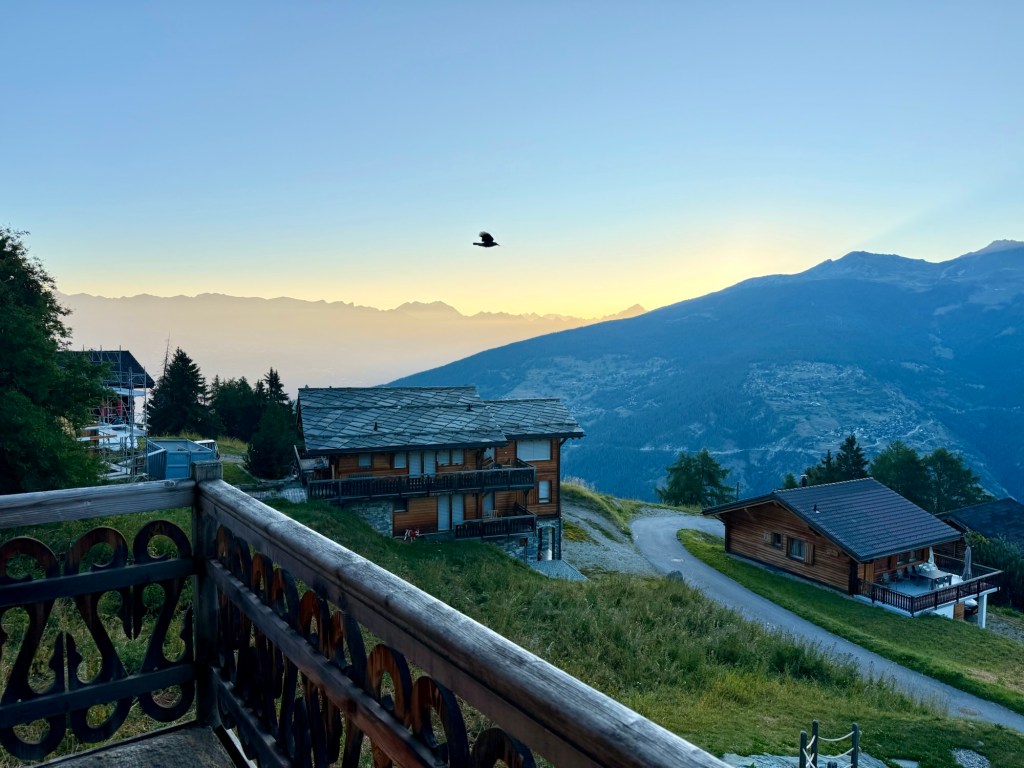
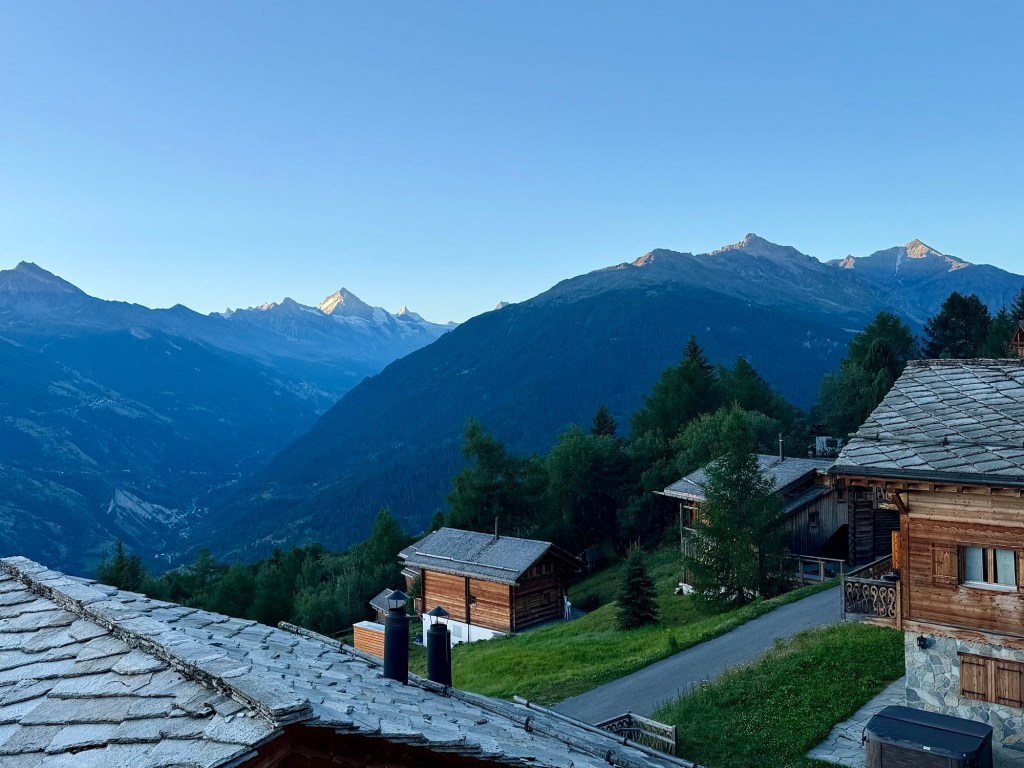
Since sleep was off the table, I grabbed my camera and stepped onto the balcony. The early morning light over the valley was spectacular, and the Matterhorn was putting on a show. If you’re going to get jolted awake by a false alarm, this is about the best view you could ask for.

Just me and the birds at this hour

We walked up to Thyon Resort and found the ski lift called Trabanta which took us to the top of Thyon 2000. The kids were surprisingly brave on the ski lift. For the two youngest, it was their very first time ever getting on—and more importantly, getting off—a chairlift. They handled it far better than I ever did.

I couldn’t help but think about my own two legendary ski lift failures.


The first happened when I was three years old. I don’t remember which ski resort we were at, but I was skiing with my parents. I’d just climbed onto the lift when, apparently, I sat on a patch of ice. As the chair pulled away, my tiny three-year-old body slid right underneath the safety bar.

By nothing short of a miracle, one foot caught on the bottom of the chair, catching my boot strap, leaving me dangling upside down instead of plummeting to the ground below.

My mom later told me there was a retaining wall approaching that I was moments away from colliding with while everyone below frantically tried to get the lift operator’s attention. Somehow the lift was stopped in time, and—if family lore serves me correctly—my dad was able to reach down and haul me back into the chair.


Not exactly the confidence-building ski experience most toddlers have.

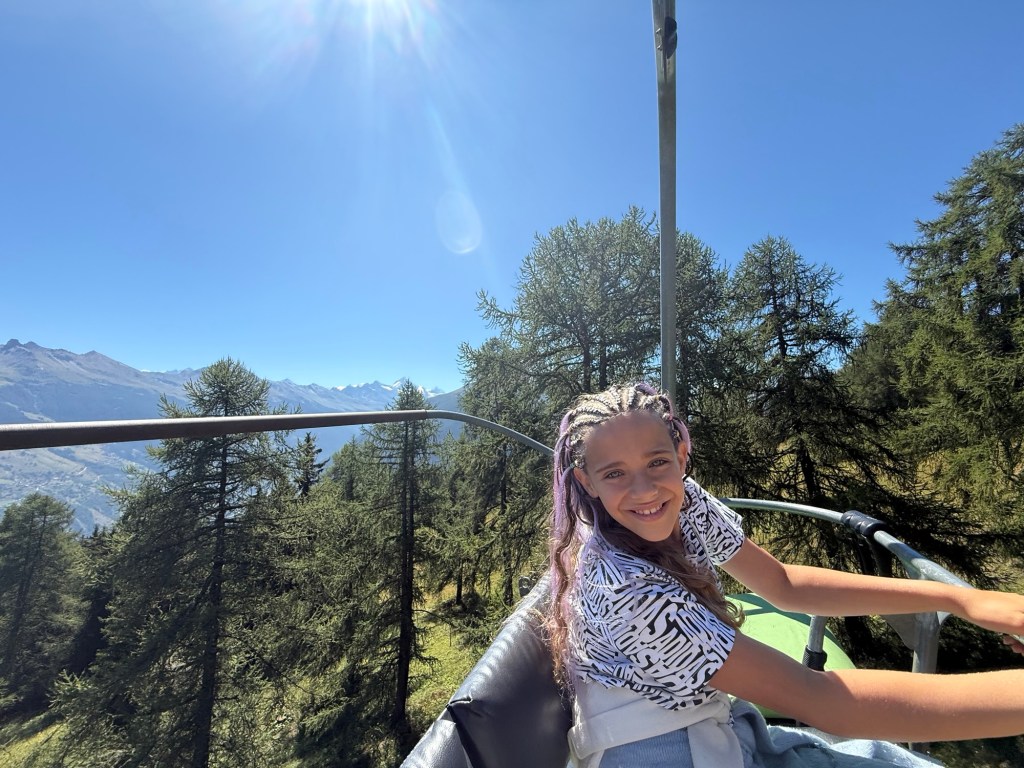
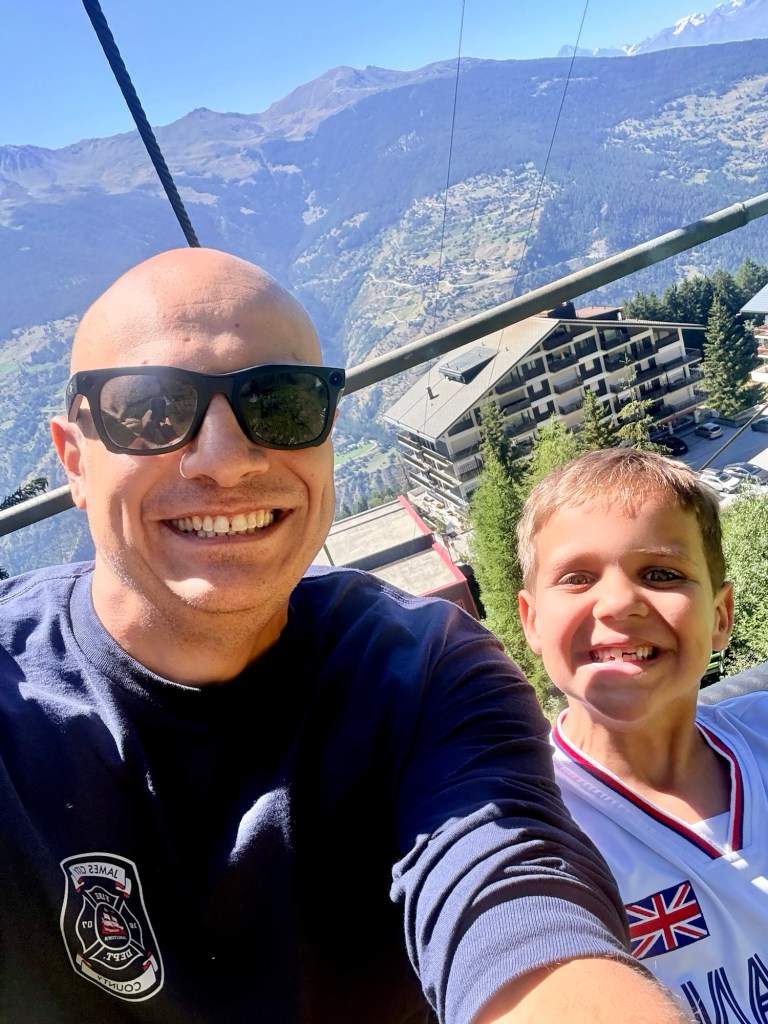
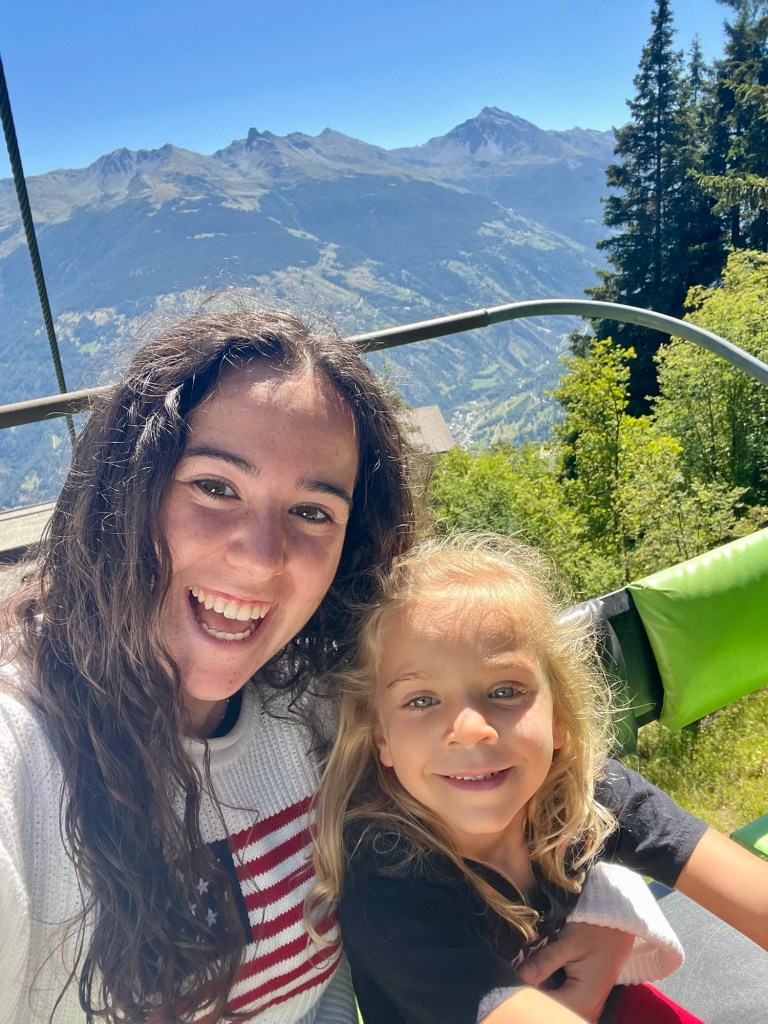
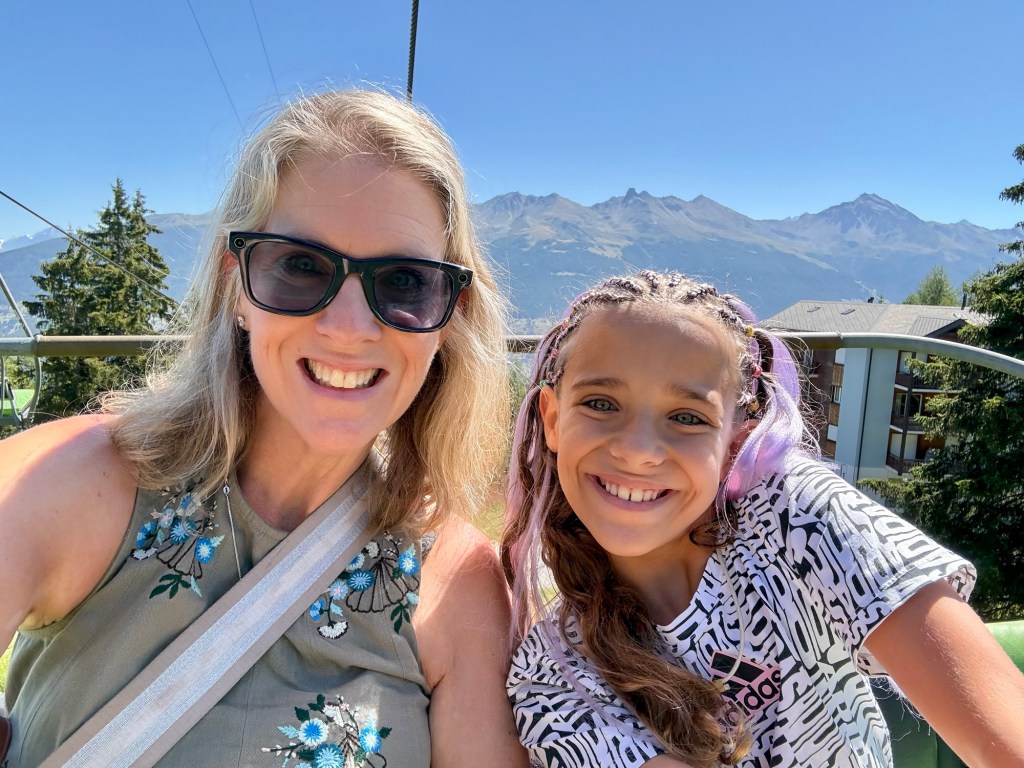
#1BibSister and I rode together, which turned out to be the perfect pairing. We were equally excited to finally see real Swiss cows up close—the kind with enormous bells hanging around their necks that we’d been hearing long before we ever spotted them. We also share a mutual appreciation for a well-timed selfie, so we managed to capture a few favorites while floating high above the valley.

As we approached the unloading area, however, we noticed the lift had stopped a few chairs ahead of us.

Turns out Amir and #1BigBrother couldn’t get their safety bar to lift, so the operator had to come help them before they could get off. #1LittleSister and Lidia disembarked without incident, and #1BigSister and I stepped off just fine.

So technically…the Louka family ski lift mishap count still belongs entirely to me.

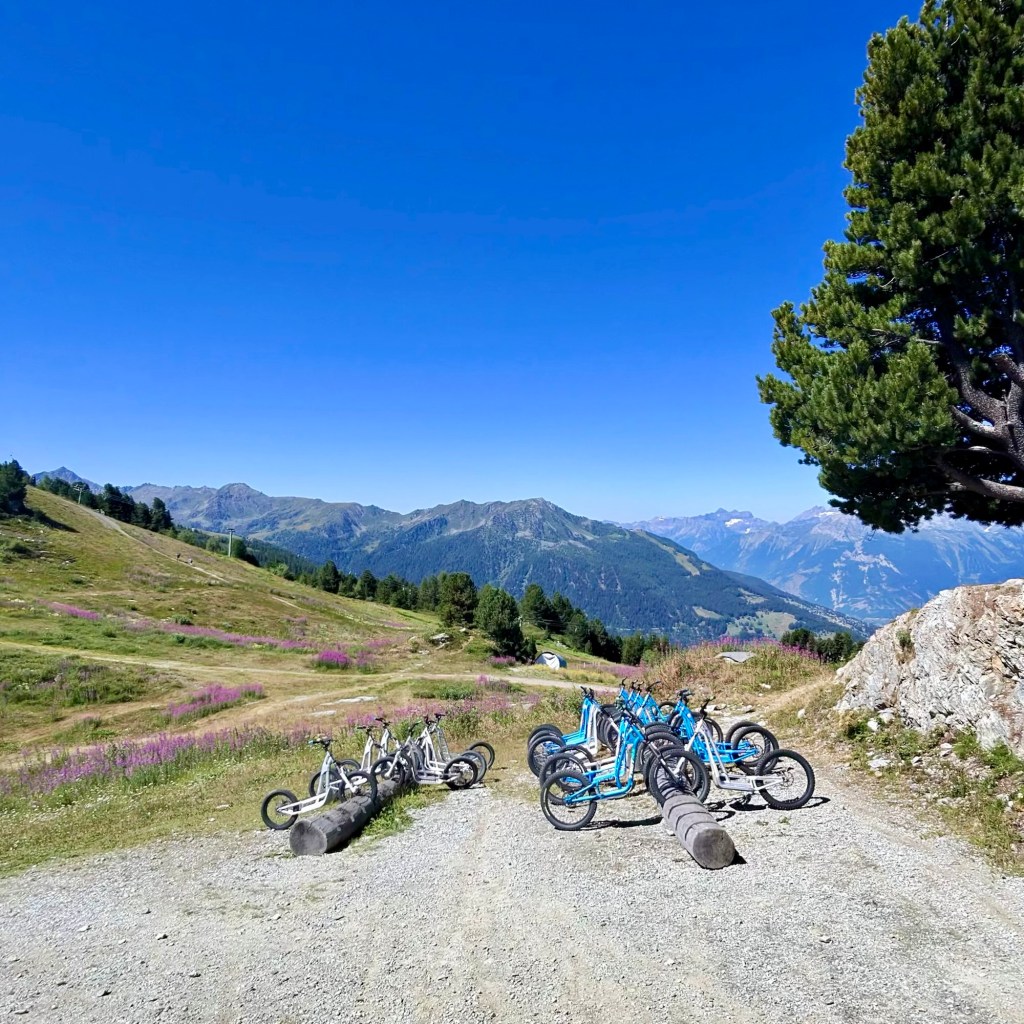
Scooter “bikes” you can rent and ride down

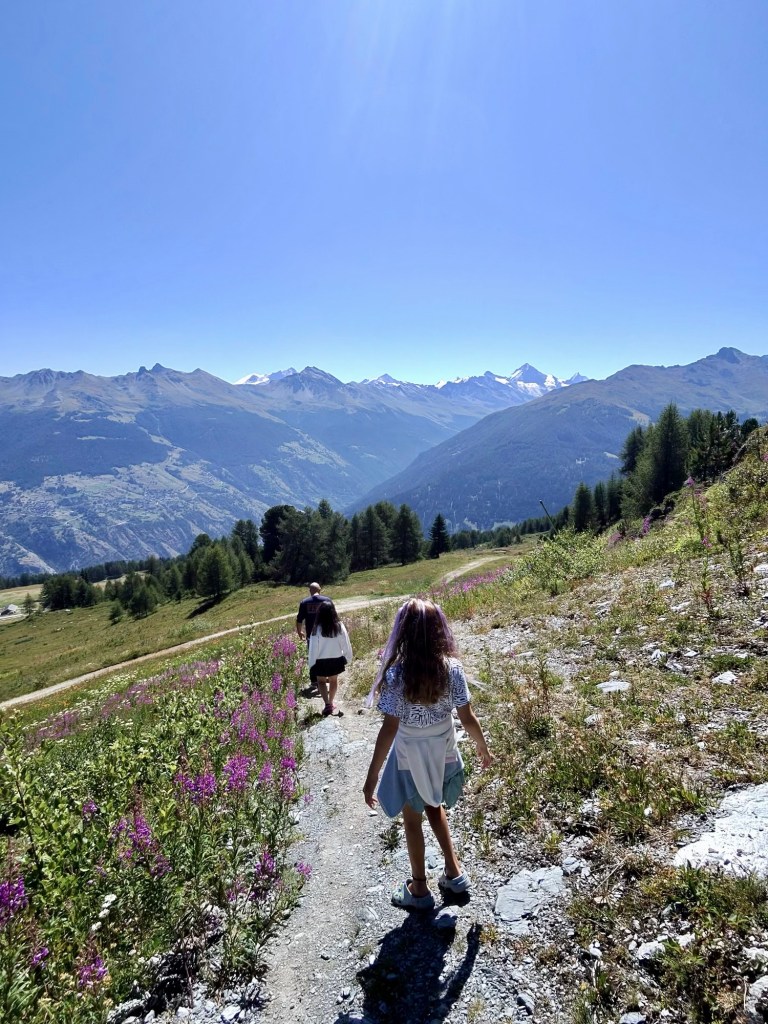
At the top of the mountain, we took a short—but surprisingly steep—trail down to a little mountainside restaurant that looked like something out of a postcard. There were horse stables nearby, a trampoline, a bounce house, a giant bull statue, and panoramic views in every direction.

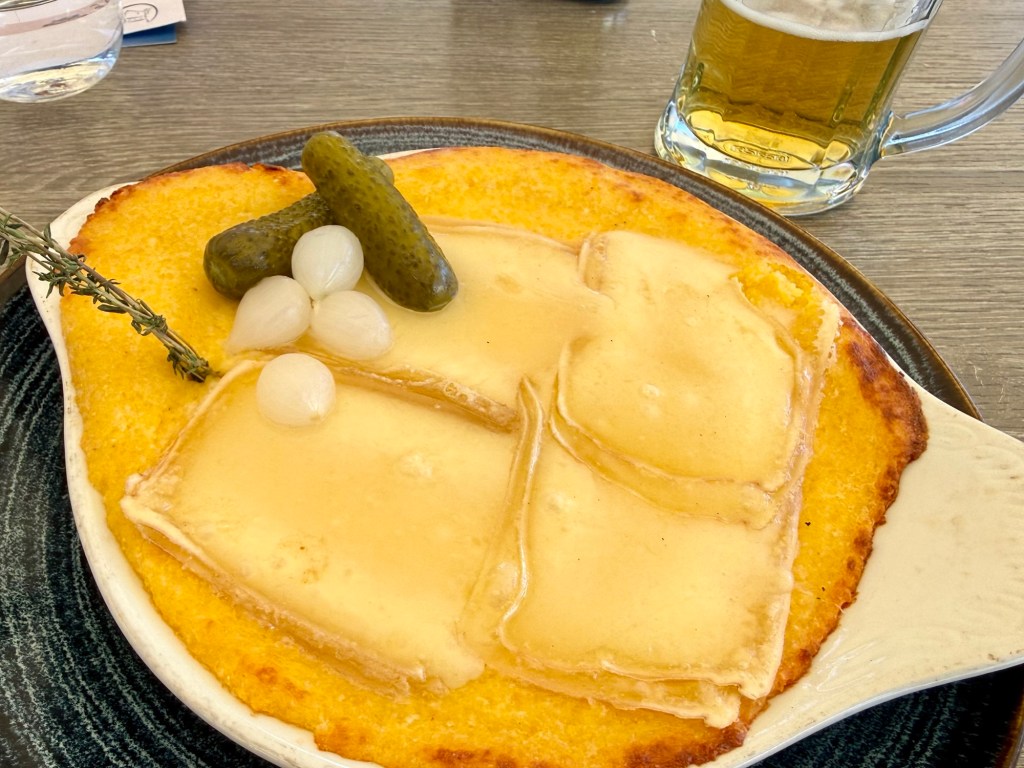
I ordered the cheese polenta, which was rich, creamy, and absolutely worth the hike.

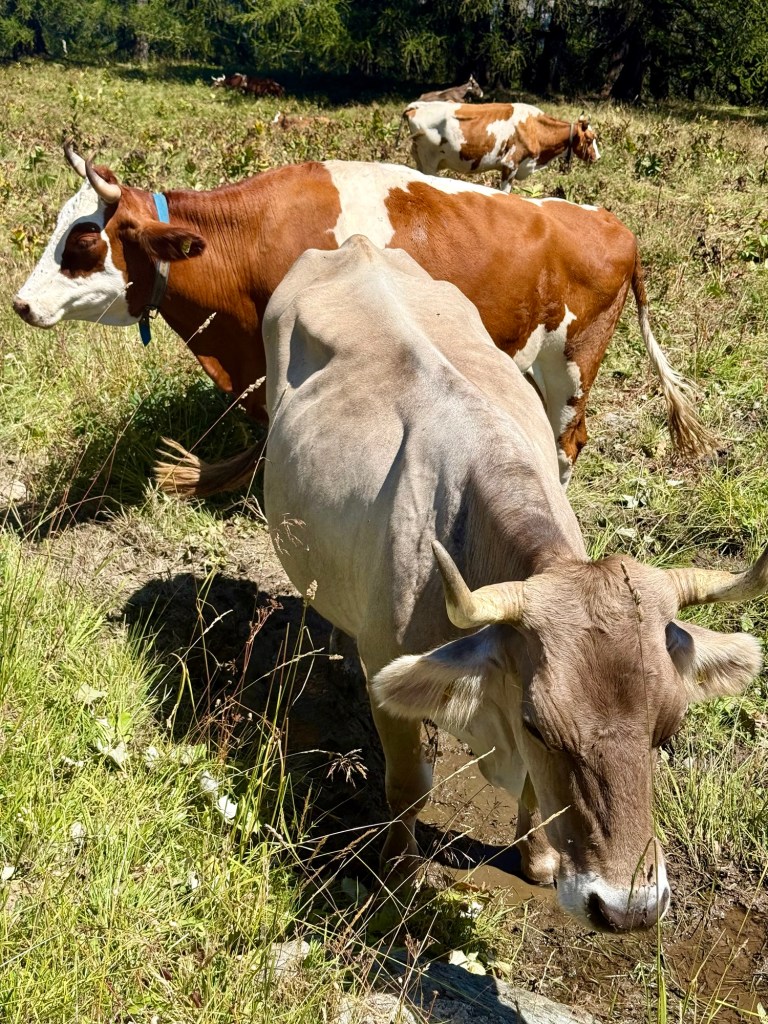
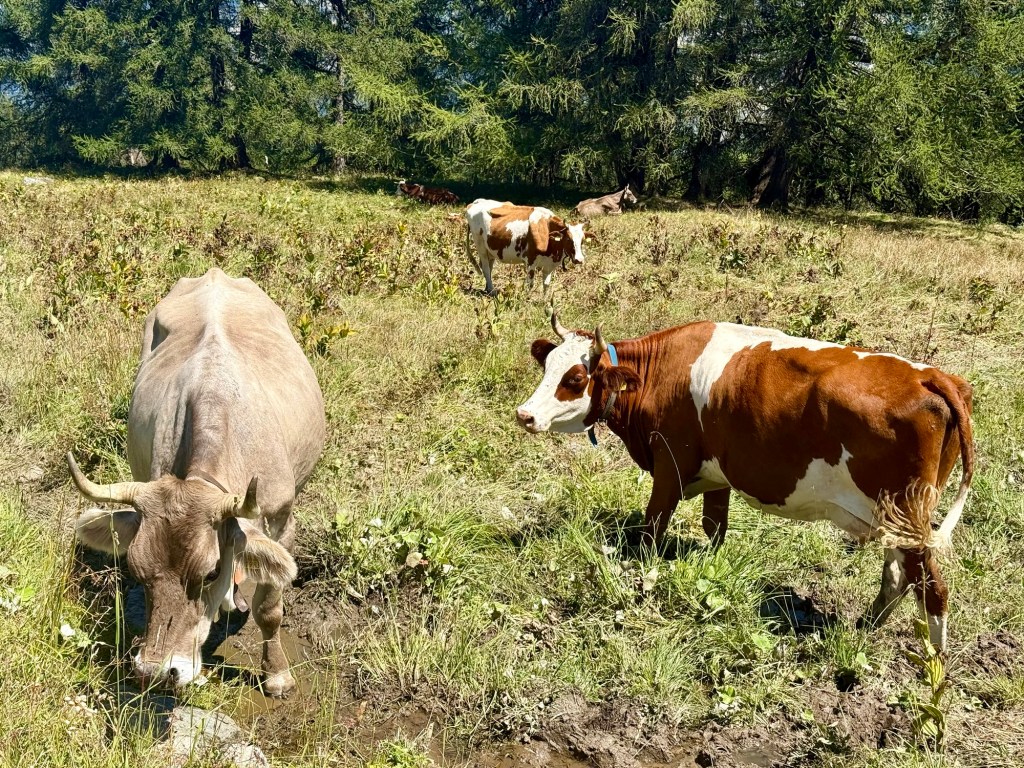
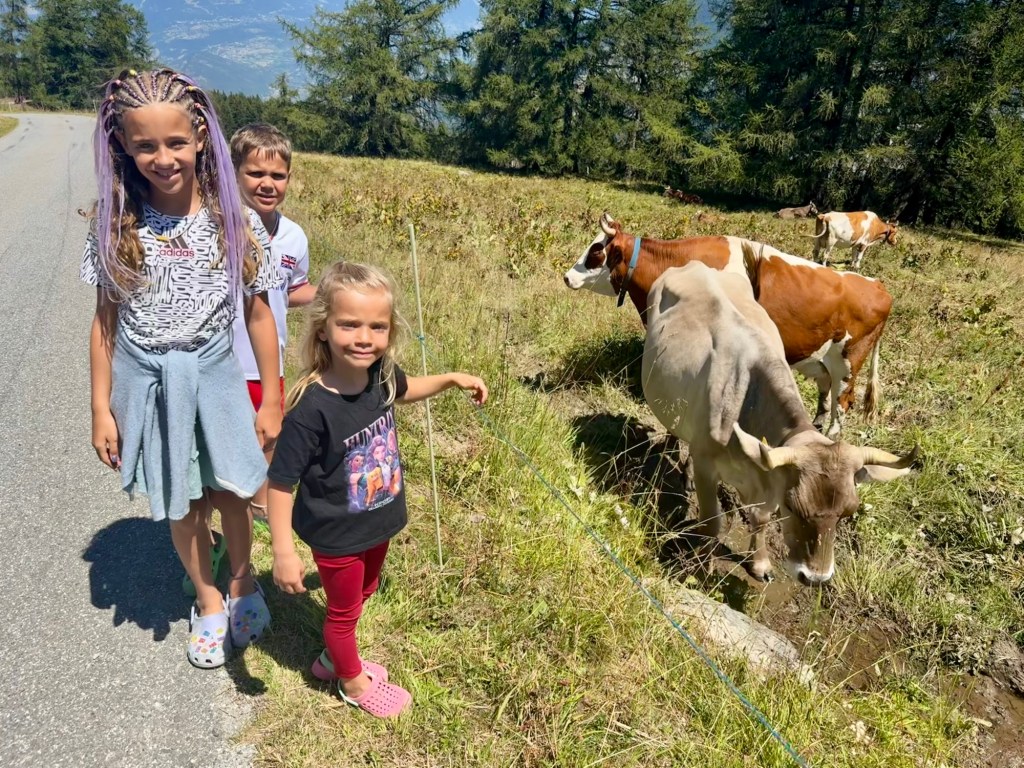
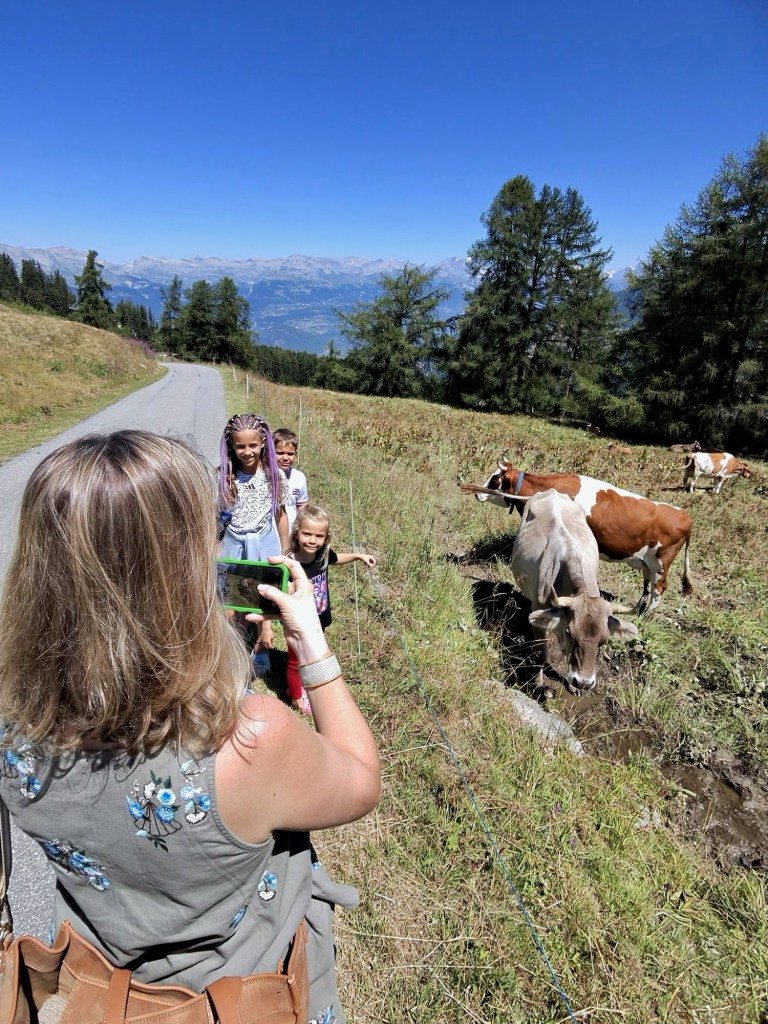
After brunch, we continued our descent, stopping to finally meet the famous Swiss cows we’d admired from above. Their oversized bells echoed through the valley long before we reached them. Some had impressive curved horns, all were enormous, and surprisingly few seemed interested in staying behind fences. They were calm, friendly, and completely unfazed by a family of American tourists taking far too many pictures.

By this point, everyone was feeling the miles. Several of us had also come to the shared realization that Crocs are wonderful vacation shoes…right up until you decide to hike down a Swiss mountain.

As we reached the bottom near the chairlift, another childhood memory came rushing back—my second ski lift disaster.

Ironically, it had also happened in Switzerland.


I was about eight years old, traveling with my parents, my sister Kristin, and our family friends, the Wrights. It was my very first trip outside the United States. We had come to Switzerland for spring break to ski, and I remember thinking it was the greatest adventure imaginable.

One day, my parents went ahead while Kristin and I lined up for a T-bar lift—the kind that pulls skiers uphill while they remain on the snow. The bar tucks behind you, with one person on each side. In theory, it’s simple.

In reality, it requires both riders to be roughly the same height.

At eight years old and with my teenage sister beside me, we were…not.

Looking back, the contraption resembled equal parts ski equipment and an oversized IUD.

We didn’t make it very far before our balance gave out. As soon as we let go, the T-bar snapped back toward the cable at full speed and smacked me squarely in the back of the head.

Instantly there was blood everywhere.

Let me tell you—bright red blood against fresh white snow is a visual that sticks with you.

Meanwhile, my parents were already well up the mountain, completely oblivious to what had happened.

A kind stranger took off my skis, carried me like a toddler, and skied me all the way down to a small medical clinic. Remember, this was long before cell phones. Kristin and I had no identification, no money, and no way to contact anyone.

As luck would have it, the physician working in that tiny Swiss clinic was an American—from Pensacola, Florida, where we had once lived. We had never met him before, but after hearing our story he simply said, “Don’t worry about it. I’ll send your parents the bill.”

Two weeks after we got home to Virginia, the invoice arrived.

Total amount due: $40.

My dad happily paid it.

Kristin and I somehow found our own way back to the ski lodge, only to discover our parents and the Wrights sitting comfortably by the fire with their boots off, completely unaware that we’d made an unscheduled stop at Swiss urgent care. Looking back as an adult, I’m fairly confident they had enjoyed a drink or two while waiting.

Thankfully, everything turned out just fine.


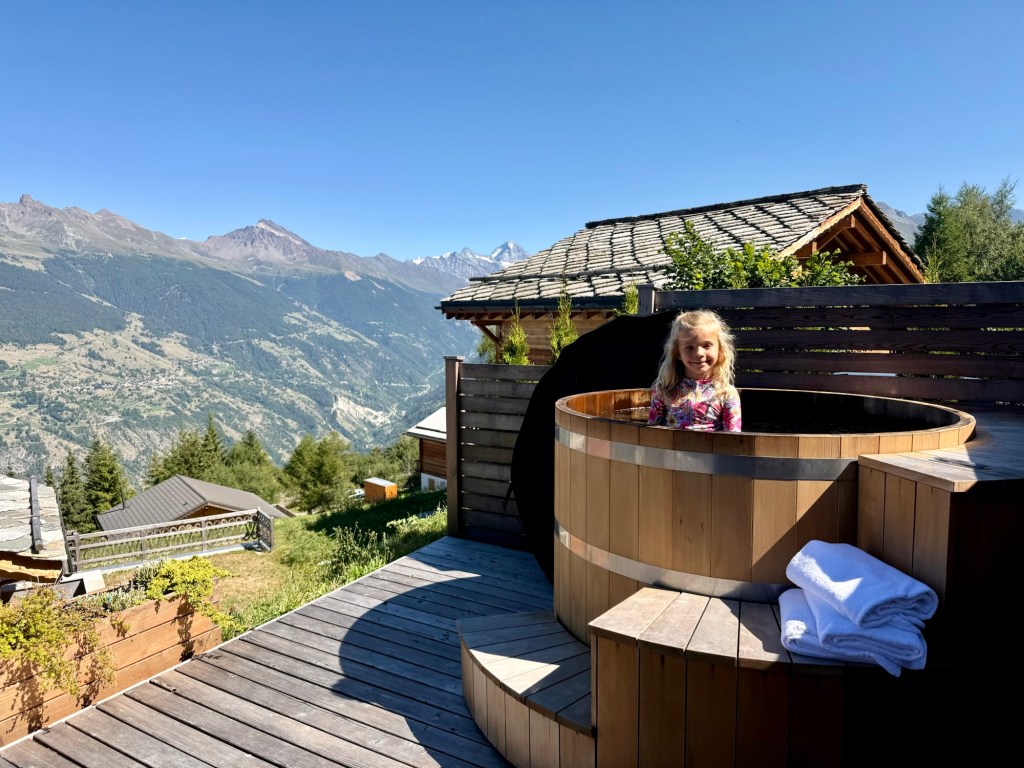
Back at the chalet, I attempted an afternoon nap, but sleep wasn’t happening. Instead, #1LittleSister convinced me to join her in the hot tub.

I tried explaining that a hot tub is not a swimming pool—it’s more of a sitting pool.

She respectfully disagreed.

Within minutes she was splashing with Olympic-level enthusiasm while I abandoned any hope of relaxation and simply accepted that parenting, much like ski lifts, rarely goes exactly according to plan.

Another 6:30 am win

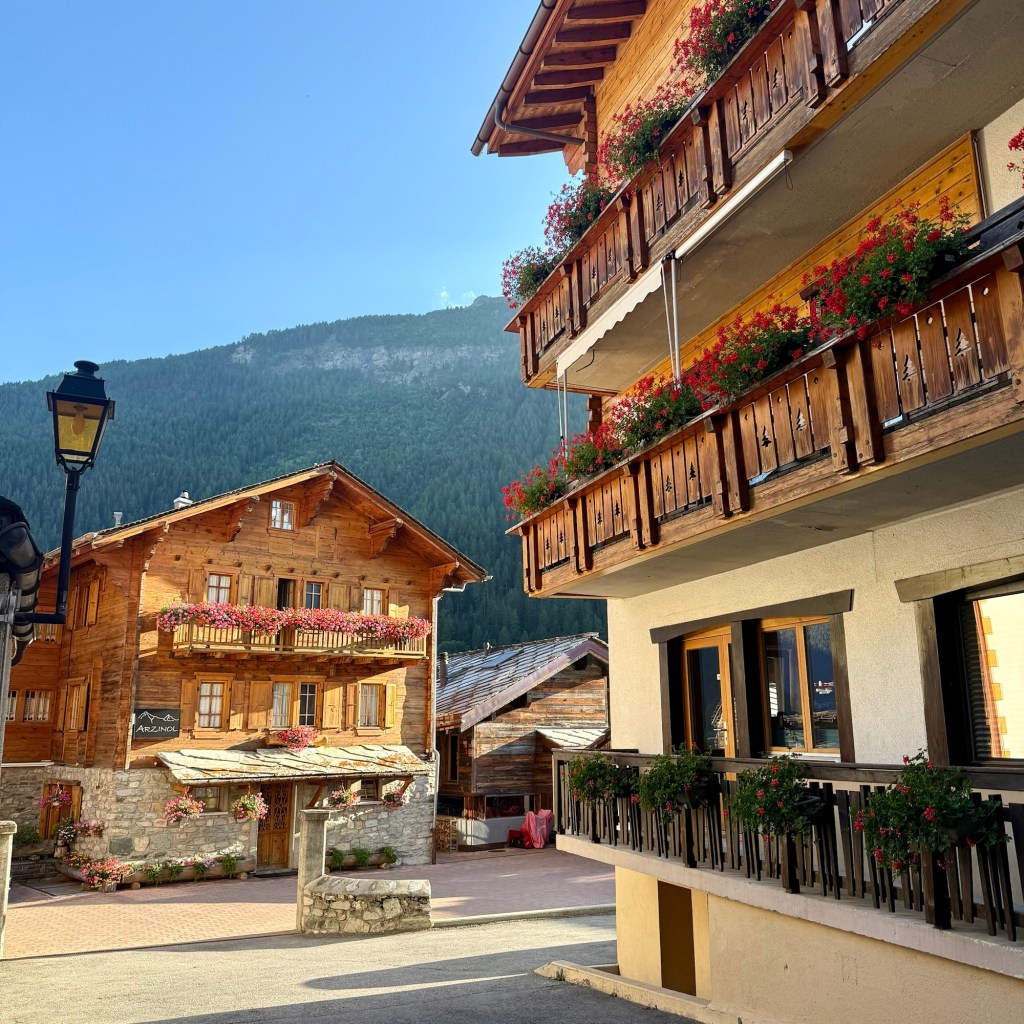
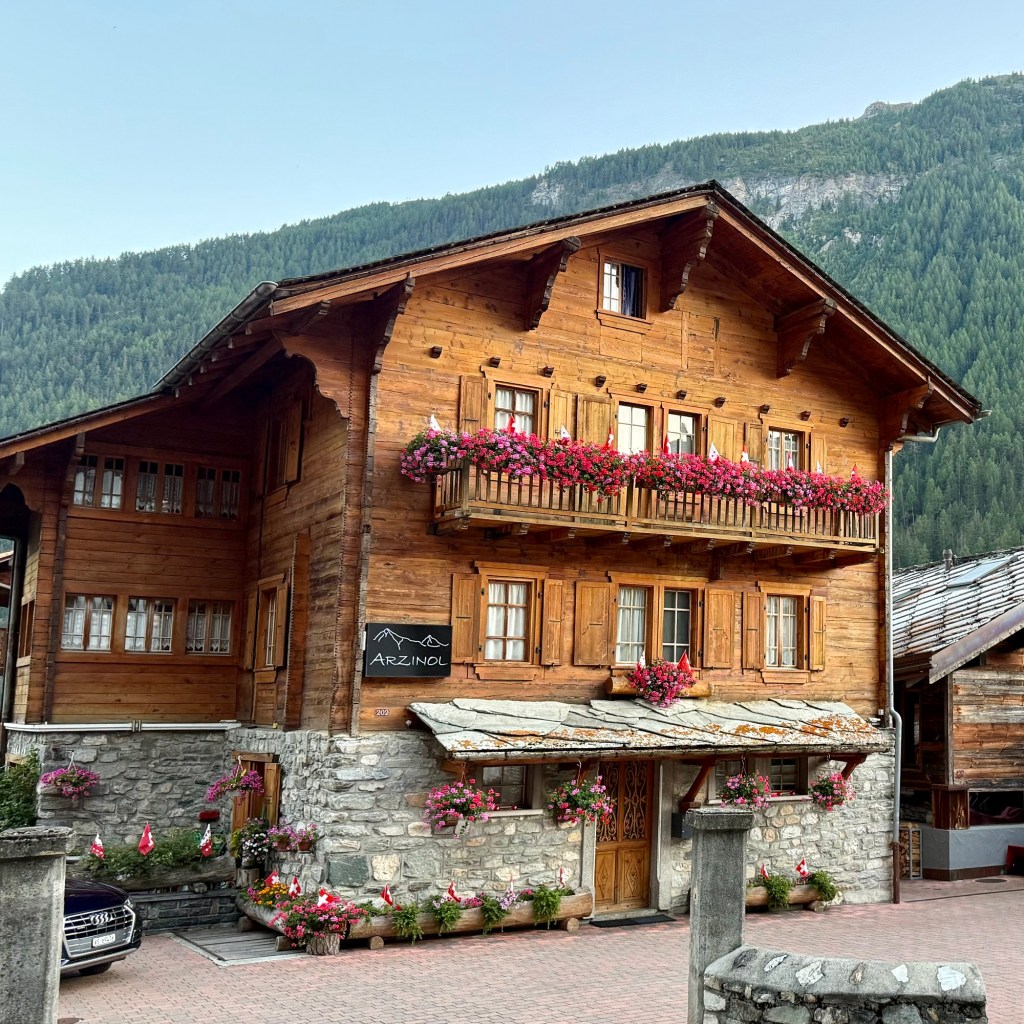
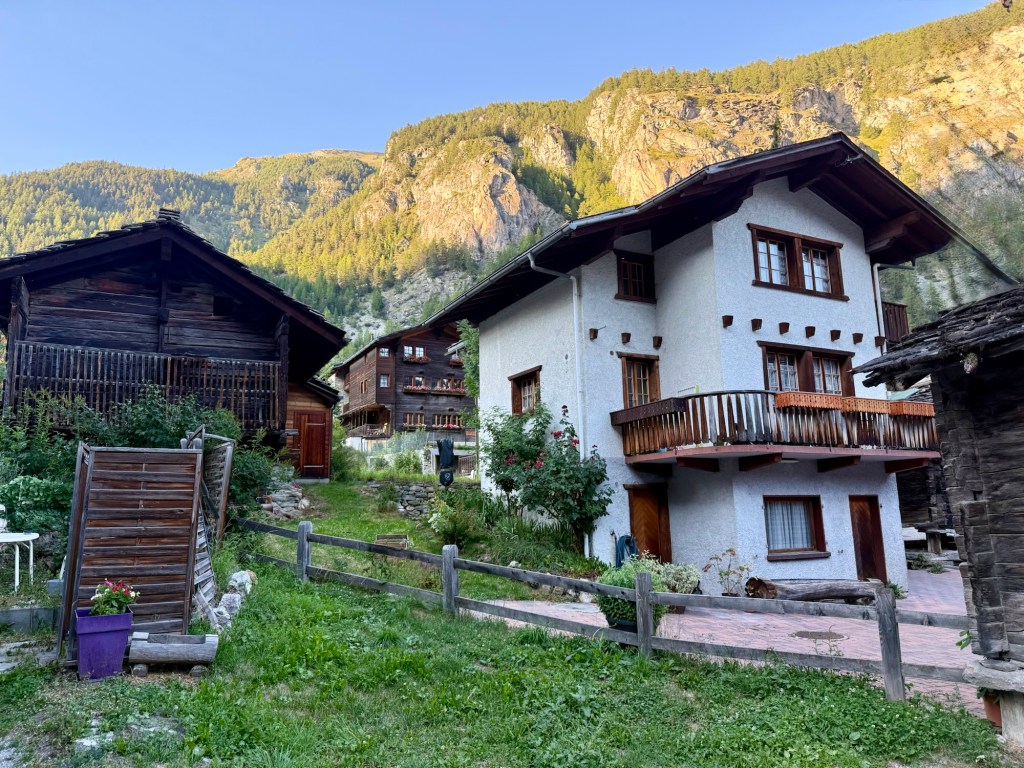
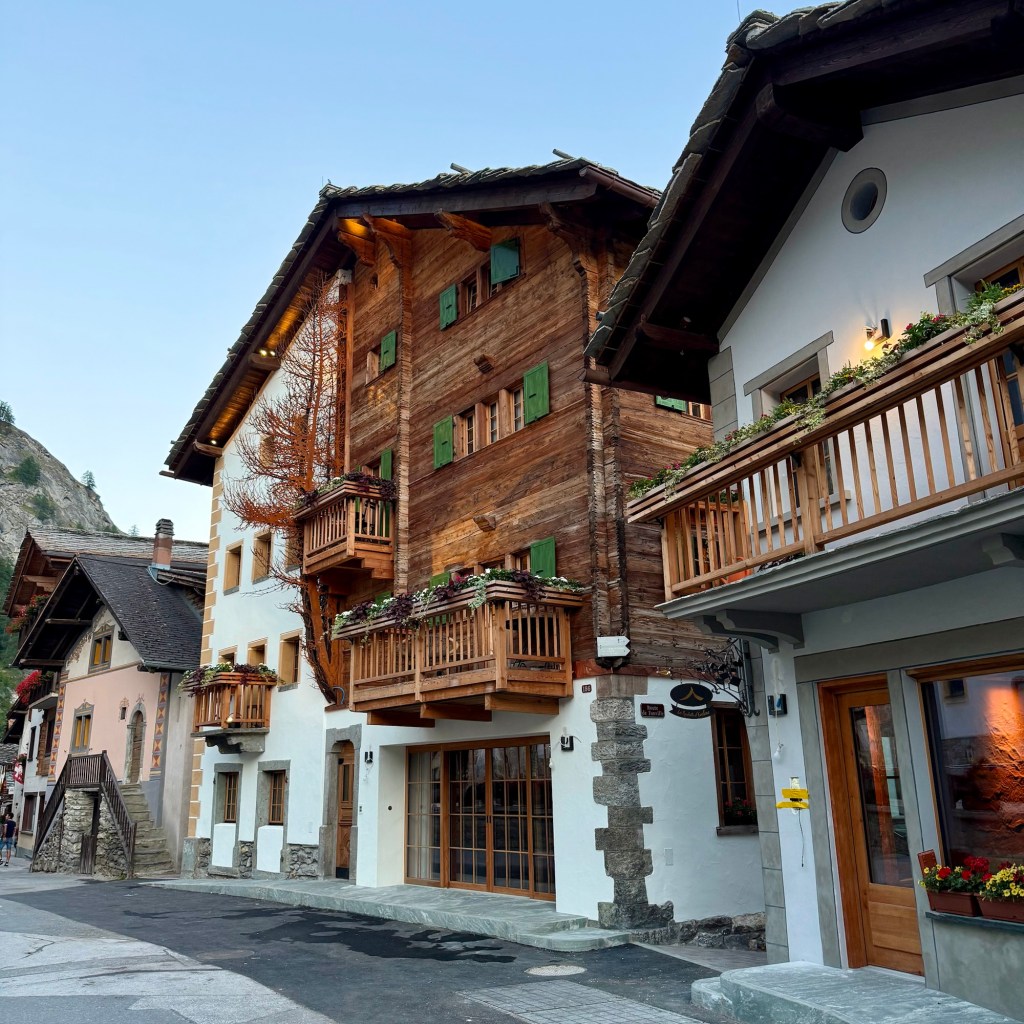
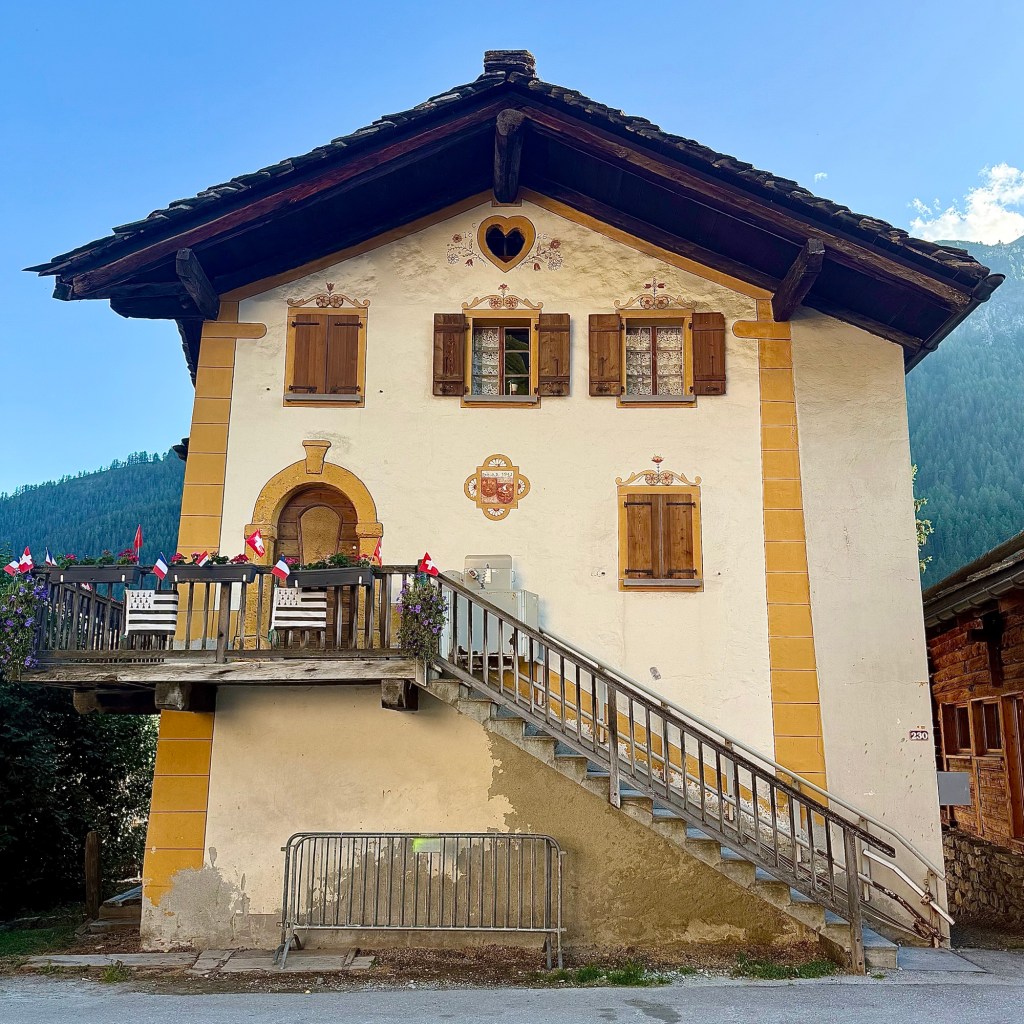
For dinner, we piled back into the car and made the 30-minute drive down the mountain to the charming village of Evolène, a postcard-perfect Swiss town nestled along the river. Dark wooden chalets lined the streets, each balcony overflowing with colorful flower boxes, while restaurants buzzed with the unmistakable energy of people lingering over good food and good conversation.

Evoléne, Switzerland

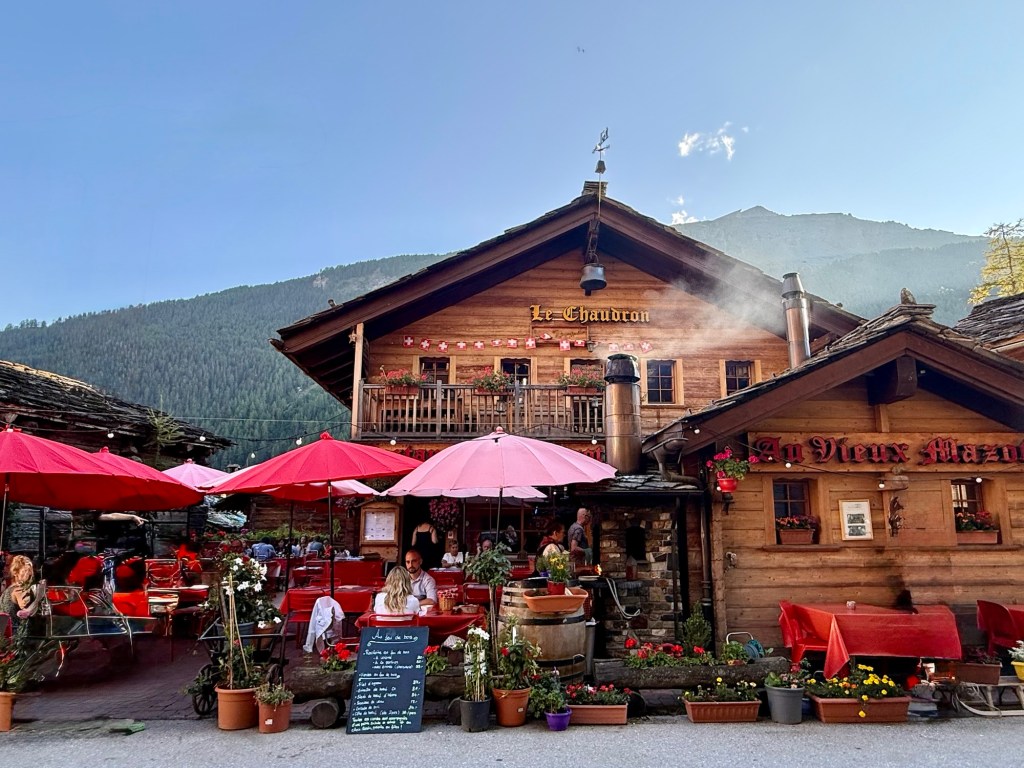
We wandered into the first restaurant we came across, Restaurant Au Mazot Chez Raymonde, which, as luck would have it, also happened to be the highest-rated on Google.

Restaurant Au Mazot Chez Raymonde

Stepping inside felt like stepping back in time.

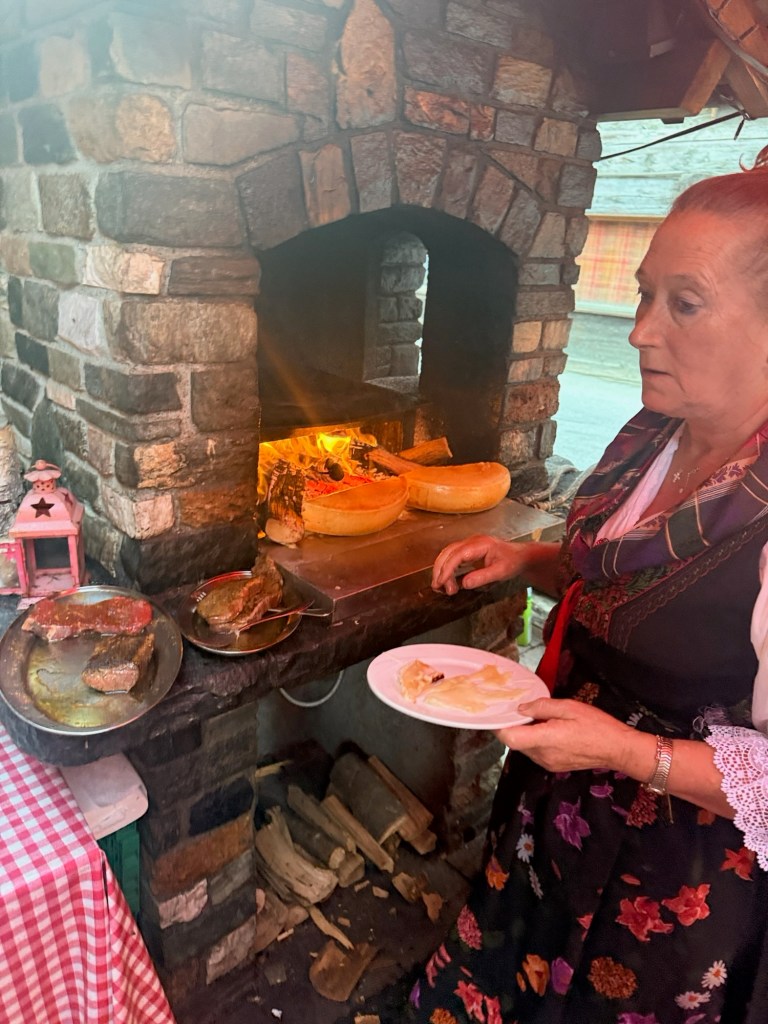
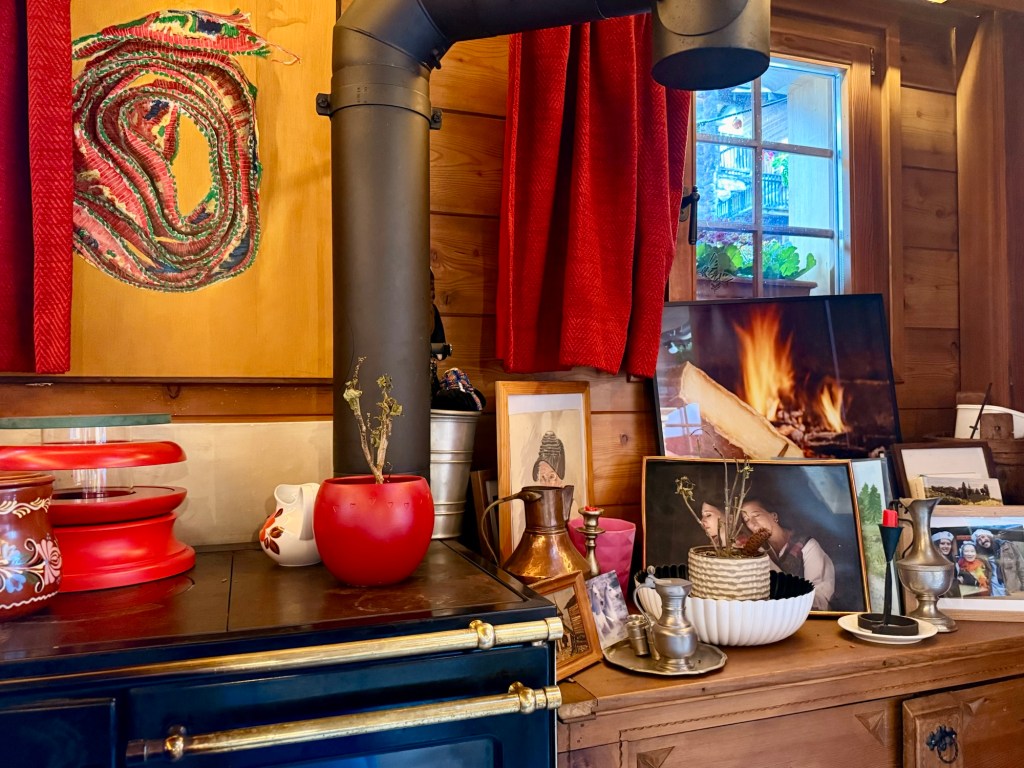
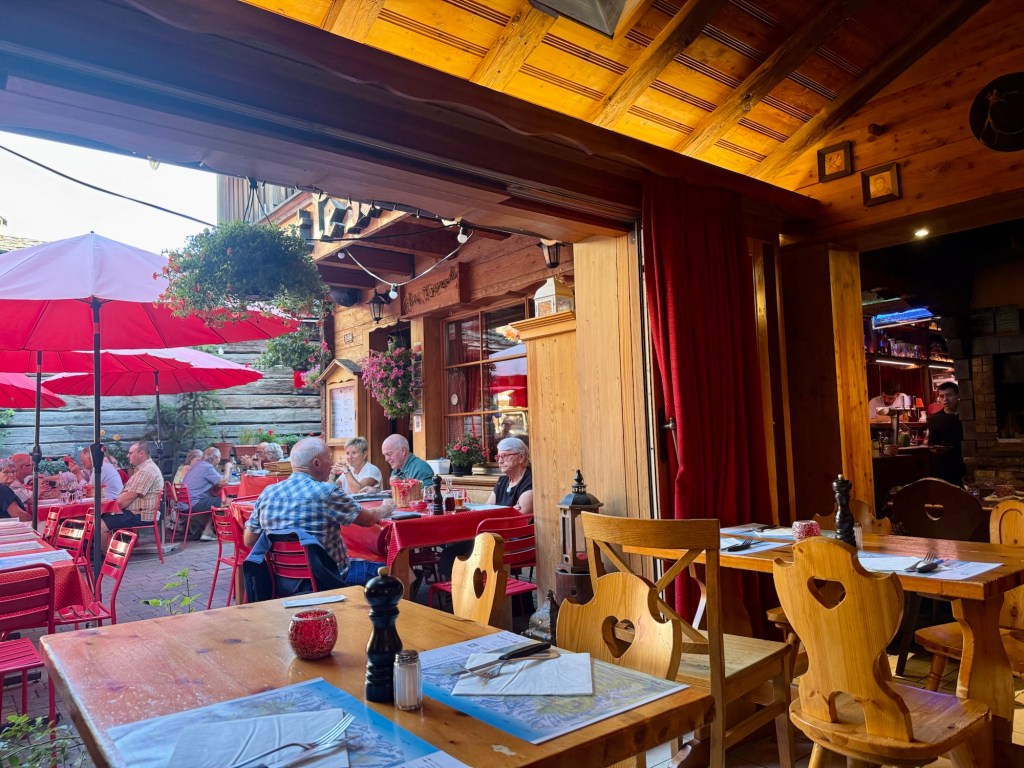
The restaurant is more than 350 years old, complete with its two original stone fireplaces that still anchor the dining room today. The atmosphere was everything you’d hope for in an old Swiss mountain inn: cozy, bustling, a little noisy, delightfully unhurried, with the warmth of the fireplaces filling the room and the unmistakable aroma of melting raclette drifting through the air.

The woman tending the open hearth had worked there her entire life and was dressed in traditional Swiss clothing. Looking around at the centuries-old photographs and drawings hanging on the walls, it was remarkable to see that the women working there today are still wearing essentially the same attire as those who came generations before them.

Behind me at the table
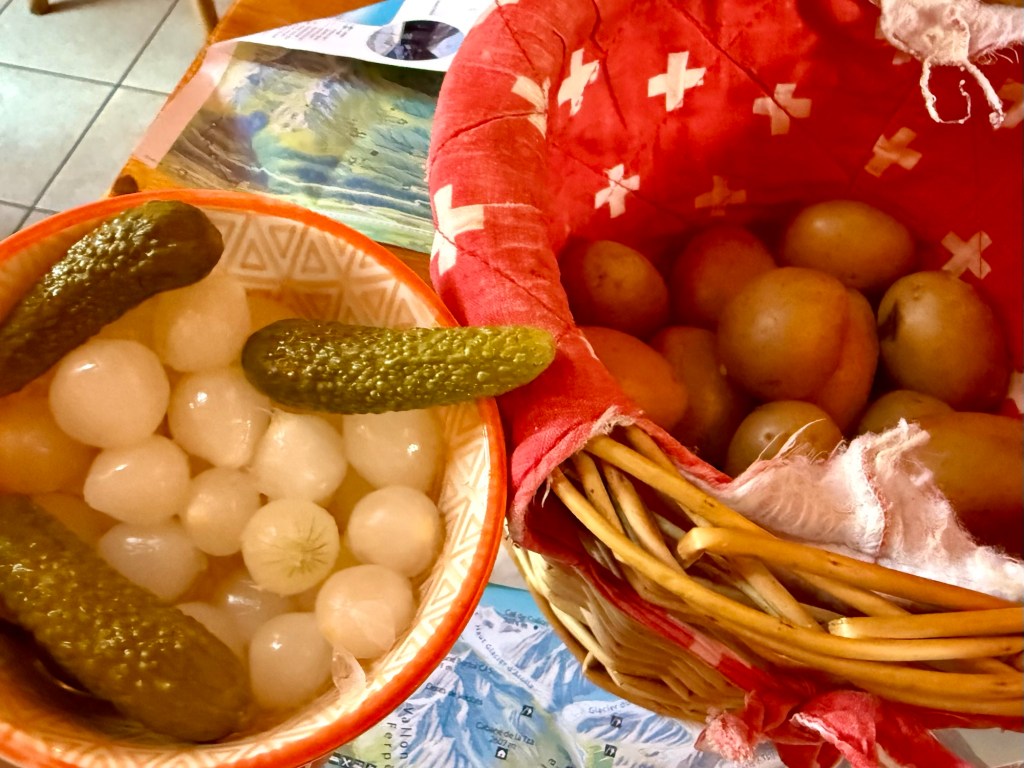
Pickled onions, cucumbers and potatoes

Every meal at our table was excellent, but by this point the early 6:30 a.m. fire alarm, the mountain hike, and the fresh alpine air had finally caught up with all of us. We were ready to head back to the chalet, crawl into bed, and recharge for another adventure.

Tomorrow promises to be one of the experiences I’ve been looking forward to most—a special “secret” boat ride that I can’t wait to tell you about.

Until then, it’s time for one last glass of red wine by the fireplace before calling it a night.

~Steph

The feet! 👣

Day 12: One Last Day in España

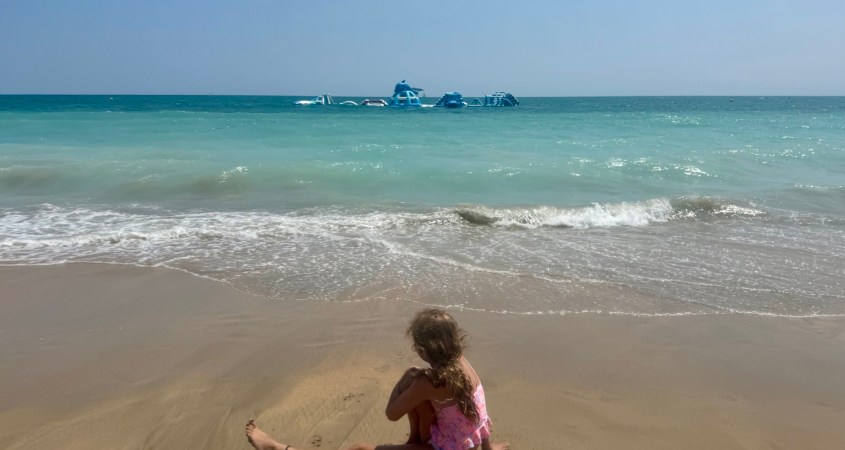
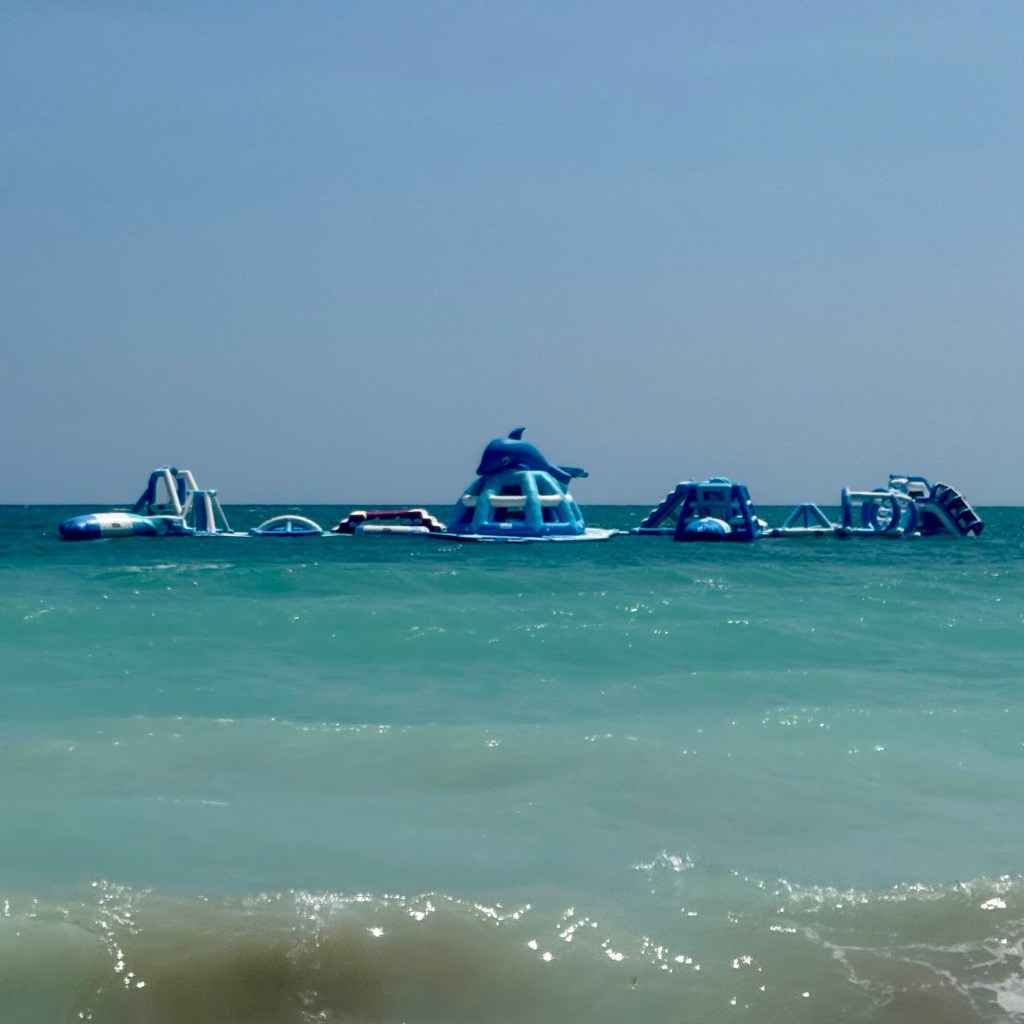
Our final day on the Mediterranean started with plans to tackle the giant blue-and-white inflatable water park we’d spotted from the jet skis. Unfortunately, Mother Nature had other ideas. A yellow flag was flying over the beach, warning of rough surf, and while adults were technically allowed on the inflatable, children were not.

You’ll notice others took a pass as well

Watching the entire structure heave up and down with the waves from the safety of the shoreline was enough to make my stomach turn. We decided we’d save that adventure for another trip.

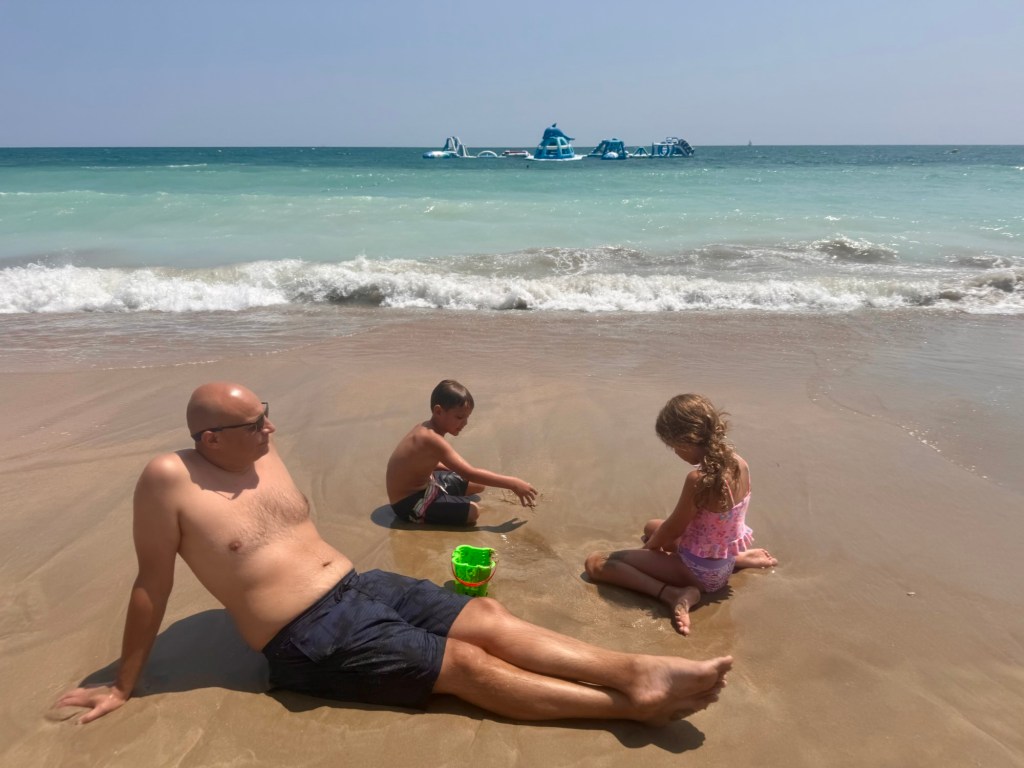
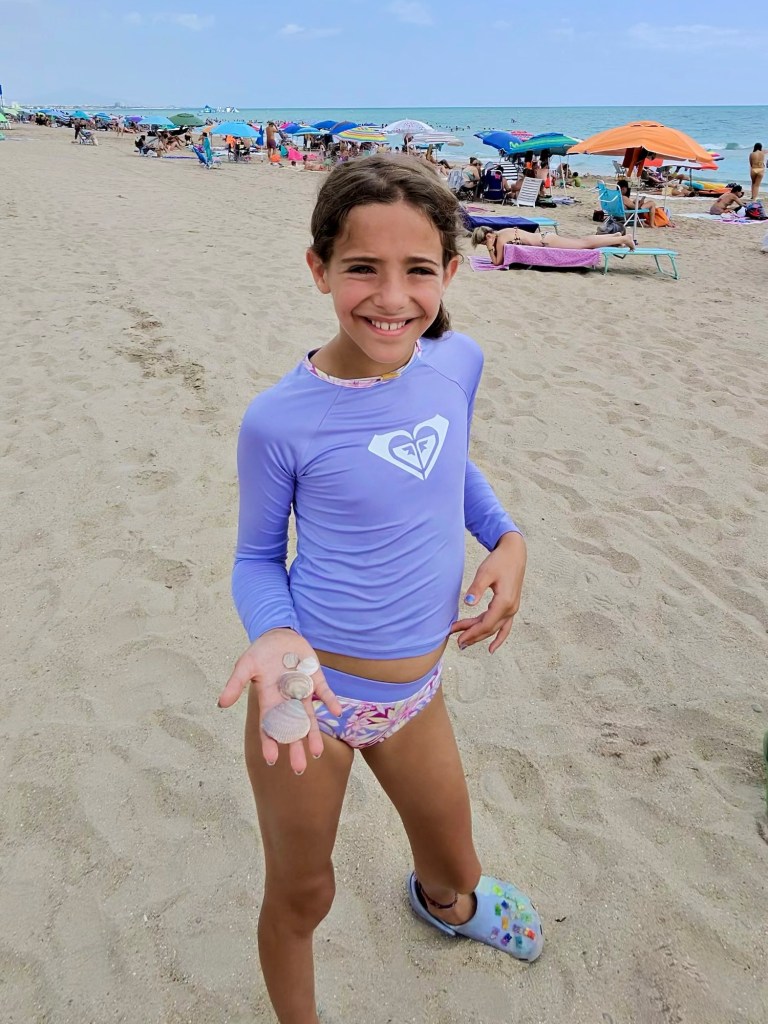
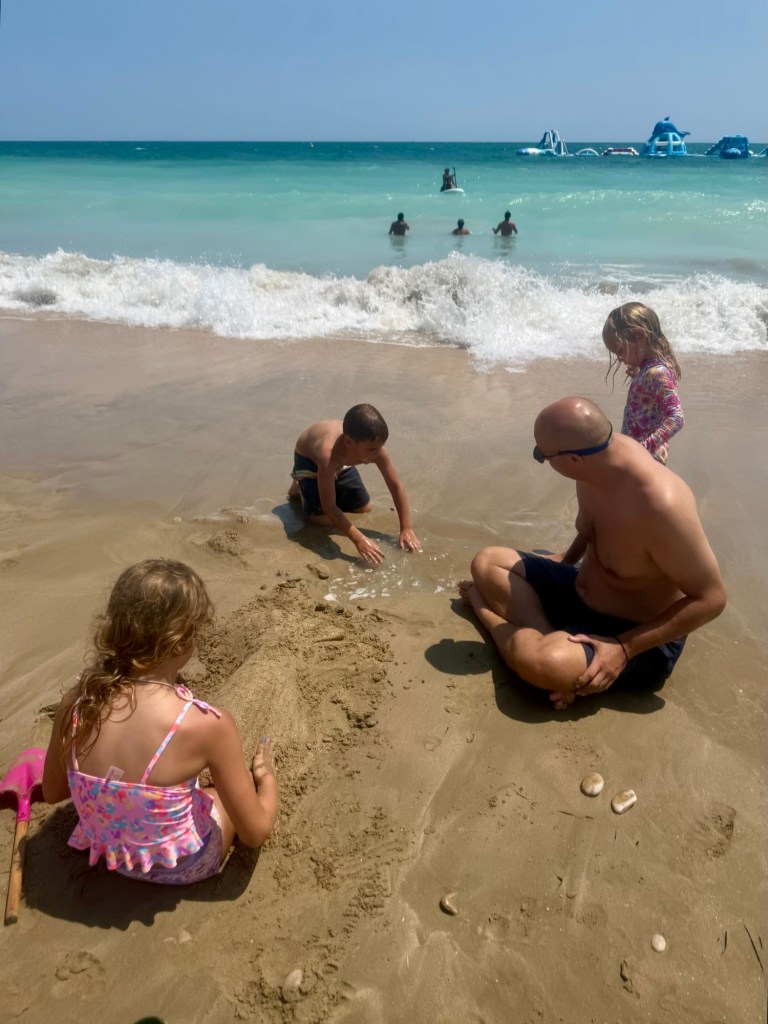
Instead, we embraced a slower beach day. Thankfully we’d packed our buckets and shovels, so the kids happily settled into the sand. #1BigSister was transformed into a mermaid, #1BigBrother and Lidia spent their time jumping waves together, and Amir began what appeared to be a determined excavation to the center of the Earth.

As you’ve probably gathered by now, lunch is the main event in Spain. Today Amir took over the kitchen, making a wonderful chicken piccata. It was comfortingly familiar for us but a new experience for most of the Spaniards, and it was a big hit.

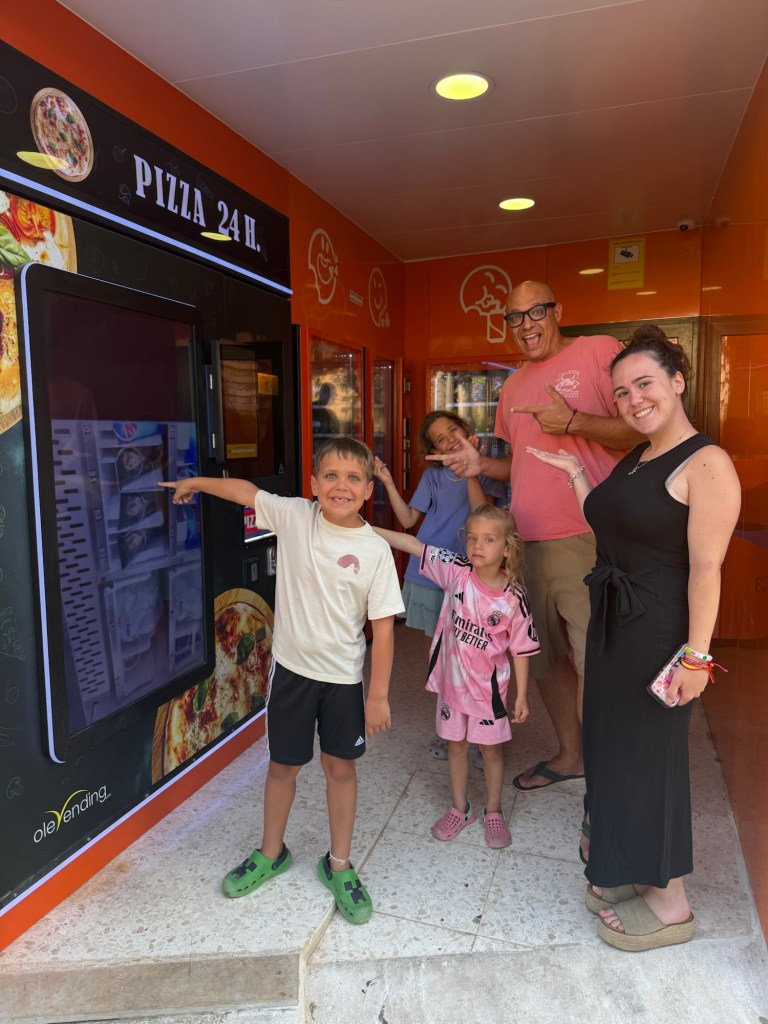
After our customary siesta, we made good on our promise to the kids and headed out for gelato to soften the disappointment of missing the inflatable park. Along the way, we stumbled upon something completely unexpected—a pizza vending machine. For €10, you choose your toppings, pay at the kiosk, and a few minutes later a piping-hot, freshly baked 10-inch pizza emerges, all without a single human involved. Amir, naturally, couldn’t resist giving it a try. I was too full to sample it myself, but the reviews—and his verdict—were surprisingly positive.

Pizza vending machine

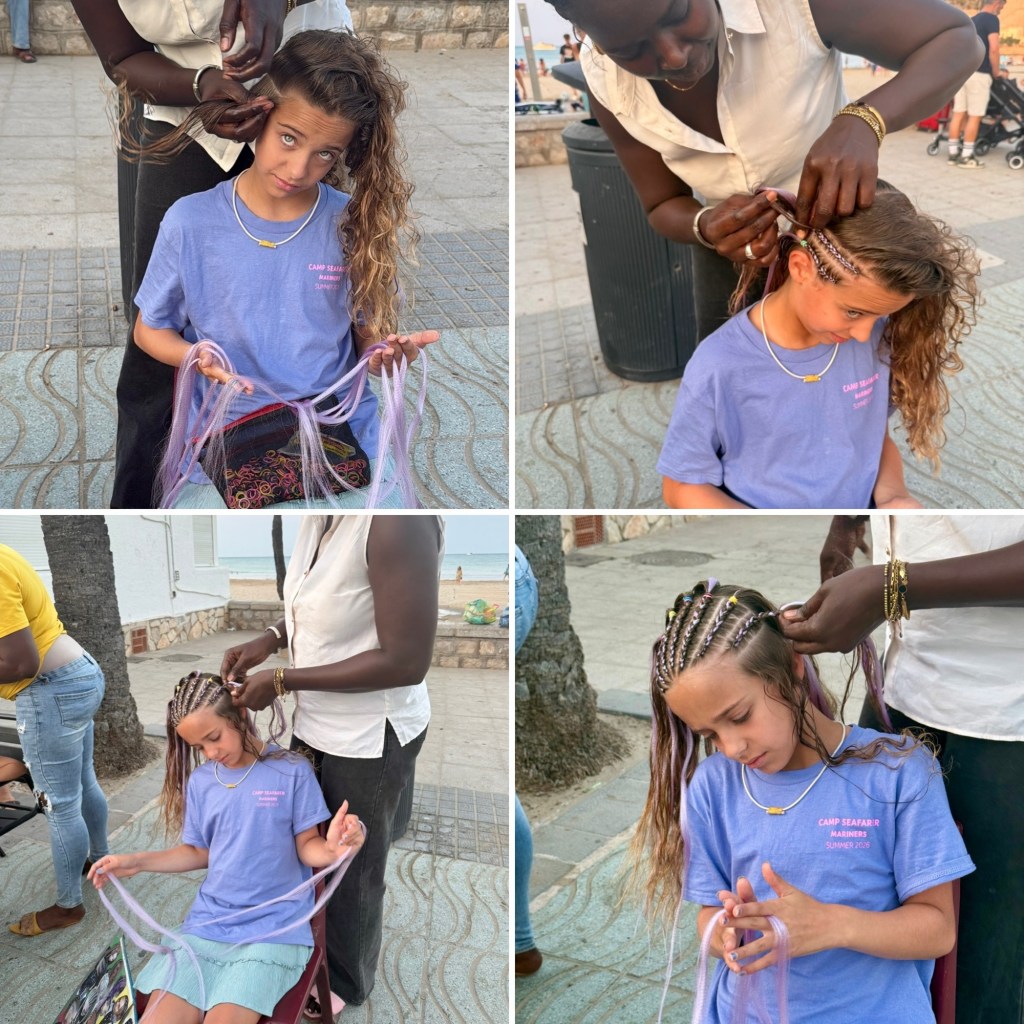
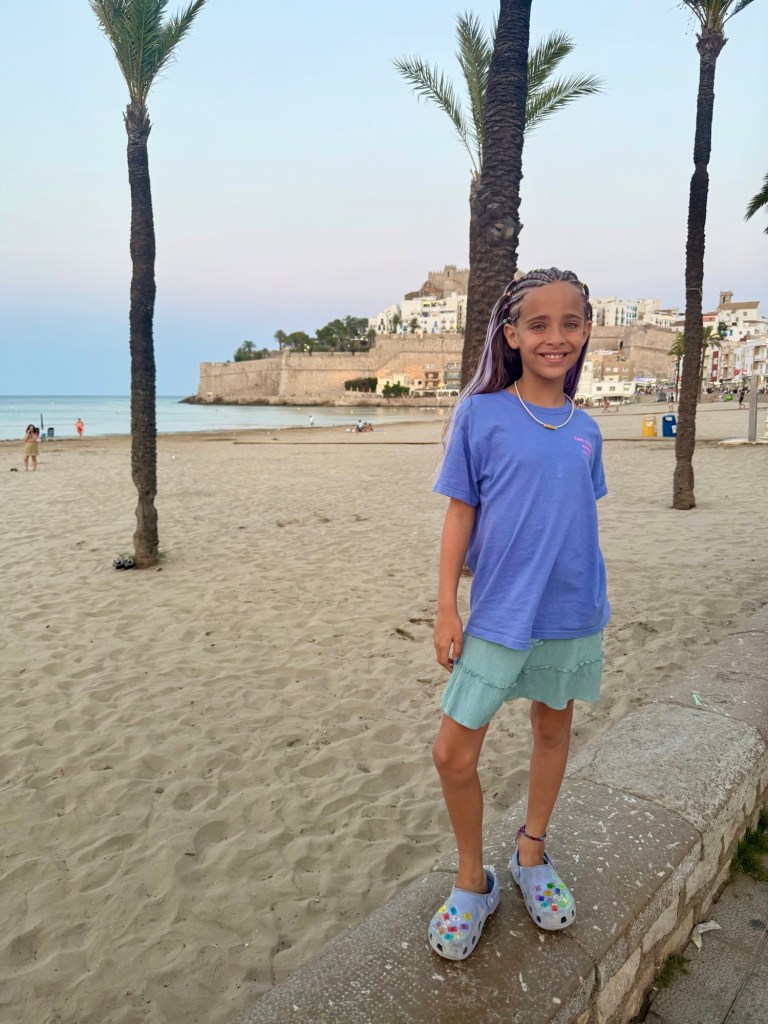
Later, #1BigSister and I wandered through town in search of souvenirs for friends back home. We also found someone to braid her hair after passing one stand with a very long wait. She chose light purple extensions inspired by Rumi from K-Pop Demon Hunters, decorated with colorful rubber bands. I told her she looked like an Egyptian version of Rumi, and she couldn’t have been happier.

35€ and 25 minutes

When we returned to the house, everyone else had ordered Chinese takeout for dinner. Between the generous lunch and our afternoon gelato, I managed only a vegetable egg roll before beginning the less glamorous task of packing for tomorrow’s journey.

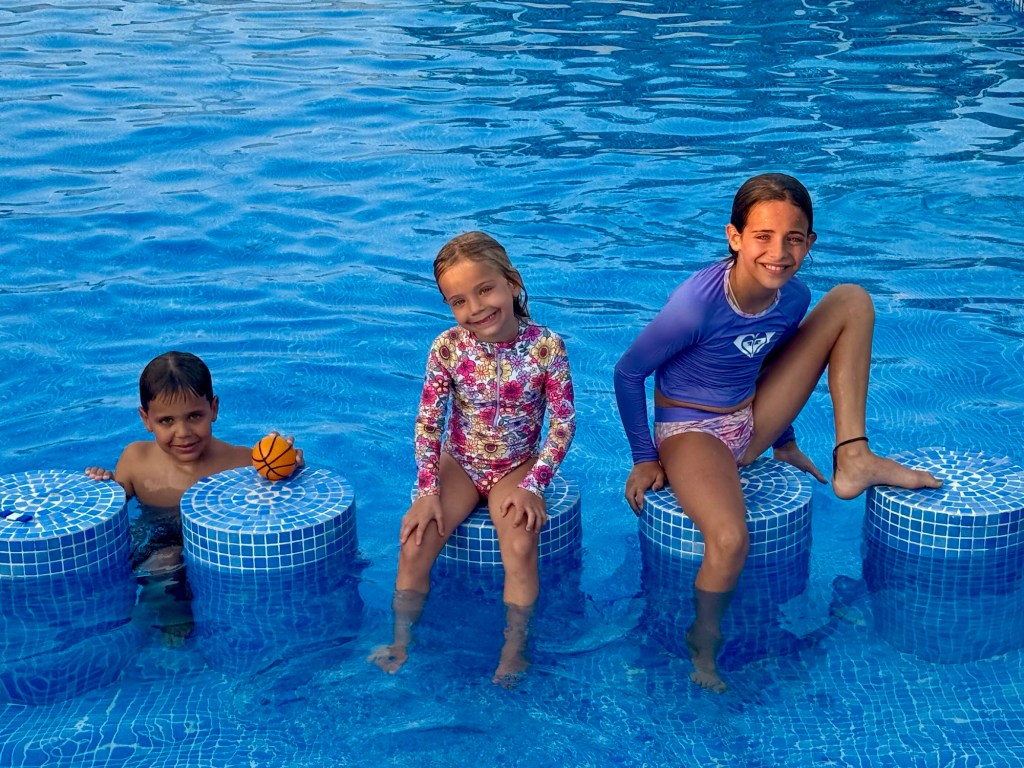
We’ll miss this wonderful pool

In the morning we’ll leave Peñíscola, drive back to Barcelona, fly to Geneva, Switzerland, and then make the two-hour drive into the mountains to our chalet. It will be a completely different chapter of this adventure.

The hardest part of today, though, was saying goodbye to Raquel and Jesús. They welcomed us into their home and family with such extraordinary warmth and generosity. This goodbye was especially emotional because they won’t see Lidia again until February, when she returns to Spain after completing her year and a half with us as our au pair.

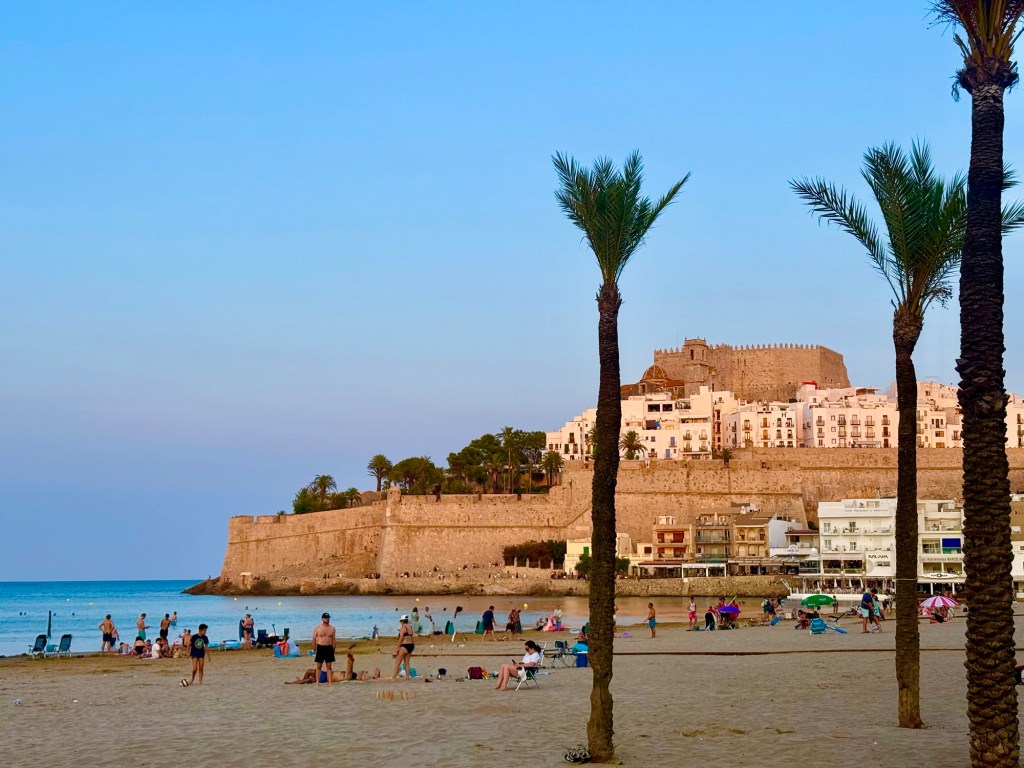
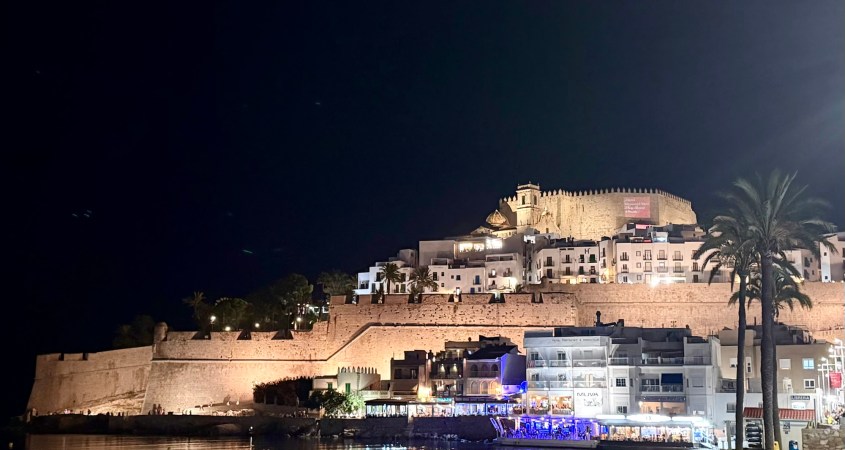
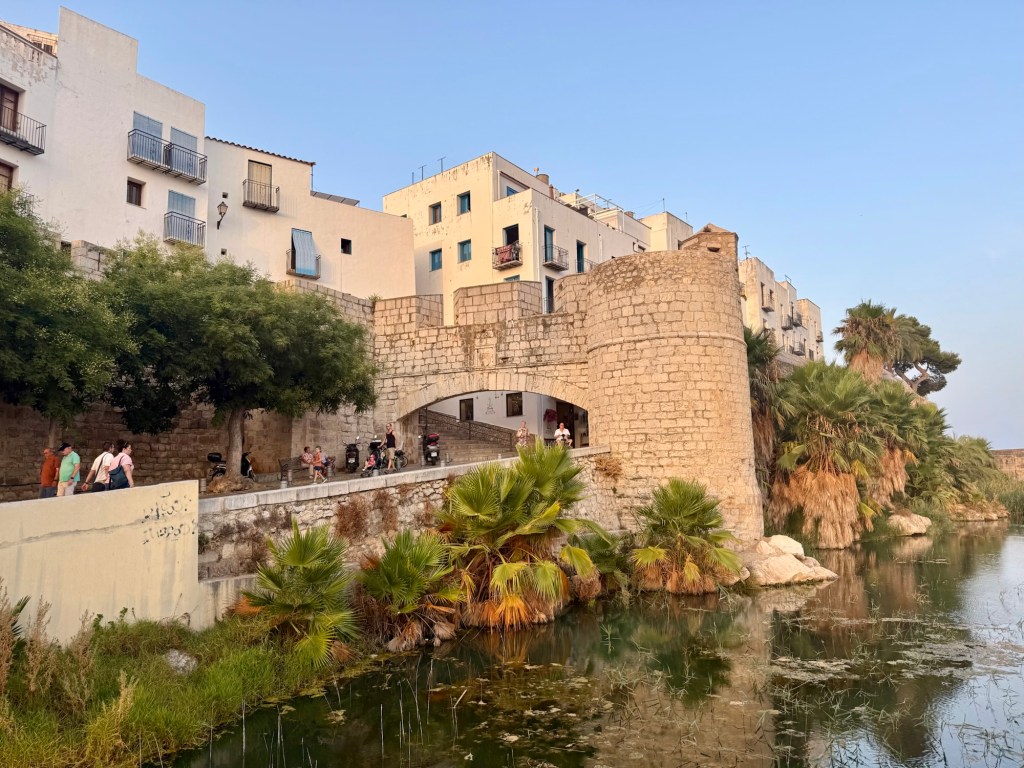
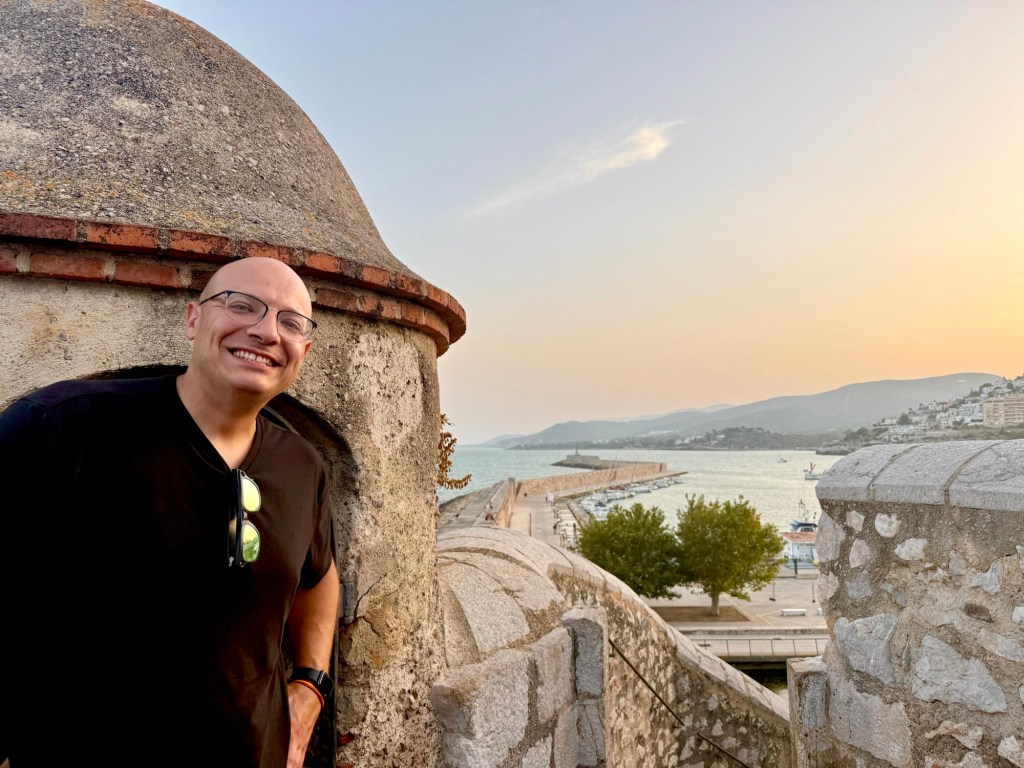
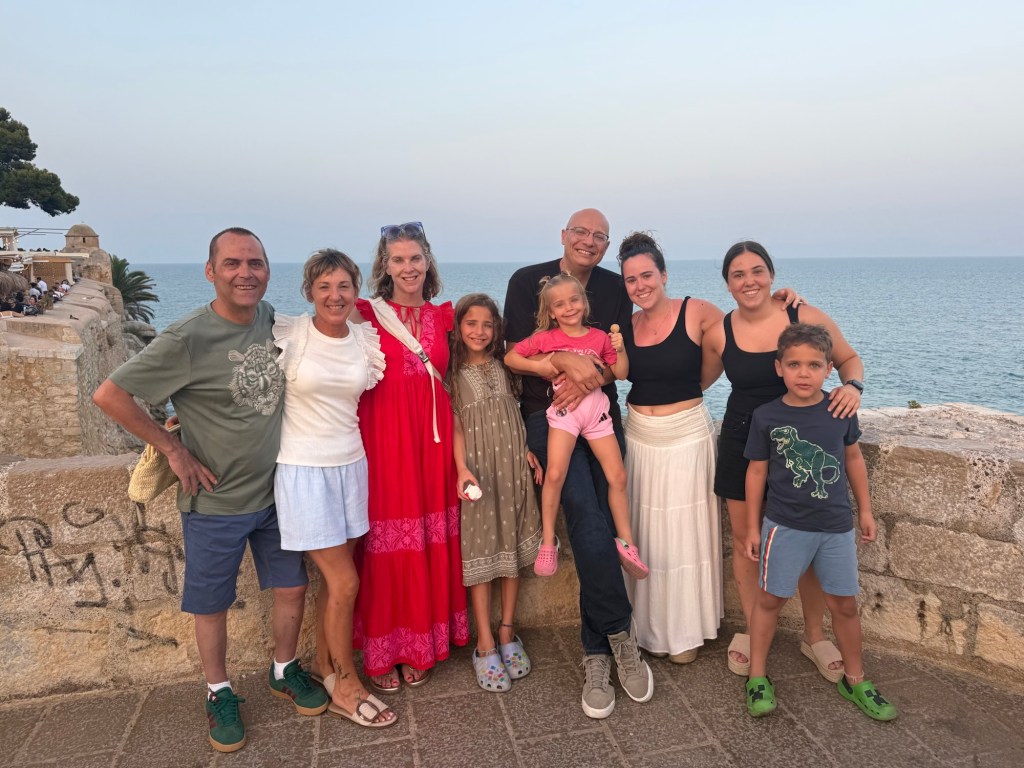
Peñíscola Castle at Sunset

As I zipped my suitcase closed tonight, I found myself reflecting on the past twelve days. The people we met, the meals we shared, the traditions we experienced, and the kindness we were shown have left an impression that will stay with us long after we’ve returned home.

There’s a reason they say, ¡Viva España!

~Steph
Day 11: Aquamotos, Castle Views, and the Best Lunch of the Trip

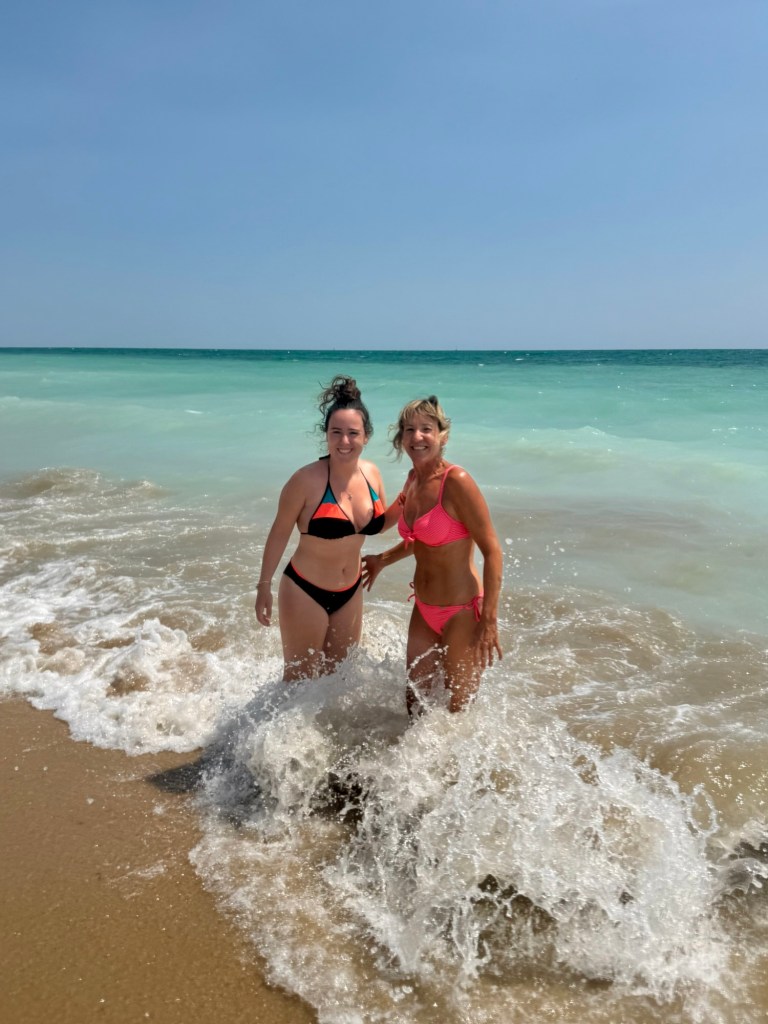
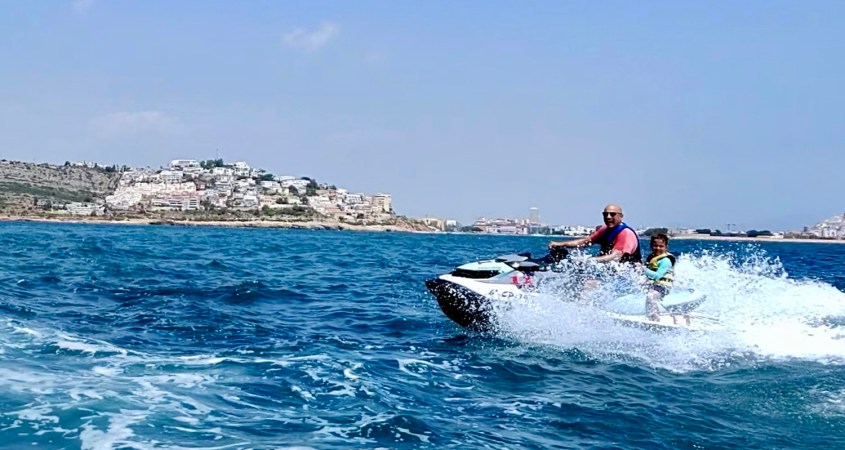
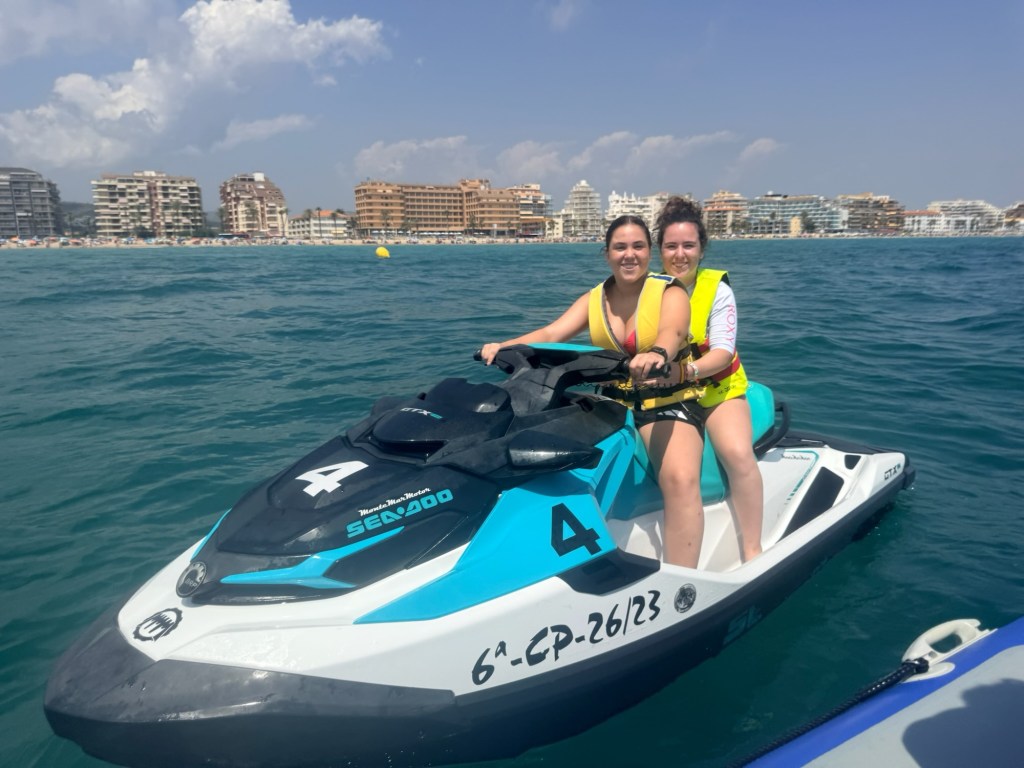
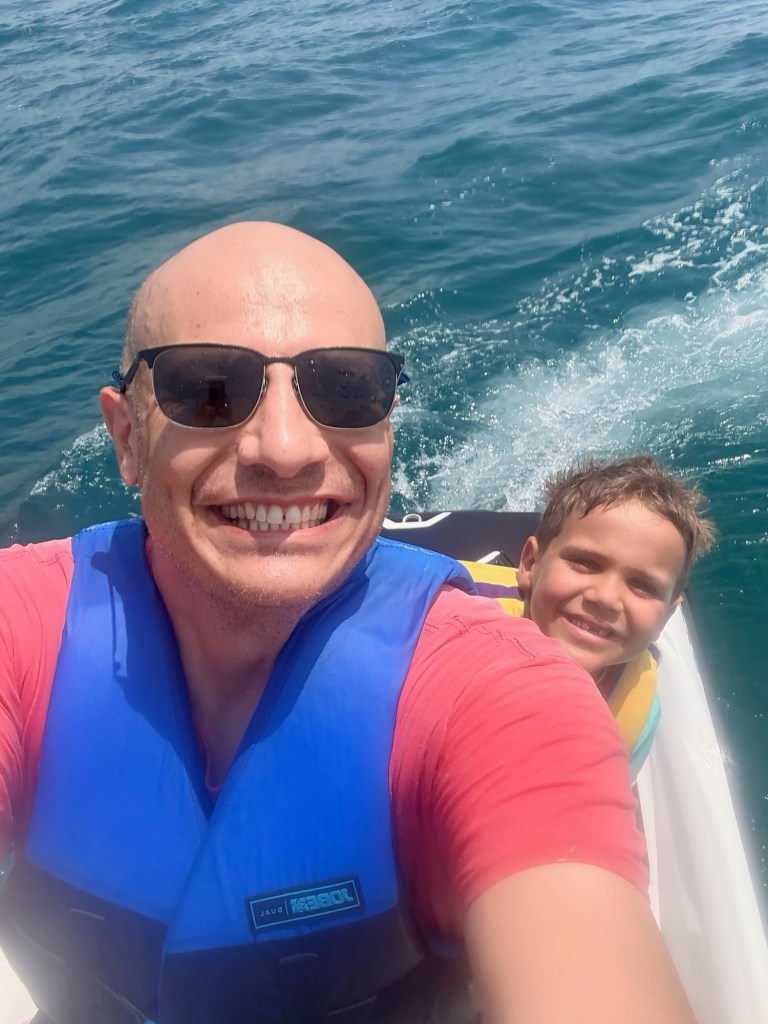
This morning we returned to the beach, but instead of claiming our usual spot in the sand, we traded towels for aquamotos—what we would simply call jet skis back home. Around here they’re also known as “water bikes,” and after today I understand why they’re such a popular way to experience the coastline.

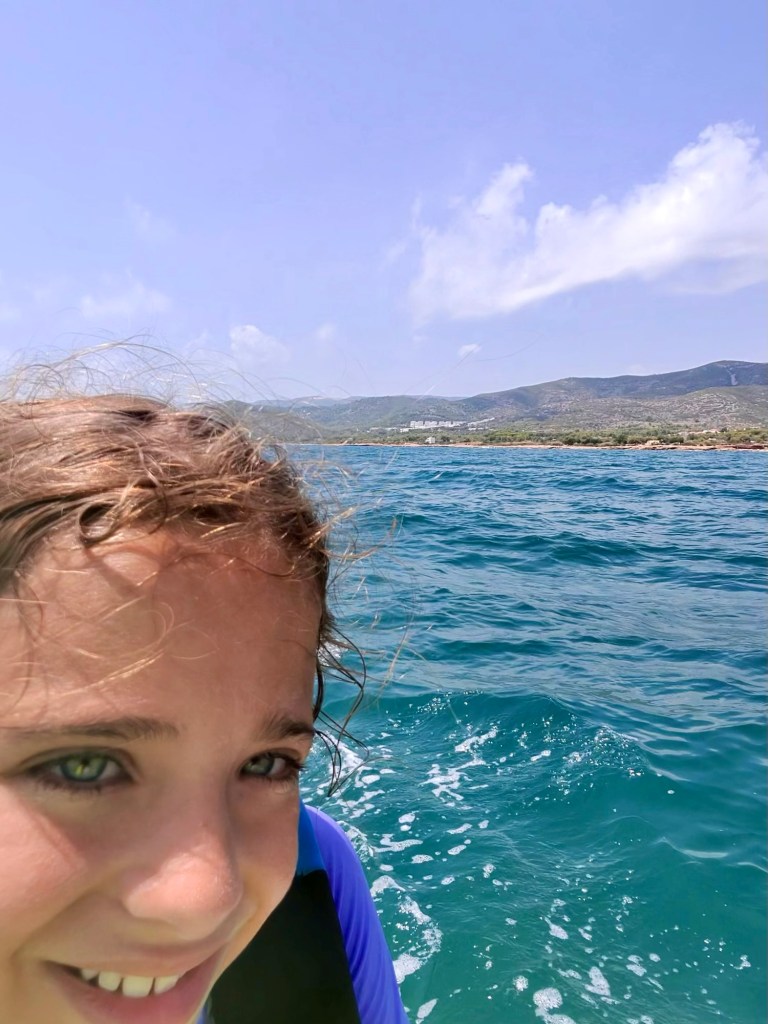
There were six of us altogether. I rode with #1BigSister, Amir paired up with #1BigBrother, and Lidia and Marta climbed onto a jet ski together for their very first ride. They took turns driving and, despite being beginners, had absolutely no fear. Before long they were flying across the Mediterranean faster than the rest of us.

Marta y Lidia

Meanwhile, I discovered that my passenger and I had very different ideas of what constituted a comfortable speed. As soon as we pulled away from shore, she asked me to slow down because my 20 mph felt much too fast. Little by little her confidence grew, and by the end of the ride we were happily skimming across the water at over 40 mph, laughing the whole way.

The thrill of the ride was wonderful, but it wasn’t what made the experience unforgettable.

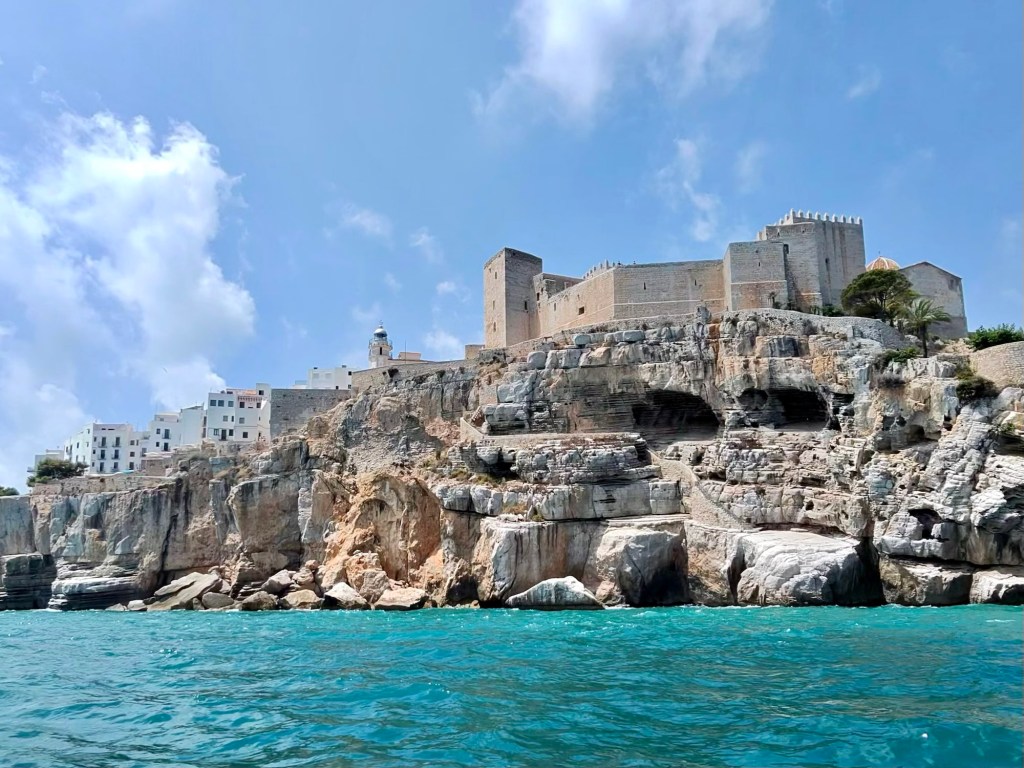
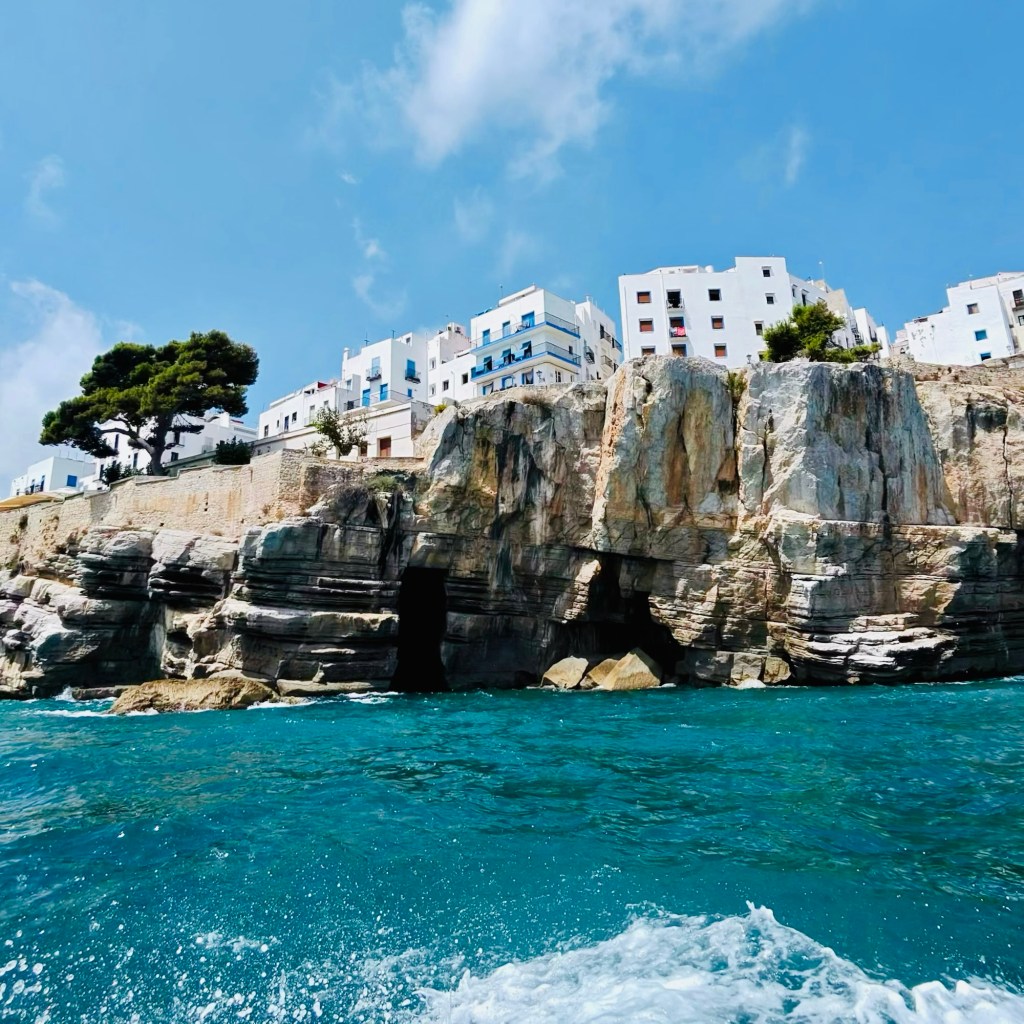
What I hadn’t anticipated was that riding out into the Mediterranean would give us the most spectacular view of Peñíscola Castle imaginable. From the water, the fortress seems to rise directly out of the sea. We circled around the back side of the rocky peninsula, where tourists on foot never venture, passing sea caves carved into the limestone cliffs and quiet stretches of shoreline with no one else around. Seeing the castle from that perspective made me appreciate why this fortress has guarded the coast for centuries.

La Castilla de Peñíscola

I wore my Meta glasses throughout the ride, hoping they might capture a few memorable moments. Given the wind, spray, and constant bouncing over the waves, I wasn’t sure what to expect. To my surprise, the photos and videos turned out beautifully, preserving views that would have been nearly impossible to capture while holding a camera.

Our guide made an already fantastic morning even better. We had booked the aquamotos for 45 minutes, but since no one had reserved the next time slot—and because we had been respectful with the machines—he waved us on and let us continue for nearly another half hour. It felt like an unexpected gift, giving us even more time to explore the coastline.

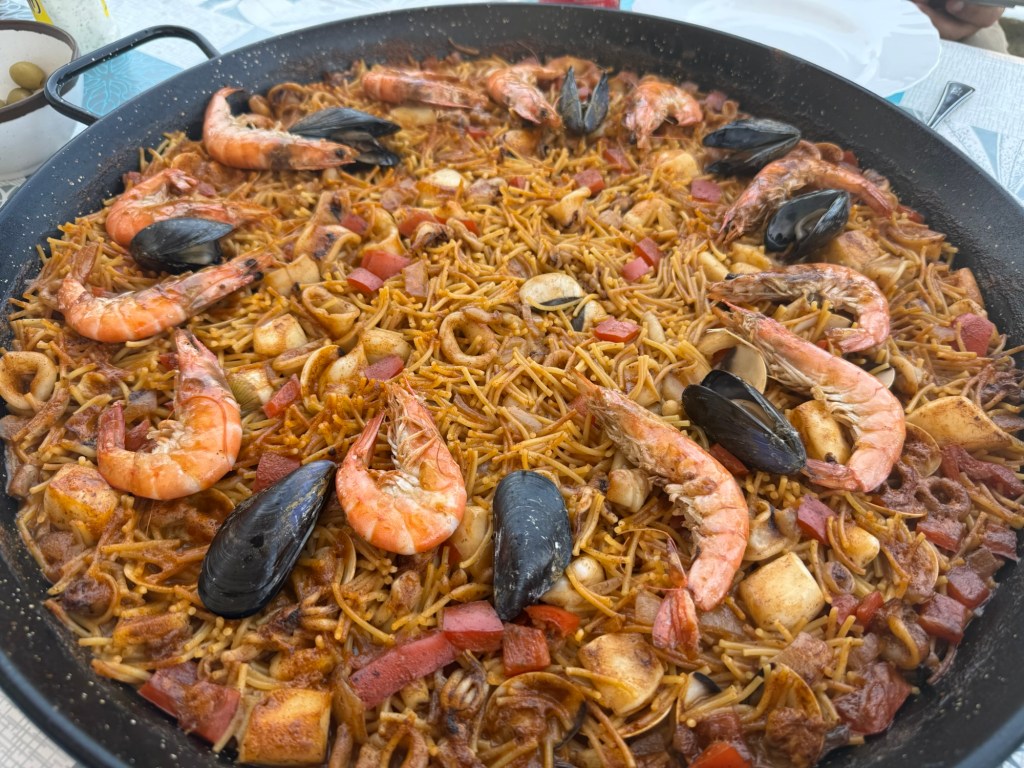
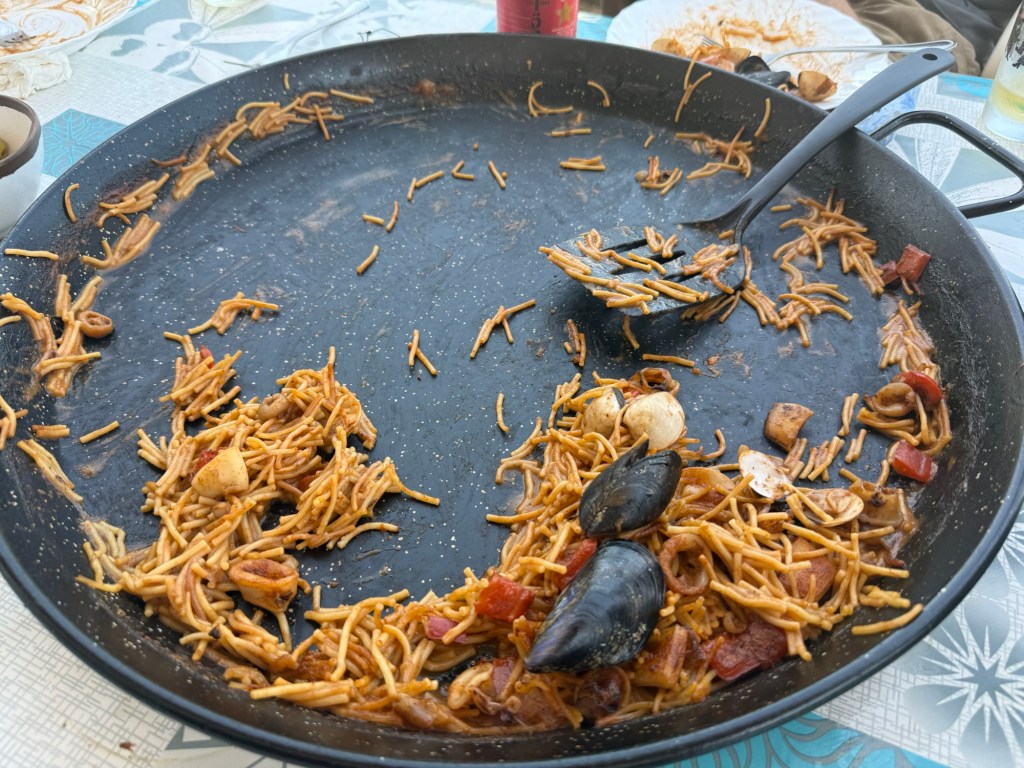
After working up an appetite, we returned for lunch and were introduced to another regional specialty. At first glance it looked like paella, but instead of rice it was made with short pieces of toasted pasta. The dish, called fideuà, shares many of paella’s flavors but has its own wonderful texture, especially with a generous spoonful of creamy garlic aioli stirred in. Served alongside fresh, crusty bread, it may have been one of the best meals I’ve ever eaten.

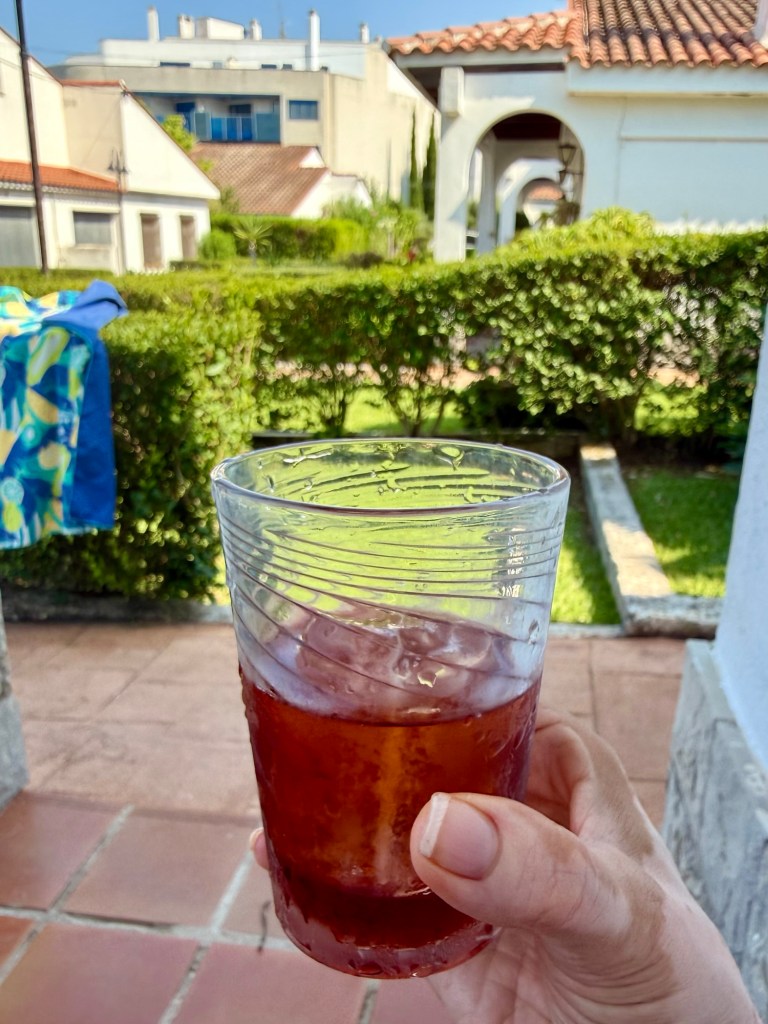
Lunch ended with a small glass of pacharán, a traditional sloe berry liqueur from northern Spain. Here it isn’t simply a drink—it’s part of the rhythm of the meal. Conversations slow down, glasses are raised, and people linger around the table instead of rushing off to the next activity. Like so many customs we’ve experienced in Spain, it reminds us that meals are about far more than food. They’re about spending time together.

Today was one of those rare travel days that seemed to have everything: adventure, breathtaking scenery, unforgettable food, and the simple joy of sharing it all with family and friends.

~Steph
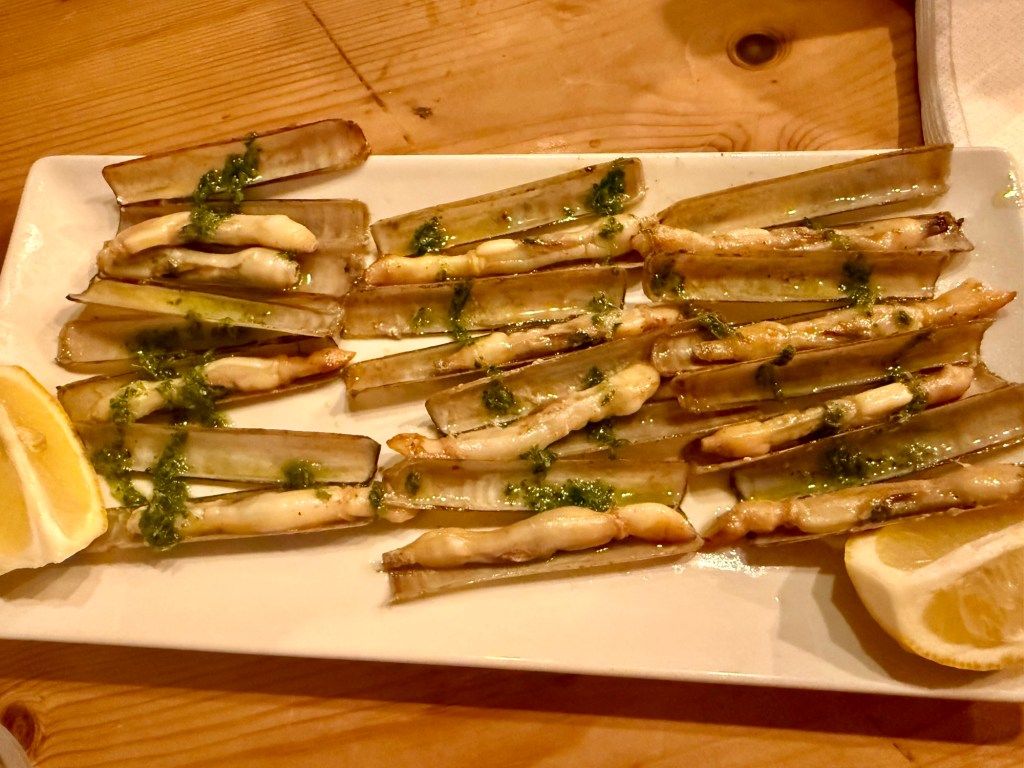
Ps: here’s a little food porn from last night

España Day 10: From the Beach to the Castle to the Waterpark

After an afternoon of splashing in the Mediterranean, racing down the slide on our paddle boat, and soaking up the sun, we made our way back to the casilla. The cool pool was exactly what we needed after a hot day at the beach, and before long, everyone had drifted off for a well-earned Spanish siesta. By now, we’ve learned that the rhythm of life here isn’t just a tradition—it’s survival during the summer heat.

La Castilla Peñíscola

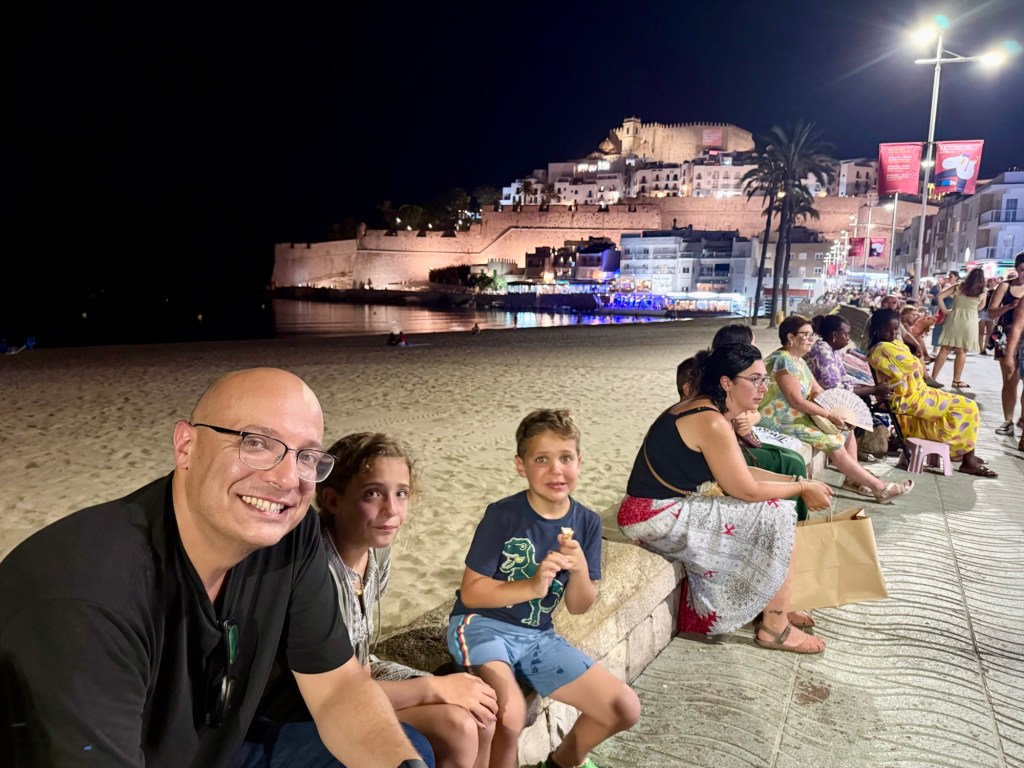
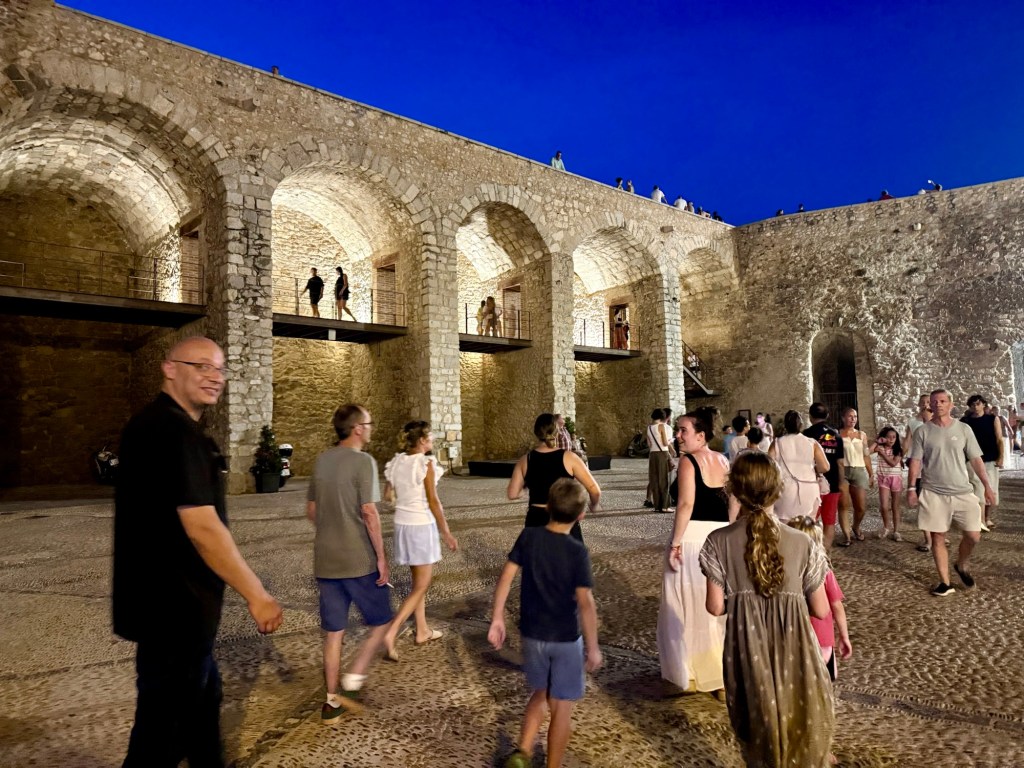
As the evening cooled, we set out on foot toward the crown jewel of Peñíscola: its magnificent castle. Perched high on a rocky peninsula and surrounded by the sea on three sides, the fortress has watched over this coastline for more than 700 years. Originally built by the Knights Templar between 1294 and 1307 on the remains of an earlier Muslim fortress, it later became famous as the home of Pope Benedict XIII—better known as Pope Luna—who continued to claim the papacy from these walls during the Western Schism. Walking through its gates, it felt less like visiting a tourist attraction and more like stepping into a living medieval city.

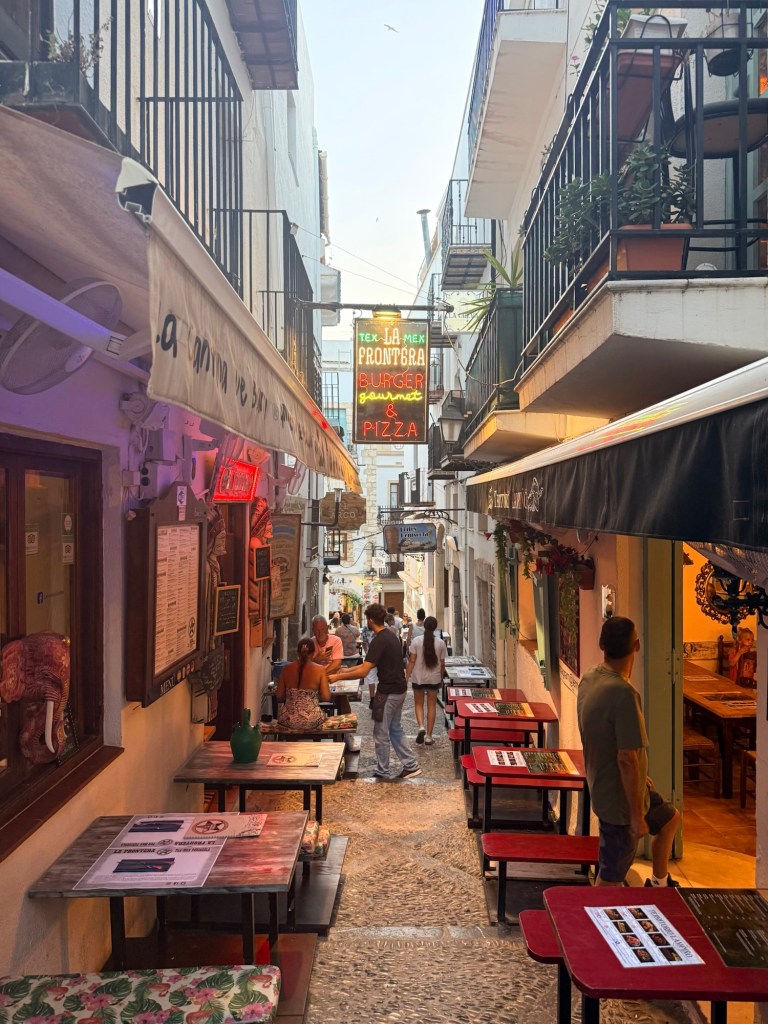
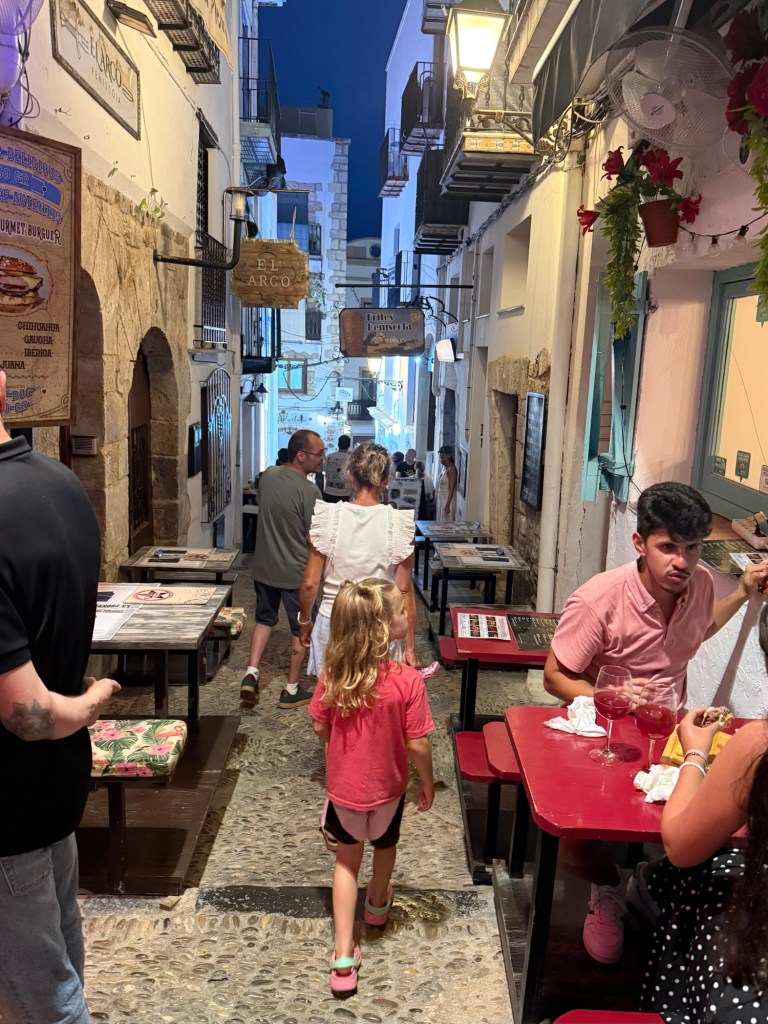
The climb wound through impossibly narrow stone streets, polished smooth and shiny by centuries upon centuries of footsteps. Every uneven stone seemed to tell a story. No cars are allowed within the castle walls—and after seeing the winding alleys for ourselves, it’s obvious they couldn’t fit even if they tried. Every corner opened onto another tiny plaza, flower-filled balcony, or breathtaking glimpse of the Mediterranean below.

Jesús has a friend who owns several restaurants inside the castle walls, so when he heard our party of nine was coming, he directed us to one of his quieter restaurants tucked away from the busiest streets. It felt like discovering a hidden gem. Inside, cured jamón legs hung from the ceiling, and only one other table was occupied, making the evening feel relaxed and intimate.

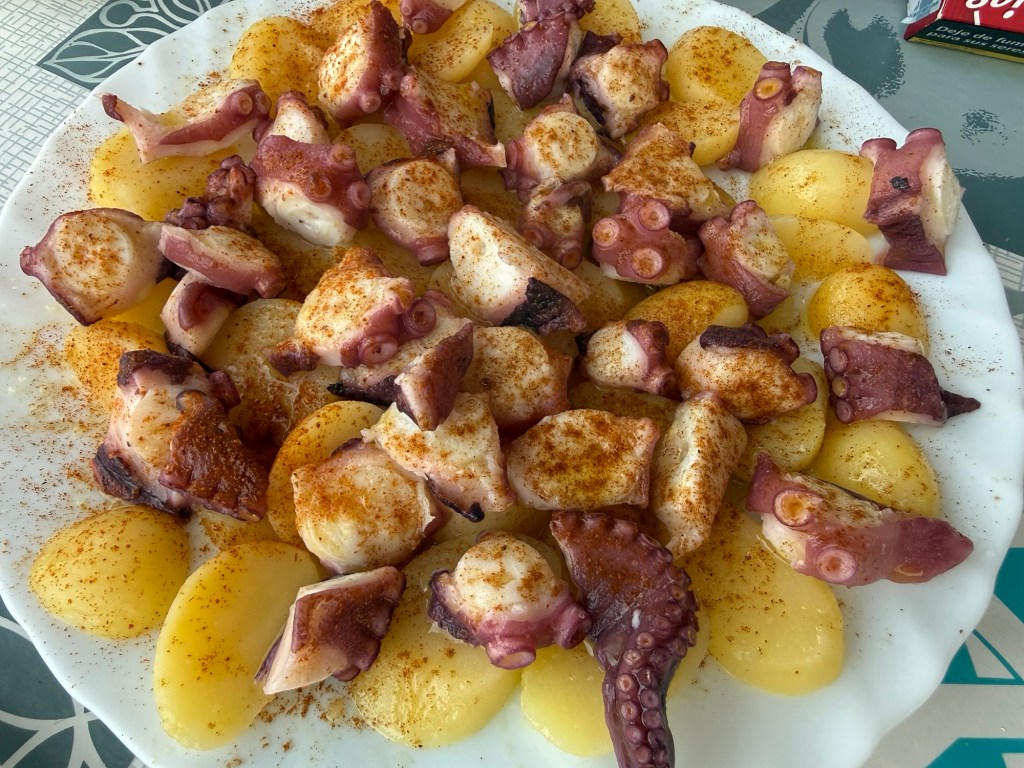
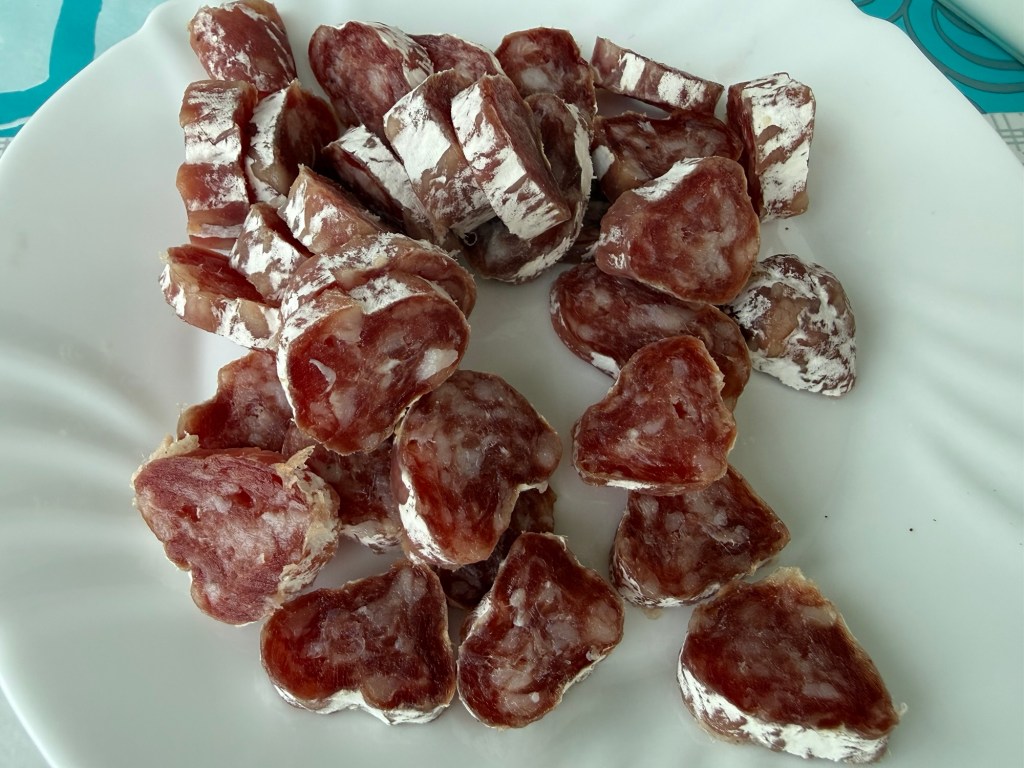
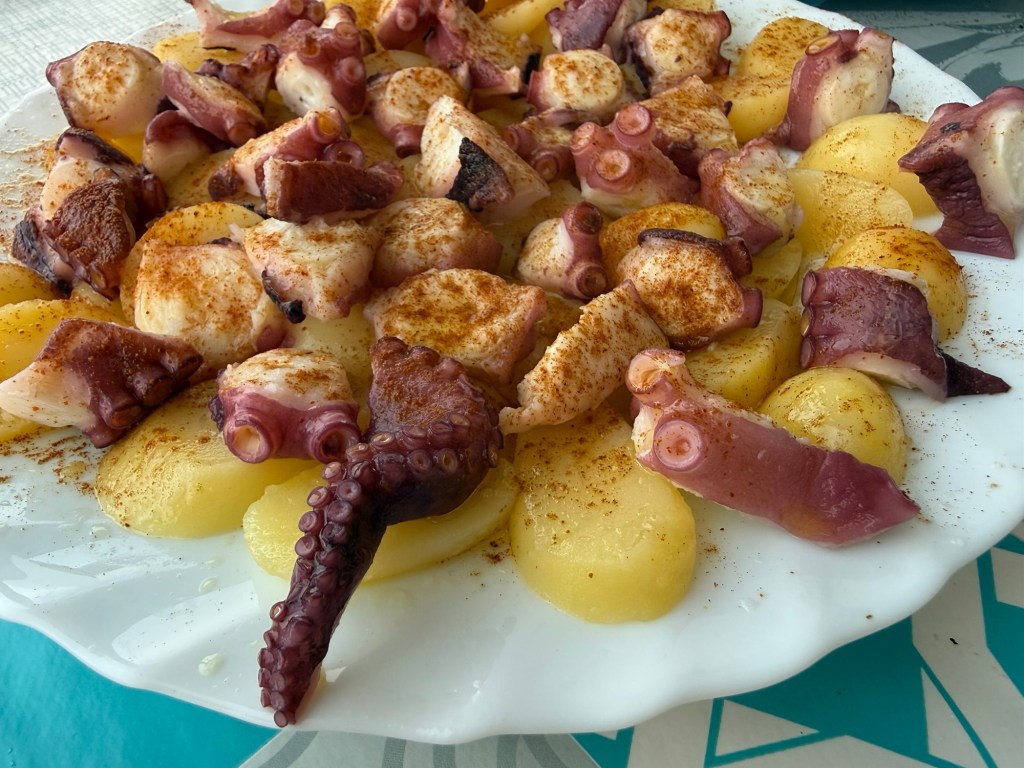
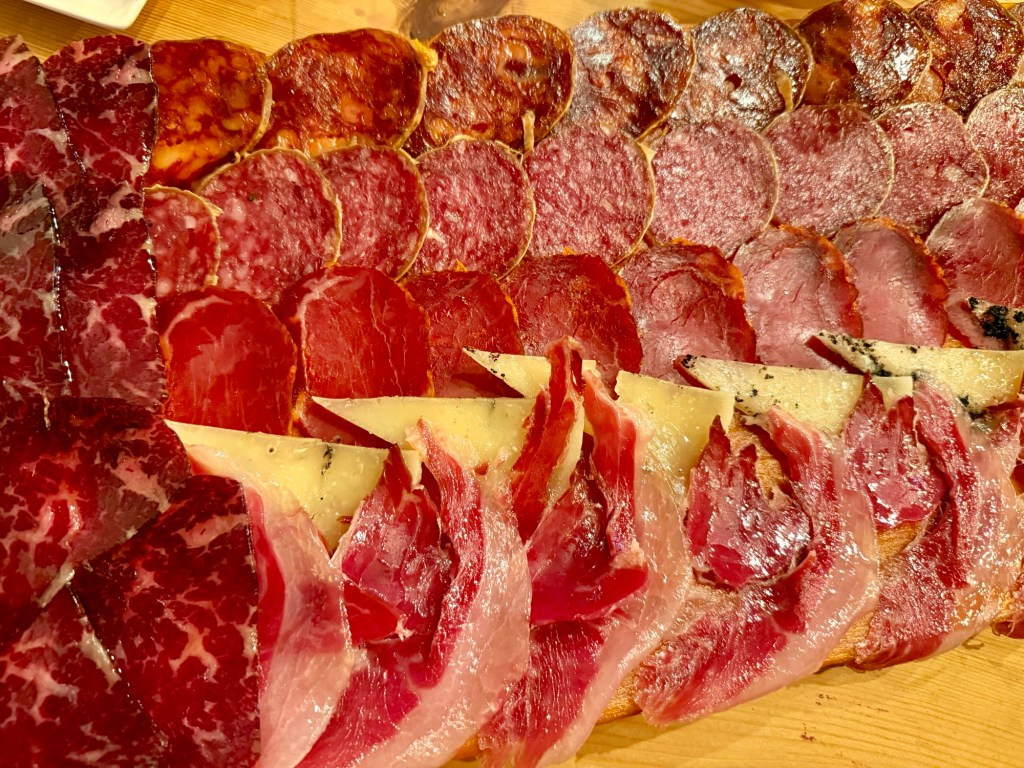
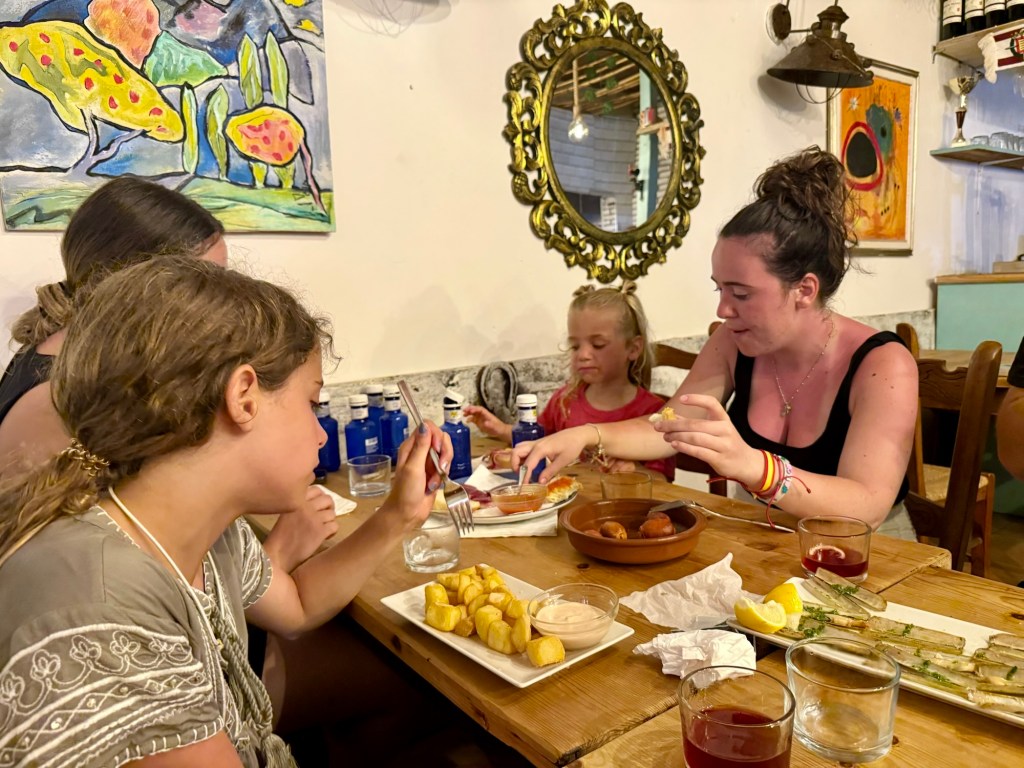
Dinner quickly became one of those meals we’ll remember for years. Plate after plate arrived to share: several varieties of jamón, octopus, squid, and even caballo for the adventurous among us. The unanimous favorite, however, was the crispy patatas bravas, disappearing almost as quickly as they reached the table. A pitcher of sangria completed the experience, and we lingered over dinner, enjoying both the food and the company.

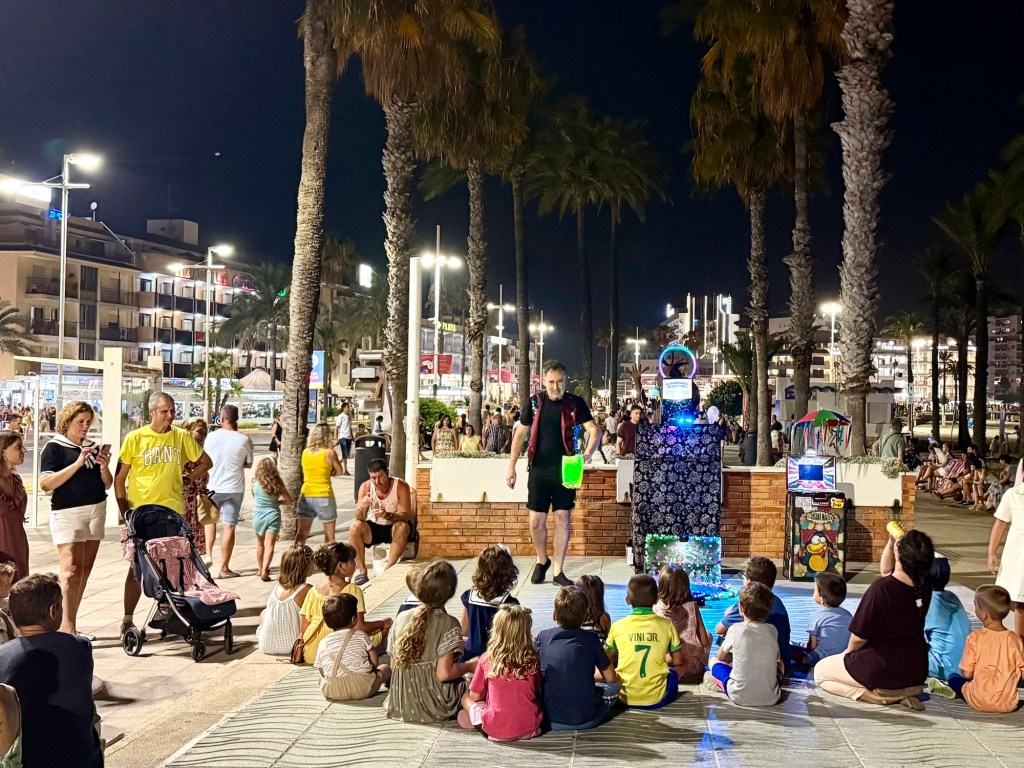
Afterward, we wandered through the illuminated streets of the castle. The children were captivated by a street magician whose tricks drew gasps and laughter, then stumbled upon a charming puppet show that held their attention far longer than we expected. Naturally, the evening ended with what everyone agreed was the best ice cream in town. While the kids happily devoured their cones, the adults settled into a nearby café. Some of us lingered over coffee, while others relaxed with a cerveza or a vodka tonic, soaking in the atmosphere of a medieval fortress that somehow feels just as alive today as it must have centuries ago.

Magician

It was the perfect ending to another unforgettable day in Spain.


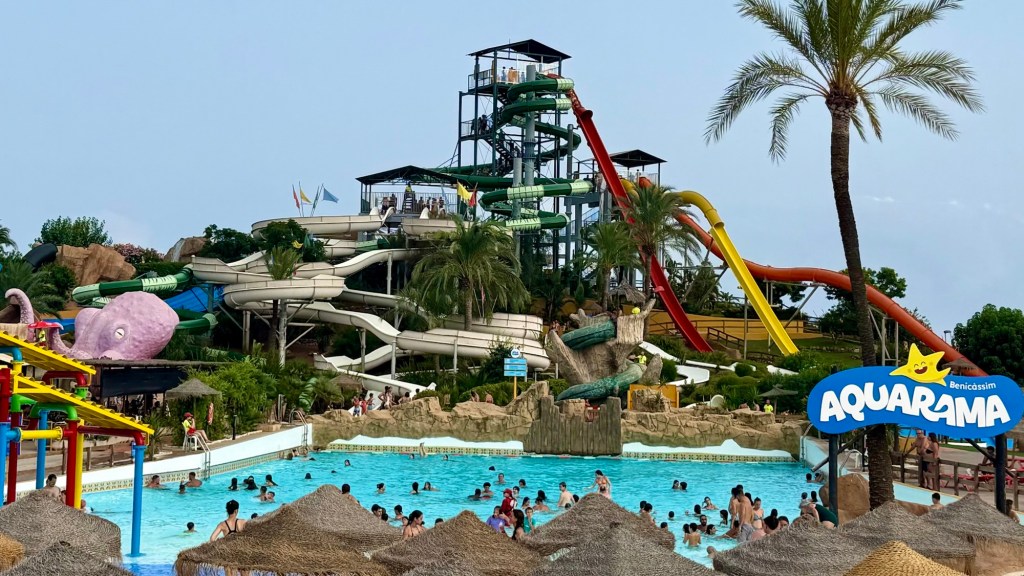
Aquarama Adventure

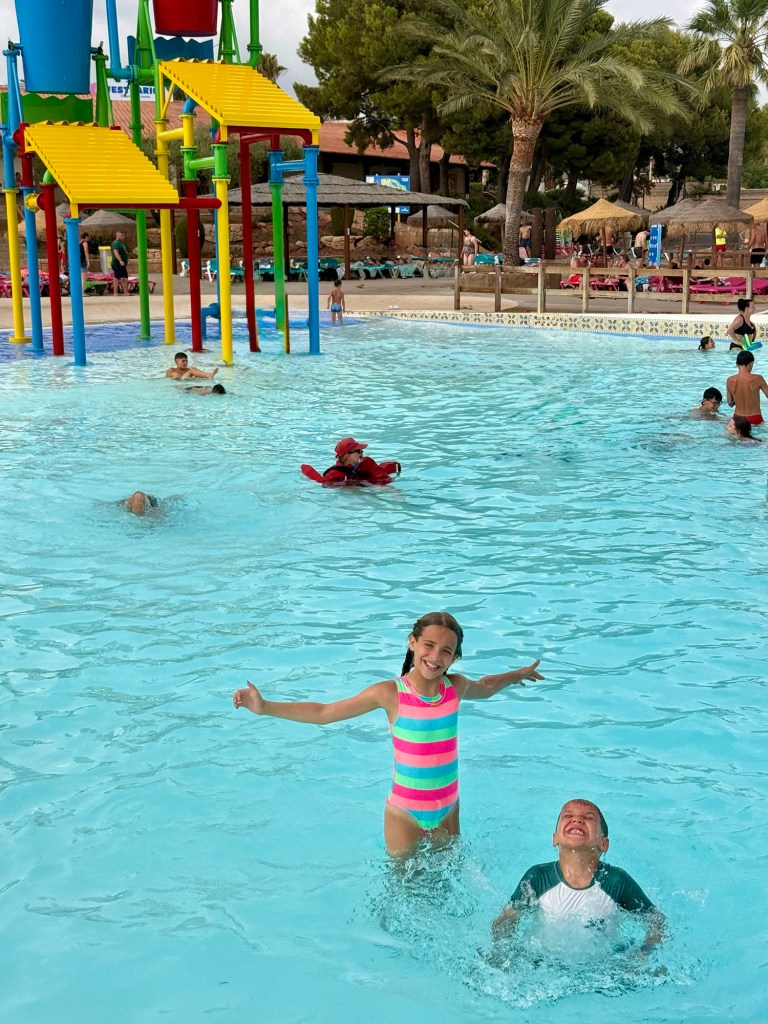
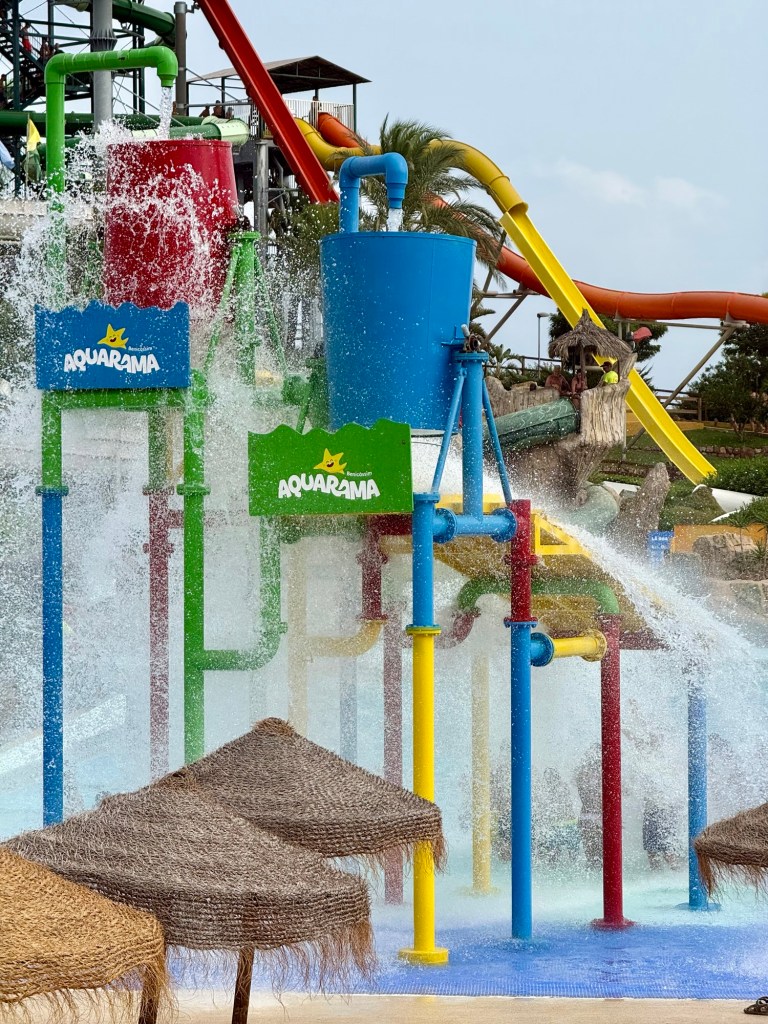
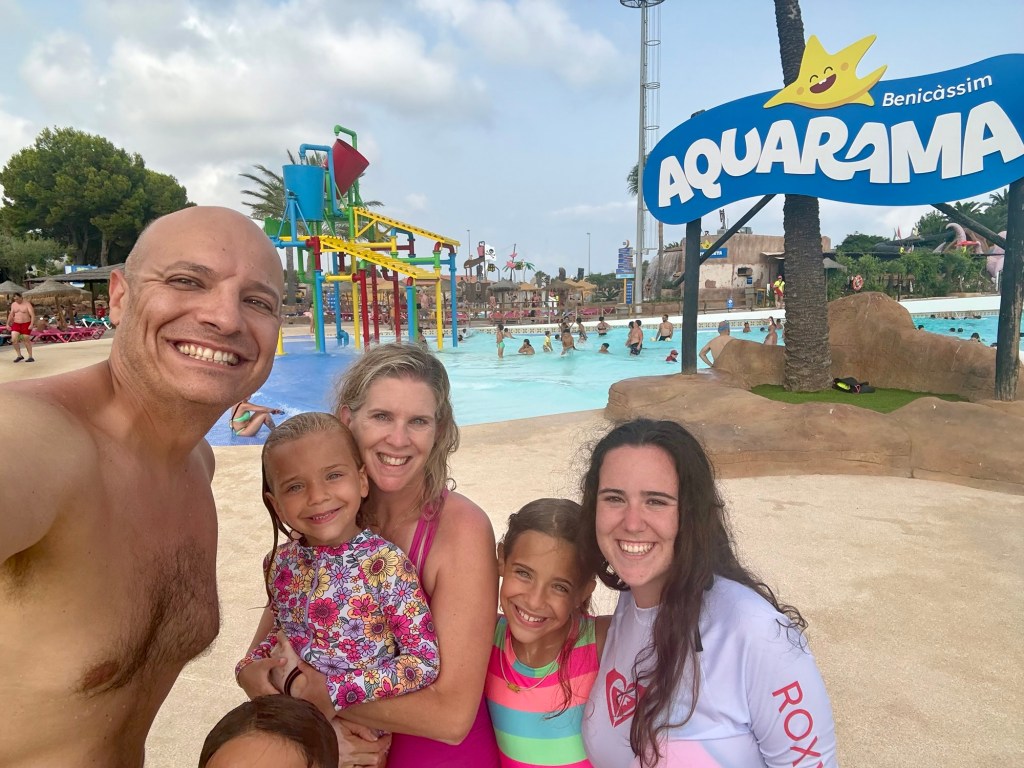
Aquarama turned out to be the perfect-sized waterpark. It had a great variety of slides—tall and short, open and enclosed, gentle and heart-pounding. One thing that really stood out was that they limit the number of tickets sold each day, so the park never felt overcrowded and the lines stayed surprisingly manageable. Lifeguards in fluorescent yellow shirts and bright red shorts were stationed throughout the park, friendly, professional, and bilingual in both Spanish and English.

Aquarama in Benicàssim, Spain

Watching them brought back a flood of memories. Once upon a time, I was a waterpark lifeguard during my college summers. What started as a fun seasonal job with a great social scene unexpectedly became my full-time career after graduating from UVA, when my management consulting job with PwC disappeared as the dot-com bubble burst in 2001. Overnight, many of us with impressive job offers found ourselves scrambling for work as the economy shifted beneath our feet.

Looking back, I’m incredibly grateful that life took that detour. Beyond making lifelong friends and sporting an enviable tan, I grew with the company into a supervisory role. I hired more than 200 seasonal employees each summer, occasionally had to let people go, and learned invaluable lessons about leadership, coaching, and helping people grow. Those experiences shaped me in ways I never could have imagined, and I still rely on those skills every day as an emergency physician. I’m especially glad I ignored the well-meaning people who insisted I needed a “traditional” internship. Lifeguarding wasn’t a backup plan—it became a foundation for the physician and leader I am today.

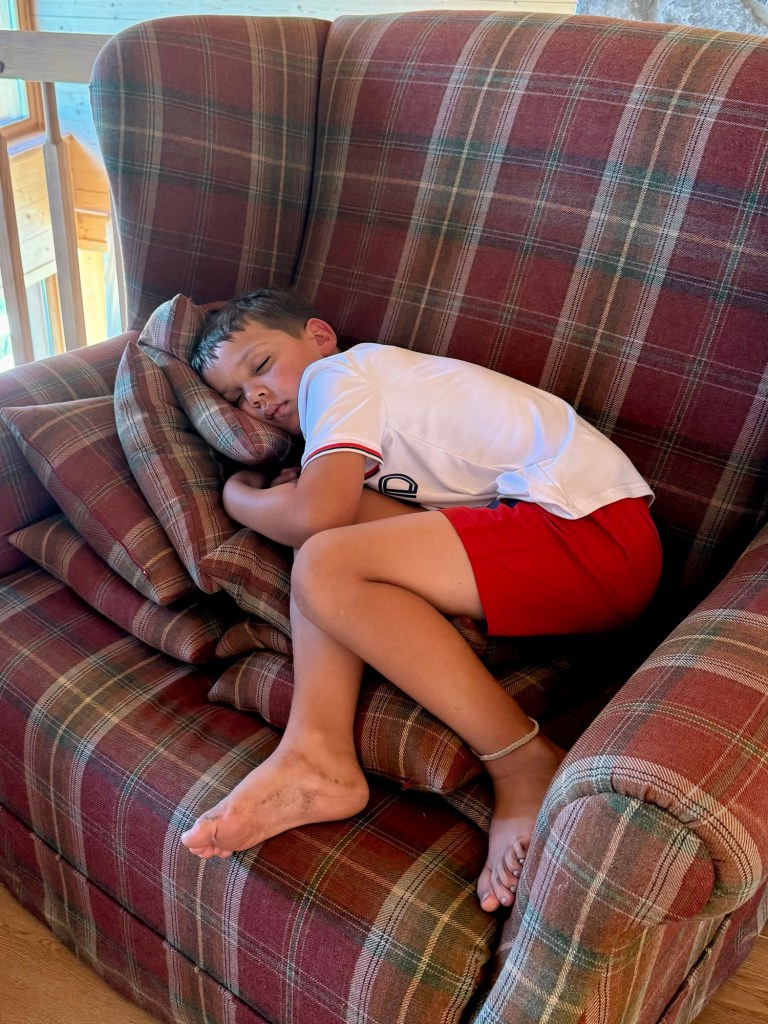
Six hours of swimming, climbing stairs, and racing down slides left our entire crew completely exhausted. Before leaving, we each ordered a gofrula—a freshly made waffle topped with your choice of chocolate, caramel, jam, whipped cream, or white chocolate. We may have indulged just a little by choosing two toppings each. Mine? White chocolate and caramel.

Now we’re winding our way back to Peñíscola, with three of the six passengers already fast asleep before we’ve even reached the highway. It feels like the perfect ending to another unforgettable day in Spain.

~Steph
Sorry #1BigBrother!