
Category: Emergency Medicine

Rwanda Day 1: Getting there is half the fun!

Jan 20, 2018

Coordinating the safe and timely travel of 2 physicians, 2 paramedics/RNs and 1 Rotarian from 2 different states and 3 different cities is no small undertaking. In addition to personnel, we had the added challenge of getting 300+ pounds worth of medical training equipment including CPR mannequins, needle decompression trainers and oxygen bottles to Rwanda with us. We found out about 4 weeks before we were to fly that these things aren’t readily available for purchase where we are headed.

We are going to Kigali, the capital of Rwanda, to teach. Our mission is to help build and solidify a formal EMS system with top-notch Prehospital trauma care. Ambulances in Kigali are currently operated by SAMU, but the providers are nurses rather than Paramedics or EMTs. That’s because there are no formal EMS certifications or programs there. Our aim is to provide the current workforce with prehospital-specific trauma training to improve provider safety. 50% of all EMS calls in Kigali are for motor vehicle collisions (MVCs). MVC trauma is a major cause of morbidity and mortality across Rwanda.

We carpooled from Richmond to Dulles. Basil, the creator of the Trauma Course content, was kind enough to offer up his Ford Explorer. More challenging than the traffic on I-95 though, were the back seat drivers offering our opinions on the best route. Dr. Sudha, a Trauma Surgeon and myself, an Emergency Physician – we are accustomed to being the pilots.

Fortunately the traffic gods showed us mercy, and we arrived at Dulles slightly ahead of schedule. The next challenge – get the 300+ lbs of luggage and equipment from the Explorer into the international terminal. It didn’t take long for the bellcap to notice me struggling to hoist a gigantic red backpack onto my back while desperately reaching for my rollerbag that was attempting to escape into traffic. He hurried towards us with his cart and began stacking our ridiculous assemblage of oversized bags. I can only imagine what he thought of us – between the bags marked “adult/child/infant” and “torso,” he must have thought we were body smugglers or really bad parents.

Inside the terminal, he unloaded our bags. I reached for some cash, knowing I was one of the few of us with smaller bills. In our pre-trip prep, Sudha advised us ahead of time to get $100 bills from the bank. In Rwanda, the larger the bill, the higher the exchange rate. I handed him the money and was met with a confused look. “Not enough, I said?” feeling confused and bordering on embarrassed. He mumbled something unintelligible but his face told me it wasn’t good. Frank, the Rotarian accompanying us on the trip, quickly slipped him more cash, which seemed to placate him as he then scurried away.

I have Dr. Sudha to thank for the opportunity to be on this trip. She’s a fellowship trained Trauma Surgeon with a focus on International Medicine. She and I have worked together for over three years in the Emergency Department at VCU taking care of trauma patients who suffer accidents and injuries throughout Central Virginia. She first travelled to Rwanda 7 years ago during her fellowship and has since made over 20 separate trips. (I get the sense she just stopped counting at some point). In October 2017, she was awarded 3 grants totaling over $700,000, one of which was from Rotary International; hence Frank’s presence with us on the trip. If you know her, you understand why she was trusted with so much money. She’s just impressive.

The 5th person travelling with us is Jane. A nurse and a volunteer paramedic in Deltaville, VA, Jane worked at VCU for years in multiple capacities. Over time, she’s carved out a niche in International EMS, so she was an obvious choice for the team.
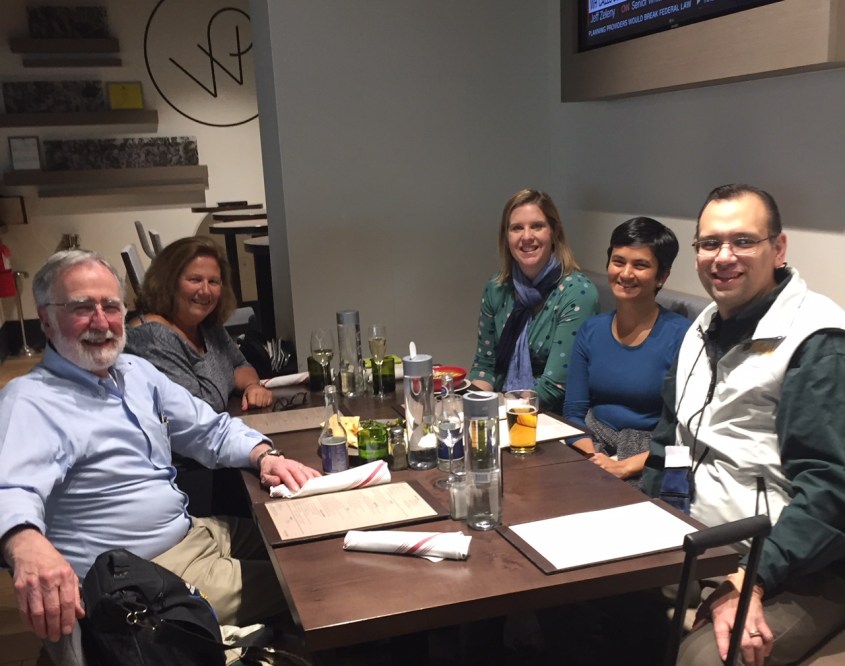
IMG_3265
Frank, Jane, Stephanie, Sudha and Basil

At the KLM* counter, we were met with friendliness and curiosity regarding our absurd quantity of baggage. We opted to check the medical equipment and carry-on our personal belongings. We didn’t want to take a gamble on the reliability of baggage transfer from Amsterdam to Kigali and end up with endotracheal tubes but no underwear.

I’ve decided for the privacy of those with me on the trip that I won’t include them from here on out. After all, this is just my perspective, and I don’t want to give the false appearance that I speak for anyone else. I will say I’m with a unique group of people and look forward to getting to know these like-minded folks. At dinner Dr. Sudha asked if we’d rather spend our 2 days off on a safari or at museums. The reflexive and immediate consensus was “SAFARI!” I knew then this was going to be a great trip.

*Bonus points for the free drinks on KLM.


Jan 21, 2018

“Day 2” is a bit of a misnomer. Technically it’s the 21st, but only because we just jumped ahead 6 hours by time zone. That didn’t stop KLM from feeding us breakfast just 1.5 hours after we’d eaten a full dinner.

We landed in Amsterdam without a hiccup. The last time I was in this airport was December of 2002. I’d just spent 5 months living in Spain, taking advanced conversational Spanish classes.   What I didn’t realize then was just what a turn my life would take. I’d gone to Spain for a reset. I’d hit some professional hiccups in my last job and went to Spain, I thought, to do the study abroad I never had the chance to do while at UVA. Yes, I became fluent in Spanish, but I also found myself and my way forward.

What’s amazing about your twenties is the same thing that makes that time very lonely. You’ve left the nest, launched into a wide-open world full of opportunity, choices and possibilities. But you’ve left your nuclear family. And unlike decades prior, your independence isn’t quickly followed by love, marriage and establishment of your own nuclear family. There’s a gap now, a road with thousands of potential turns, each of which could lead to an entirely different life. Endless opportunity can be paralyzing. After standing at that airport, I came home, applied for and landed a job, which resulted in a successful career in Internet Marketing. I also joined my local rescue squad.

The view from the window on this leg of our journey, Amsterdam to Kigali, can be summed up in one word: tan. I finally gave in to my body’s repeated requests and took a 2 hour nap. Since waking up, I’ve seen nothing but desert. I did have a view of a beautiful part of Africa on the plane itself. Wearing a handmade, yellow and green gown with her hair secured tightly in a bright yellow wrap, everyone’s eyes focused on this woman when she appeared at the boarding gate. I looked down at my hold-over maternity pants and Merrill shoes and suddenly felt boorish and underdressed.
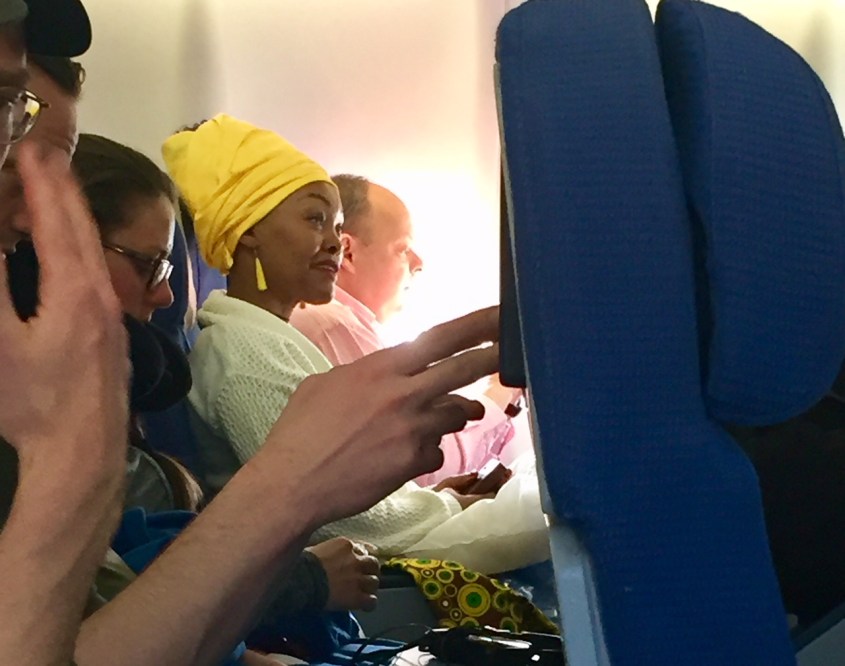
IMG_0492

We arrived on time into Kigali.  I had hoped for daylight as we landed so I could take an aerial survey of the city, but this close to the equator, night overcomes day very quickly,  with sunsets happening in about 10 minutes from daylight to darkness.

We’re staying at the Gloria Hotel , which is just the right combination of nice but not stuffy.  My only regret again is that it’s dark, and I can’t fully appreciate everything the area has to offer.   I’m settling into my room as we have a long day tomorrow spending time in the Emergency Department, on the SAMU ambulance, and hopefully paying our respects at the Genocide Museum

~Steph


Explore more days in Rwanda:

Rwanda Day 2 | Rwanda Day 3 | Rwanda Day 4 | Rwanda Day 5 | Rwanda Day 6 | Rwanda Day 7 | Rwanda Day 8 | Rwanda Day 9 | Rwanda Day 10/11

DIY Traction Splint Trainer for Under $75

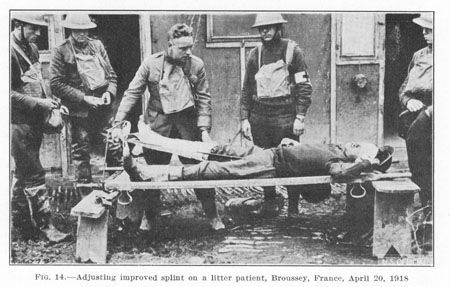
Traction splints have been around since the late 1800s and were first employed during WWI. Given the lack of alternatives and atrocious environment, they were credited with massively lowering the mortality rate of soldiers suffering femur fractures on the battlefield. The idea was simple – take the long, sharp shards of broken bone, which exist within millimeters of the largest artery in the body, and stabilize them to ease pain and help control or prevent massive bleeding.

http://www.haretractionsplint.com/history-of-traction-splinting/

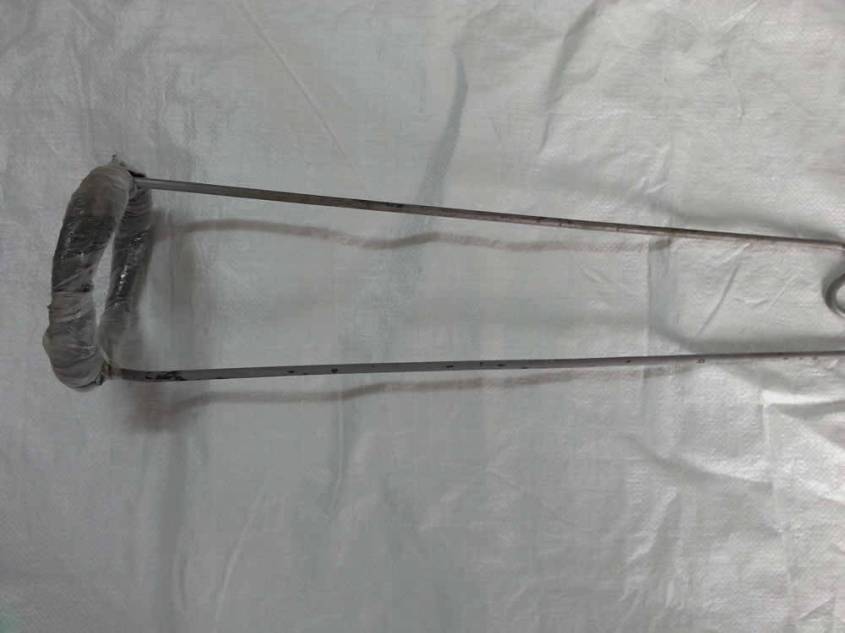
A century later, little has changed. There are a few basic flavors, but all have the essentially the same design of a long rod that runs against the affected leg and something which with to pull tension upon and secure the foot or ankle. Despite a lack of continued innovation and even less in the way of empiric research, an almost identical device to that which made its debut with the British Army in 1915 is required aboard every ground ambulance in the country. And almost every one of them resides in a cabinet or under a bench, forgotten and ignored until the biennial state inspection rolls around.

thomas-splint-1
The “Thomas Splint,” c. 1915

All EMTs are taught the procedure for applying a traction splint, but too often it is done in the classroom then never again. In my own experience of almost a decade of EMS, I have had the opportunity to apply one only once. As an ER physician for the last three years at the largest, busiest trauma center in Virginia, I have yet to have a patient arrive with one in place. My theory is that providers often do not consider it when appropriate, and even when they do their familiarity and comfort with the procedure is lacking, so it is skipped. In fact, one study found them to be applied in only 38% of appropriate cases and of those, 2/3 were placed incorrectly.

In other words, if you happen to break your leg, there is only about a 13% chance someone will correctly stabilize that razor sharp bone jostling against your femoral artery while you bump along to the hospital.

Since accurately practicing the procedure without crippling and otherwise healthy recruit is difficult, I looked up available traction splint training models. They cost around $1800, and are full of unnecessary bells and whistles, well beyond the means of many small EMS agencies. So I took matters into my own hands and created a rugged, reliable, anatomically and physiologically accurate model for less than $75. I’m offering it here, open sourced, to anyone who may want to replicate it for his or her training department.

You will need:

  1. A plastic store mannequin 
  2. Rubber exercise bands 
  3. Duct tape
  4. 2’ of 1 ½” PVC pipe
  5. Long, zip ties, x4

Tools:

  1. Standard drill
  2. Manual or electric saw
  3. Measuring tape

How to:

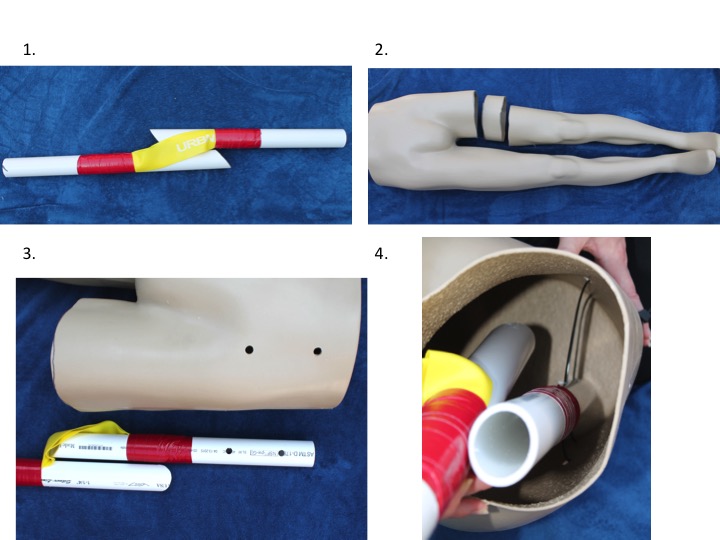
  1. Rubber exercise bands were stretched along the length of a two foot long section of 1 ½” PVC pipe, using duct tape to secure either end. The pipe was then cut diagonally in the middle, simulating a fractured bone.
  2. A six-inch section of the mannequin’s thigh was removed.
  3. Matching holes were drilled in the proximal and distal sections of the “broken femur” and the mannequin leg.
  4. The simulated bone was inserted and secured at both ends with long zip ties passed through the holes.

slide1-1

At rest, the proximal and distal segments of the mannequin leg fit together, accurately simulating the shortened extremity one would expect with such an injury. The exercise bands create a physiologic level of tension, and the leg can be pulled to length and stabilized using any commercially available traction splint. At length, the gap created allows the learner to visualize the physiology of the injury and intended function of the device.

screen-shot-2017-01-24-at-7-19-48-pm

If you do make one, please post a comment and let us know how it turned out!

~Amir

img_3146
VCU Health Research Day  |  June 2, 2017

(The concept for this model was presented at the National Association of EMS Physicians annual conference in New Orleans, LA as an educational innovation on Jan. 24, 2017).

  1. American College of Surgeons (2009). Equipment for Ambulances. https://www.facs.org/~/media/files/qualityprograms/trauma/publications/ambulance.ashx
  2. American College of Surgeons (2012). Chapter 8 Musculoskeletal Trauma. Advanced Trauma Life Support Student Manual.  219-220
  3. Abarbanell, N. (2001) Prehospital Midthigh Trauma and Traction Splint Use: Recommendations for Treatment Protocols. American Journal of Emergency Medicine. 19 (2). 137-140.
  4. Skelton MB and NE McSwain (1997). A Study of Cognitive and Technical Skill Deterioration Among Trained Paramedics. Journal of the American College of Emergency Physicians. 6 (10). 436-438.
  5. Daughtery, M., Mehlman, C., Moody, S., LeMaster, T., & Falcone, R. (2013) Significant Rate of Misuse of the Hare Traction Splint for Children with Femoral Shaft Fractures. Journal of Emergency Nursing. 39. 97-103.

EpiPen cost soars 400%: Implications for EMS and the ED

I had a patient last week brought into the Pediatric ED for an allergic reaction. The child had known allergies, and by the EMR, had been prescribed an EpiPen by the Pediatrician – but mom said she didn’t have one at home to use. “We have insurance, but when I tried to fill the prescription, they wanted $620! I just can’t afford that,” she apologetically told me. I sat there in disbelief, assuming she had crappy insurance.

Flash forward three days later when the news hits the mainstream media:

“EpiPen price hike has parents of kids with allergies scrambling”

“Why did Mylan hike EpiPen prices 400%? Because they could”


Prehospital Implications

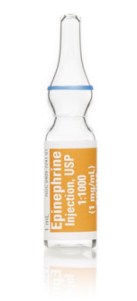
AEMTs and Paramedics, better check that drug box twice for your 1:1000 epi vials because you’ll be using them more often for anaphylaxis as parents and patients increasingly forgo the EpiPen. With a $400-$650 price tag (with insurance), and a 1 year expiration date, can you blame them? I certainly don’t.  So brush up on your local protocols, and stay vigilant. For a good review on anaphylaxis, check out this post.

0011445_01


Emergency Department (ED) Implications

As with prehospital providers, we too need to be ready with the IM epinephrine.  It’s always been recommended after EpiPen administration for patients to come to the ED  to be observed for 4-6 hours in case they need a redose of epinephrine.  As patients increasingly skip that first dose, we should expect more potential for respiratory distress and need for difficult airway management.


EpiPen Alternative

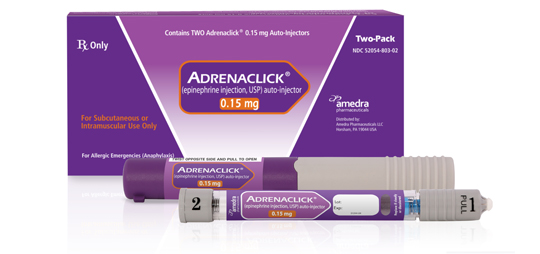
Thanks to the Facebook Group EM Docs, I learned of AdrenaClick, a reasonable alternative we can prescribe for patients with severe allergies.  The mechanism of delivery is slightly different than the EpiPen (two caps to remove instead of one), but given that it’s 1/4 the cost – it’s what I’ll be prescribing moving forward.  AdrenaClick has a good training video on their website with detailed instructions for use.  With a coupon from GoodRx, AdrenaClick is available for as low as $141.67 at Wal-Mart.  It’s still more than the original $57 cost of an EpiPen when acquired by Mylan, but better than current EpiPen prices.

body-what-is-epi-options-15mg2


If you want to learn more about the skyrocketing prices of the EpiPen and the not-so-coincidental tie to congressional mandates requiring EpiPens (like AEDs) in schools, check out this article on Bloomberg.

<Disclaimer> And, of course, I do not endorse the efficacy of, nor am I paid by AdrenaClick. They just happen to be the only other comparable epi auto-injector on the market right now.  <Disclaimer />

~Steph


PulsePoint: An ER Doc’s experience answering the page

In April, 2016, Richmond became the first city in Virginia to partner with the CPR crowdsourcing app PulsePoint, bringing their technology to our city. Across the US the incidence of sudden cardiac arrest is over 300,000/year, and survival rates are generally less than 10%. Early CPR and defibrillation can triple that number. Other municipalities have had success with the technology, with early data showing it to be an effective way to get a bystander’s hands on the chest prior to the arrival of EMS units.

Arrows466x250

While neither Steph nor I have been alerted by the app yet, one of our interns has had it go off not once but twice in just three months. I spent a while picking his brain about it last night so we could share his experience.


Amir: Ok Mike, you were telling me a couple of weeks ago that your PulsePoint actually went off. Could you just explain to anyone who maybe hasn’t heard of PulsePoint exactly what it is and why you have it?

Mike: Sure, PulsePoint is an app that’s tied with the local EMS dispatch. Whenever there’s someone nearby who needs CPR, people with the app get a notification and can respond to help.  Essentially trying to do for CPR what tinder has done for online dating.

Amir: Perfect. Except preferable not to wait for the other person to swipe right as they have only moments to live. Got it.  So it’s on your phone, just monitoring the EMS dispatch, waiting for some unsuspecting person to drop – and that’s where your story starts. Lay it on me and the rest of the English speaking world.

Mike: When the alert went off I was enjoying my day off watching Game of Thrones. I had received one alert previously that I didn’t respond to (that one was while I was in the hospital), so I recognized the alert. It was a nearby address, and “CPR Needed,” no other information. I threw a shirt on (always don appropriate PPE first) and ran out the door. When I got there, I identified myself as a doctor (liability much?) and was let in. The victim in question didn’t actually require CPR; I did a jaw thrust to keep the airway open, and literally 45 seconds later an EMS crew made their way in. And from there, EMS basically was running the show.

Amir: Ok so most importantly, have you seen this season’s finale?  It was amazing.

Mike: I can’t believe they killed off [insert character you’ve only just finally felt an emotional connection to]. So unexpected.

Amir: Speaking of killing off, back to this maybe-dying person.  How did you even know where to go?

Mike: Pulse Point has a pretty clean interface. When the alert came up it has a Google Maps type street grid.

Amir: How far away was the spot?

Mike: Just a block or so, looking into it the app will typically alert a provider within 1/4 of a mile, depending on the agency.

Amir: So pants on, shirt on, out the door – leisurely stroll down the block? Or were you hoofing it?

Mike: I think I had a decent clip going. Not a full on sprint.

Amir: You live about 1/4 mile from us. If that app ever puts a pin on our house I expect you to transform into Usain Bolt.

But ok so you’re keeping it cool, it’s their emergency not yours after all, and you show up. What kind of place? Apartment? House?

Mike: House; one I had biked past many times around the neighborhood.

Amir: What’s the etiquette here? Politely knock on the door or charge in like Superman? I imagine the latter comes with the risk of being, you know, shot to death. But for all you know it’s an innocent baby dying in there, and you’re literally the only person who can save her, right?

Mike: Yeah, the thought crossed my mind. There’s definitely a can of worms to be opened here: how do Good Samaritan laws apply to physicians, was the correct address sent through the app, the list probably goes on.  But I knocked and was let in, so cross at least one of those concerns off the list.

Amir: Did they ask who you were or how you knew what was going on or what you were doing there?  I mean no uniform, badge – you’re Joe Schmo for all they know.

Mike: It was pretty hectic and everybody just seemed to accept that I was there to help. No other questions asked.

Amir: What did you find in there?

Mike: Respiratory distress, cause unknown. As somebody who doesn’t have a background in EMS, approaching this in the field is definitely a different thought process than undifferentiated respiratory distress rolling into the ED. Differential diagnosis isn’t too important when your treatment options are limited to what you bring with you, which in this case was nothing.

Amir: Great point. Something more docs should keep in mind when EMS rolls in with a hot mess.  So not breathing, could be overdose but could also be massive head bleed, who knows? You don’t even have gloves. So you jaw thrust, trying to avoid any and all fluid leakage, and just hope the cavalry arrives soon. You weren’t up for mouth to mouth?

Mike: In retrospect, I did have my Red Cross pocket mask in the depths of my closet. Now it’s been moved to the shelf in my kitchen.

Amir: That’s a great tip. If you’re going to use this app and respond to god-knows what, be as prepared as possible. Maybe a little kit for the car and home with some basic stuff – gloves and a barrier mask.

Mike: But that does lead into another thing I’ve been considering about PulsePoint. The cavalry in this case was less than a minute away. From their website, PulsePoint costs over $10,000 to implement, and another $10k to $28k a year to maintain. So the agencies most likely to be able to afford an extra service like PulsePoint are also the agencies that are well funded, and most likely to have an EMS crew right around the corner.

Amir: Ah so you think maybe we need to see some pre/post implementation outcome data.  I’d say if that guy had been in cardiac arrest though, those 45 seconds could make a significant difference.

Mike: Oh sure, it’s definitely a good idea. Especially considering that you don’t need to be a doctor to get the app. Anybody who’s BLS certified or better can join up. And unless there are some hidden costs involved, it’s still less expensive than a lot of the other “bells and whistles” that EMS agencies can add to their toolkit.

Amir: {{*cough* ACLS drugs *cough*}}  Any other tips for potential heroes out there?

Mike: Just the usual things that I’m sure are second nature to EMS providers. Expect the unexpected, prepare for as much as you can, and the number one rule, first do no harm to yourself. “Survey the scene, don’t expose yourself to harm” doesn’t get drilled into us a ton as docs, but there’s a reason it’s the first step in BLS training.

Amir: Perfect. So to sum up:

  1. Get Dressed.
  2. Don’t show up empty handed.
  3. Watch your back. And your front.
  4. Have a good lawyer, just incase.

Mike: Couldn’t put it better myself.

Amir: I love it. Thanks for sharing the story. I can’t believe it’s gone off not once but TWICE for you.  I’ll let you have the last word to your now adoring public.

Mike: Flarhgunnstow.


I had to look up that last word. Apparently it’s this:

If you know CPR and are willing to help someone whose life depends on it, go to PulsePoint.org and see if your city has partnered.  If you don’t know CPR yet, the American Heart Association website can help you find a CPR course.

~Amir


billet_michael
Michael Billet, MD is now a PGY-2 in Emergency Medicine at VCU Medical Center in Richmond, VA. He attended the University of Virginia for both his undergraduate and medical school training. He likes long walks on the beach, Settlers of Catan, and is definitely the guy you want on your trivia team.


A Simple Way to Include Radiology Imaging in Your Presentation

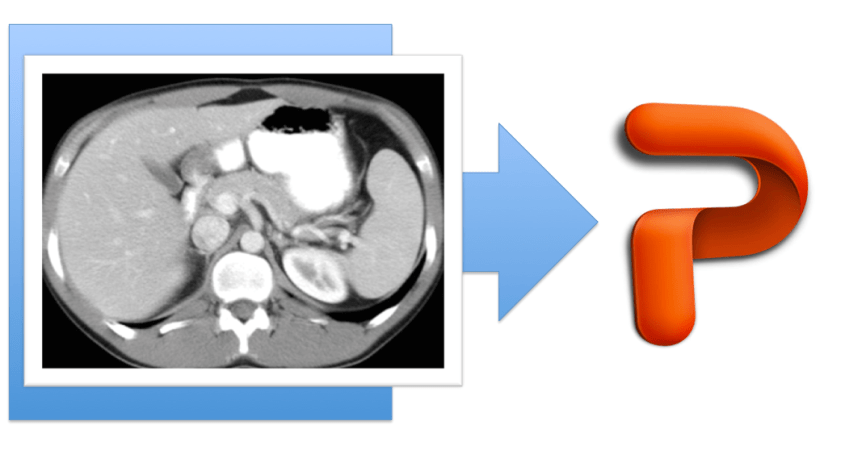
If you work in the medical field, you’ve likely had to present a patient case report. You do a chart review, gather the physical exam and lab data, but often importing the CT scans, ultrasounds, MRIs and other video imaging for display in your PowerPoint can be a time-consuming and frustrating task.

I recently discovered an easy way to include multimedia medical images into PowerPoint in a fairly easy way. This process works on a Mac. For PCs, I’ve been told Pacstacker  is the best available option for importing radiology imaging into PowerPoint.


You’ll need access to 3 things to get started. Make sure you have each of these available on the same Mac:

  1. The radiology image you want to capture, with the ability to scroll through
  2. QuickTime for Mac
  3. PowerPoint for Mac or PC

QuickTime includes a feature similar to the “Print Screen” feature.  Instead of capturing just one image that instant, it captures your desktop activity in a selected area over time.  The result is a video file you can import into PowerPoint or other presentation software.

Step 1: Open up your Radiology imaging viewer and select the scan you wish to include.

Step 2: Open QuickTime.  From the File menu, select “New Screen Recording.”

Screen Shot 2016-06-23 at 4.40.06 PM

Step 3: When the “Screen Recording” box pops up, click the red circular button to begin.

Screen Shot 2016-06-23 at 4.40.25 PM

Step 4: A tan box will appear, asking you either click once to record the full screen, or drag and select with your mouse the portion of your screen you want included in your screen capture. For capturing radiology images, you’ll want to make sure you include only the image and exclude any personal identifiers to be HIPAA compliant.

Screen Shot 2016-06-23 at 4.41.12 PM

Step 5: While recording, scroll through your imaging study making sure to include everything you want to display.  I recommend scrolling through by clicking the arrows on the keyboard rather than using the mouse, as the cursor may accidentally enter the image field and therefore appear in your presentation.

Step 6: Click  the “Stop” button to stop recording your screen capture.  The button is somewhat hidden in the bar at the top of the screen.  It’s the circular icon with the square in the middle that you see in the image below (right side of the screen, leftmost).

Screen Shot 2016-06-23 at 8.28.58 PM

Step 7: After you click “Stop,” you’ll be prompted to save your video to your computer. Remember the location; you’ll need to find it later when you import your video into PowerPoint.

Step 8: Open your PowerPoint presentation.  To import your imaging study, Go to Insert>Movie>Movie from File.  Then find your file and click OK.

Screen Shot 2016-06-23 at 8.41.23 PM

Step 9: Your imaging study is now imported into PowerPoint as a video.  You can scroll backward and forward as needed during your presentation.  To preview your video, start your presentation and click the triangular “Play” button on the bottom left.  Note: if you click anywhere else on the slide, it will advance to your next slide, not start your video.

Screen Shot 2016-06-23 at 8.46.35 PM

PowerPoint has improved over the years, and videos are now automatically embedded with your presentation when you save your .PPTx file.  You may need to save your presentation file to DropBox, Google Drive or another cloud storage app as the file size is usually too large to send via email.


So that’s it – a previously arduous task made surprisingly simple. I hope this saves you some stress and time.

~Steph