Category: EMS

5 Things I Learned in Business School I Wish I’d Learned in Medical School

These days, many people enter medicine as a second career.  I am no different.  I was an undergraduate business major and worked in the corporate world of internet marketing for 6 years prior to medical school.  Perhaps a science major would have been more practical when I was spending 7 hours struggling to understand some fundamentals of molecular biology; however, my business background did occasionally give me a leg up. Going back to school at 30-something, surrounded by recent college grads, I realized a few lessons I picked up along the way weren’t necessarily obvious to others.

1. Everyone has a job, and they all matter

Despite modern movements away from it, medicine is an extremely hierarchical world.  Medical students pine for that long white coat.  Doctors bark orders at nurses without introducing themselves or asking nicely.  Phlebotomists, lab techs, housekeepers and others largely go unnoticed.
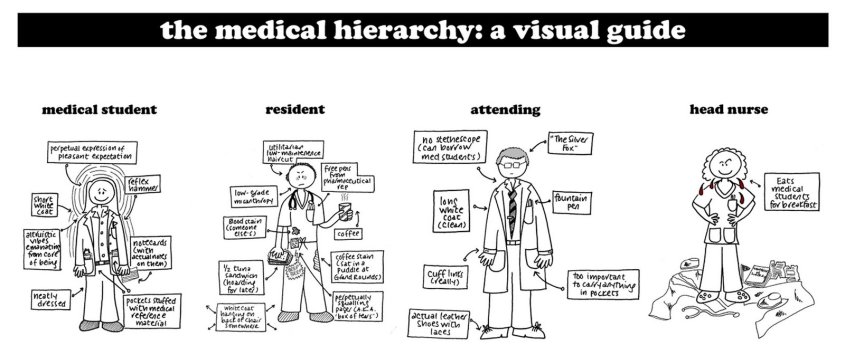
medical hierarchy
Copyright: Michelle Au | theunderweardrawer.blogspot.ca

One beautiful reality of capitalism is that jobs don’t exist unless they are vital… IMPORTANT.  In medicine, we need janitors, doctors, accountants, secretaries.  Everyone with a title has responsibilities and is therefore necessary for the organization to function.  Companies with excess overhead from superfluous staff don’t stay in business very long (VA Hospitals aside). So when the surgical consultant steals a computer terminal from the ED Tech so she can finish her note, this disrupts work flow, and sends a message that somehow the doctor’s work is more important than the ED Tech’s.  It’s just not true.  Be mindful that everyone on the team has a job to do and people will want to be on your team.

2. “For-profit = evil” is not always the case

Yes, pharmaceutical companies are responsible for their reputations as greedy, evil, for-profit companies.  Just ask Martin Shkreli.  And while it would be great to provide free medications to any and all who truly have need, research and development (R&D) of new medications is risky and costs money.  A lot of money.


On average, a new drug takes anywhere from 11-14 years to make it to market, and that’s IF the drug makes it that far.  Of any new drug developed in a lab, there is an 8% chance that drug will actually make it to market, meaning it’s prescribed by doctors for actual patients.§ The money spent on R&D for 92% of unsuccessful drugs is a true cost, and those bills still need to be paid.  Smart R&D focuses on modular development, so that one lesson learned developing a drug that failed can be applied to new research that will hopefully help a different drug get to market.

Yes there is excess and greed.  Yes Big Pharma develops drugs based on profitability, not strictly based on need.  People with “orphaned diseases” have to create non-profits and raise funds for R&D since the pharmaceutical companies won’t do it.  It’s not ideal.  Attracting the brightest minds to develop major pharmaceutical innovation requires paying people well, and I’ve yet to hear anyone tout how well-paid they are at their non-profit organization.  In the end, it’s not as simple as saying “just lower the prices or make it free.”

3. Product perception is reality

Marketing is everything.  You can have the best product in the world, but if no one knows it exists, or if consumers don’t understand what it can do for them, they won’t buy it.  Similarly, you can get all the science right in medicine, but if results, diagnoses and plans aren’t communicated, getting it right doesn’t matter.

If anything this is even more applicable in medicine than business.  While people have some innate understanding of what makes a good vacuum cleaner, they probably need more help understanding their liver failure and what treatment they need. I never assume patients understand their disease.  Taking 5 minutes to explain the relation between the liver and ascites goes a long, long way.

4. Dress & Look the Part

Being a medical professional requires knowledge, honesty and altruism.  Most people get that part right.  But professionalism in medicine also means being on time, dressing professionally, and remembering that people are always watching.  So for the EMT: put down the cigarette, tuck in your shirt and wear your gloves when needed.  For the medical student: be the first one arriving to rounds, wash your white coat (not just once a semester either), lose the stubble and open toed shoes and ditch the piercings for the day.  Doctors: wash your hands, put down your iPhone and give patients your undivided attention. All the knowledge in the world can be quickly overshadowed by a distracting or detracting exterior.
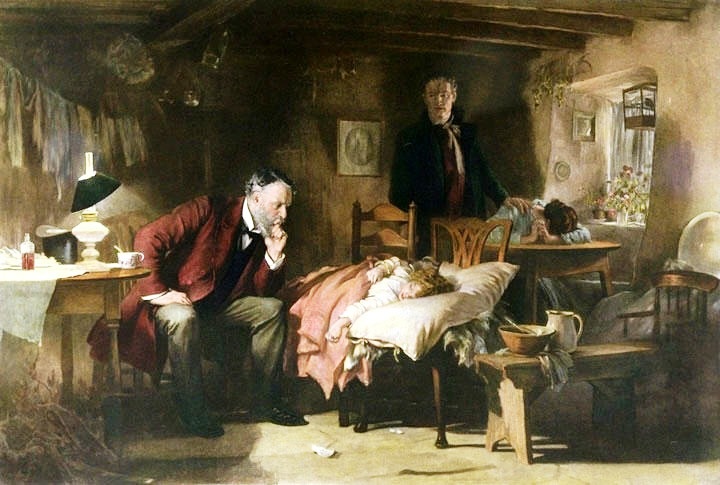
The_Doctor_Luke_Fildes
“The Doctor” by Luke Fildes

5. Listen to Customer Feedback

This is not “The customer is always right.” Medicine is different.  Just because a patient thinks he needs antibiotics for his cold doesn’t mean he should get them.  But your customers do know their bodies best and how they are feeling at the time.  If you are handing a patient discharge paperwork and they “still don’t feel right,” stop and listen.  In this case, the customer feedback is critical, and the price to pay may be high – both for the patient and for your wallet.  Any seasoned Paramedic will tell you, “When the patient says they are going to die, I believe them.”  We’ve all been there.  And if you haven’t yet, it’s just a matter of time.


So that’s it, 5 small things.  What lessons have you borrowed from an earlier career and applied to medicine?

~Steph

Screen Shot 2016-05-04 at 10.42.59 PM


§ http://www.fdareview.org/03_drug_development.php

EMS in the Hot Zone: Not so Fast

Yesterday I attended the 17th Annual Rao R. Ivatury Trauma Symposium hosted by VCU Health. I took away multiple “nuggets” to incorporate into both my prehospital and ED practice. The conference is geared towards anyone taking care of trauma patients – not just doctors but nurses, social workers, nutritionists, therapists and EMS providers, too. I highly recommend checking it out next year. Save the date: Wednesday, March 29, 2017.

Always a leader in EMS advancement, members of the Richmond Ambulance Authority (RAA) presented a poster on delivering “Good Medicine in Bad Places.” To the credit of RAA, they have developed a council with their partners in Police and Fire, to address regional response needs to unique and dangerous situations (i.e. active shooters, bombers, terrorist attacks). The data they presented is accurate – the number of incidents is rising, and the fatalities climbing.

Tactical Combat Casualty Care (TCCC) is specialized training that originated in the military. TCCC is currently being tested and studied in the civilian public safety setting. The TCCC conversation is an important one. Specialized training for these situations is an unfortunate necessity in the United States. A little background info on how these things are currently handled – most cities have specialized SWAT Medic teams comprised of talented, elite individuals adept at not only the delivery of prehospital medicine, but also in things like shooting, hand to hand combat and law enforcement. These providers are a special breed – in most cases considered the best of the best in their public safety organizations. I’ve been hearing the rumble and chatter over the last year, and it was again echoed by RAA yesterday. There is current shift in conversation towards training 100% of EMS providers to enter the warm and hot zones, to render care to patients while under fire.

It’s well known and proven that the current model of Fire/EMS waiting to enter scenes causes treatment delays that increase patient morbidity and mortality. In the December 2015 issue of the Journal of Emergency Medicine, Peter Pons of the Hartford Consensus commented that “fire/rescue and EMS personnel must work with law enforcement agencies to enter these scenes earlier than has been traditionally performed, intervene promptly to stop ongoing external hemorrhage, and incorporate basic concepts of tactical combat casualty care/tactical emergency casualty care into their education, training, and practice.” I don’t disagree with that, but I’m not sure it makes sense for us to immediately assume ALL Fire and EMS personnel should be entering scenes with active shooters – as if it’s simply one more bullet point we can just tack onto the job description.

If you think about our existing public safety system, some firefighters enjoy both patient care and fighting fire, while others if given the choice, would only ever fight fire. Similarly, some Fire and EMS providers might be part cop/soldier at heart – both capable and interested in taking on TCCC. I can assure you that not everyone on an ambulance has that police/soldier side that wants to run into an active shooter scene. Yes, EMS is a dangerous job; I’ve been punched and had a knife drawn on me in the back of the ambulance (no one tell my Mom please). Of course you can never predict what may happen and need to be ready for anything. That’s not what I am talking about in this instance. What I’m saying is that if a call goes out for an active shooter, it might not be wise to require 100% of the Fire and EMS personnel to be able to enter that active scene. Here are just a few reasons I think that could be a bad idea.

Screen Shot 2016-03-24 at 9.47.55 PM.png
Figure 1: Crossover of skills/interests in various professional fields

Negative Effects on Recruitment

As I mentioned, not all EMS providers want to take on the police/military type role of being armed with a weapon, entering dangerous scenes and providing care under fire. I don’t know how big of a chunk of people that is, as it hasn’t been surveyed yet to my knowledge. I can say personally, having been in a building with an active shooter, I have zero interest in doing so again, even with the most state of the art training. How many of the 840,000 certified EMS in the US might we lose if that bullet point gets added to the job description? Additionally, 22% of those 840,000 certified EMS personnel are volunteers. Some volunteers might want to play a part in TCCC, but if you have a family and derive no paycheck or medical benefits from your volunteer EMS gig, can you really afford to enter that scene? And what will become of all the career providers who want to do patient care, but don’t want to risk their lives. Perhaps we will we see them shift into the hospital in ED Tech, CNA and RN roles.

Distraction Away from the Medicine

Even right now, EMS education has two large components: 1) the medicine, taking vital signs, deciding what drugs to give and when and 2) operational aspects, entering a scene safely, driving an emergency vehicle, operating a portable radio, etc. As an ED Physician, I admit my bias towards the importance of #1. We’ve all had the trainee who wants to drive lights and sirens before he’s mastered taking a blood pressure. With only ~160 hours of instruction in the current NREMT course, I worry that adding the required training for TCCC will shift focus away from the medicine and negatively impact patient care, potentially leading to more morbidity and mortality across all patients, improving outcomes for those victims requiring TCCC, but leading to a net decline in overall care. Perhaps the solution will be increasing the course length. I’m not saying it can’t be done; I just hope someone studies and considers that before implementing blanket curriculum changes.

Are EMS Providers Physically Fit Enough?

Sadly, three quarters of active emergency responders in the US are overweight or obese, and 75% have been diagnosed as hypertensive or prehypertensive. All in all, we are not a healthy bunch when compared to our counterparts in Police, Fire and the military. How many EMS providers will meet the physical demands required for TCCC? Even if people want to take part in TCCC, will they meet the physical requirements to do it safely, or perhaps be pushed out of a job they love, despite providing excellent medical care.

measuringobesemanwaist0115_710826

Would it actually improve care?

To justify the risk associated with TCCC, you must be able to prove that more lives would be saved than lost, and not just during active TCCC situations, but across prehospital care as a whole. It just hasn’t been studied yet. Perhaps once studied, it will prove to be net beneficial, but right now we just don’t know.


So those are my thoughts; I’m curious to hear yours.

~Steph


A Neuroscientist’s Look Back on his July 4th Ambulance Ride-Along

On July 4, 2013, Dr. Paul Aravich joined TeamLouka on the ambulance as an observer.  He was asked to jot down a few thoughts on his experience.  His essay is shared below.

~Steph


Reflections of a Virginia Beach Volunteer Rescue Squad Lay Observer, July 4, 2013. 

Paul F. Aravich, PhD
998839_10151588264079545_313081585_nStephanie Krebs and Amir Louka are two VBVRS volunteers and EVMS medical students who are “social change agents and leaders for the greater good of the community.” They invited me to run with them at Station 8 on Independence Day, 2013. I saw 2 other EVMS students that day who I also admire: an exceptional paramedic who is a new medical student, and a Navy veteran and physician assistant student who is as gentle as he is tall. I witnessed great respect between VBVRS, fire department and ED personnel in almost every instance. And I saw cutting-edge wireless technology and state-of-the-art equipment—although I am still not sure if it the ambulance is a box or a truck.

At the station I hung-out with a volunteer from York County who served at the World Trade Centers and Katrina, a new EVMS graduate student, a senior volunteer who is a builder of persons as well as of homes and barbecues, a critical care nurse from Chesapeake, and an accountant. We talked about abandoned older persons, defensive medicine, how to read an ECG, challenging behaviors, not getting T-boned at intersections, altruism, family, political turmoil in Egypt, and who catches a baseball better, the bulked-up waiter at IHOP or a nerd like me who, like Winnie the Pooh, is actually a “bear of little brain.” We also wondered if we heard the dispatcher correctly that a person got stabbed in the cheek with a fork. At one point Stephanie bravely gave me her humerus (which is pretty funny) and Amir gave me his stethoscope and cuff so I could learn the proper way to take a blood pressure. Thankfully, Stephanie’s paresthesia lasted only a few minutes. At the nearby Oceania Fire Station we laughed with an Army veteran who has seen more than his fair share of tragedies, discussed the merits of Cheryl Crow as a History Channel commentator, and had a surprising conversation about the nutritional problems of hot dogs that made me worry that firefighters may someday eschew donuts. I saw camaraderie being built during the down times as well as during the calls. And, I talked with a squad member and former court official about the ones that were saved, the ones that got away, and an aging parent with dementia. I was reminded that all of us have to hold on to our victories, let go of our defeats, and understand that we’re in this together.

1040465_591569347561093_149799321_o
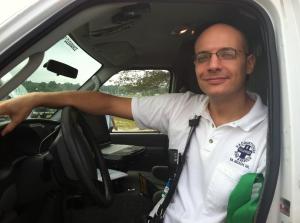
Dr. Aravich & us outside Sentara Virginia Beach General Hospital

Throughout the day I was humbled and inspired by consistent displays of commitment and professionalism, humanism and compassion, and collegiality and mutual support. I saw a successfully aged person with a rare and serious injury that causes significant pain in others but did not in her and wondered if it would steal her independence. I saw an isolated older woman and cancer survivor with depression and abdominal pain and hoped that her GI cancer was not coming back. I saw a frightened young mother fighting addiction and hoped that today will be the first day of the rest of her life. I saw an injured skateboarder who should have known about helmets. I saw a scared older person with breathlessness and fatigue and a family history of heart attack who should not have been cutting grass in the middle of a hot day. I saw the basic life support team immediately recognized the severity of this situation and calmly and effectively take precautions before the paramedic arrived. I saw the paramedic take an ECG in the truck and learned later that it showed the more severe type of heart attack called a STEMI (ST Elevation Myocardial Infarction). I saw the paramedic taking care of this person inside the moving and turning ambulance by, e.g., drawing blood, giving nitroglycerine, sending ECG telemetry to the ED, and offering words of encouragement. Finally, on the 4th of July I saw a crying spouse, caring neighbors, and engaged citizens volunteering to help others when almost everyone else was relaxing.

If, in the Jeffersonian tradition, the pursuit of happiness importantly involves pursuing the greater good, then the VBVRS is full of happy people. And, if people are not distinguished by doing what they have to do but are distinguished by doing what they don’t have to do, the VBVRS is full of very distinguished people. Thank you Stephanie, Amir and the VBVRS for allowing me to see the important volunteer work you do without charging patients. Lives do indeed need saving, both physically and emotionally. All of you saved lives today. Is there any greater compliment? Meantime, a few words about hot dogs: it is OK to bad-mouth hotdogs—but not on the 4th of July.


Dr. Paul Aravich is a behavioral neuroscientist and Professor of Pathology & Anatomy, Internal Medicine, and Physical Medicine and Rehabilitation at Eastern Virginia Medical School (EVMS). He is the former of the Virginia Brain Injury Council and its Ad Hoc Neurobehavioral Committee. He also chaired the Virginia Governor’s Public Guardian & Conservator Advisory Board and sits on the Boards of the Mary Buckley Foundation for brain injury survivors & their families; the I Need a Lighthouse Foundation for suicide awareness; and Alternatives, a nationally recognized youth empowerment organization. He won an AOA Glaser Distinguished Teacher Award. It is the highest award for medical education in the United States and Canada and is presented at the annual meeting of the Association of American Medical Colleges. He also won a Virginia State Council of Higher Education Outstanding Faculty Award, which is Virginia’s highest award for research, teaching and service.
10273447_10152226339749545_1587305735930057894_n
EVMS Graduation, May 2014
You can view his 2009 TEDTalk here:
To learn more about volunteer opportunities with the Virginia Beach Rescue Squads, visit LivesNeedSaving.com.

Go Go Gadget Defibrillator: What I Do and Don’t Carry on Duty

Everything lies on a spectrum, especially in the world of medicine, and a medic’s choice of personal kit is no different. From Mr. “I don’t care if it’s a rectal bleed, gloves are for rookies,” to your favorite Rescue Rambo, who would use a Medivac unit as his daily commuter if he could, we each choose a few (possibly) useful things to keep within arm’s reach while on duty. While Steph and I may work at the busiest Level 1 in the state, and have any and all imaginable technology at our disposal while there, being outside the hospital is a different story entirely. So here’s a look at what I choose to bring along and what I feel can make a difference when the tones go off.

ambulance rookie
Photo copyright: The Lonely Medic

1. My very own pulse ox

A few years ago these things could set you back a few hundred dollars, but now you can pick one up on Amazon for about $20 with free shipping. Beyond the general appearance of a patient (Again, a spectrum: from “Ugh, why 3am?” to “Oh… that can’t be good.”) few things can give you as much information about the person in front of you as this tiny device. Patient looks like he’s working to breath? Maybe it has something to do with that O2 sat of 65% – better call back the engine you just cancelled.

It’s part of my approach to almost every patient I encounter – I introduce myself while lowering myself to their level (standing over a patient is imposing and dominant, even if you’re not 6’5” like me, and not generally comforting to little old ladies). I slip on a pulse ox while taking his/her hand and wrist to feel a pulse. As well as instantly assessing perfusion, motor and sensory function, that simple, brief human contact goes a long way in gaining trust and establishing rapport. Fun fact: the servers at Hooters do exactly the same thing.

2. A radio

We take them for granted, but this thing is your ticket to unlimited resources on-scene and your lifeline when SHTF (like this day in Virginia Beach in April 2012). Need manpower? Engine’s en route. Leave something in the truck? Someone can grab it on the way in. When my partner had a seizure on duty and wasn’t breathing, I hit that little orange button and said a few words… You’d have thought WWIII had broken out. When every unit in a five mile radius was headed my way in seconds, I realized that motorola is more than a faceless voice that tells you where to go. I keep mine in a reflective shoulder strap for added safety, to which I also attach the pulse ox for quick and easy access.

dont_push_button

3. A knife/multitool/trauma shears

I carry one of the above, depending which I can find while getting ready for duty at 4am. I don’t carry all of them. I don’t carry multiples of any of them. No boot knives or ninja stars, no Ka-Bar combat bayonets. It’s volunteer EMS, not Vietnam. I use it to cut stuff.

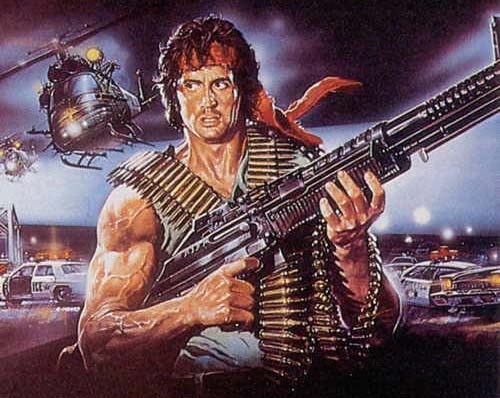
image (2) RAMBO
Every squad has this dude.  You know who I’m talking about.

4. A mini maglite

One of the things I love about getting outside the hospital are the places we go. We often see another side of society we otherwise never would – dark alleys, abandoned buildings, and deep ditches in the dead of night. I’ve had a mini maglite since day one, and it’s never let me down. If I have a funny feeling about a place, I might bring along one of the big D cells we keep in the truck, but 99% of the time the mini gets the job done.

5. Steel toed boots and well made pants 

Steph regularly wears shorts and sneakers on duty. I just don’t get it. Even if it’s 100F in the shade, you’ll find me sweating in my 5.11s. Who knows where you’ll find yourself, or what you’ll find yourself in, on the next call. Safety first.

image (3)

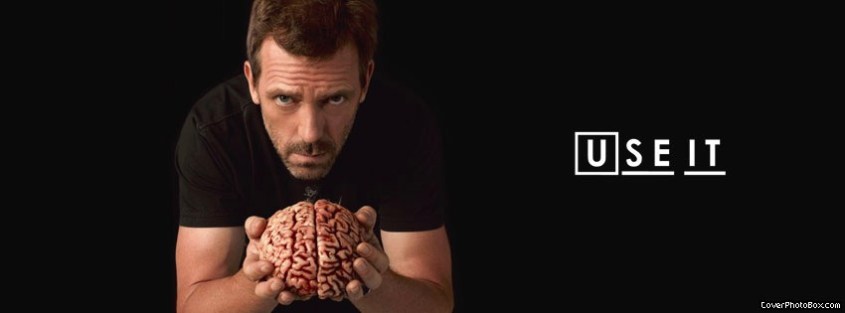
6. My brain 

Forget everything I’ve said up to this point. Brainpower is the only thing you NEED to bring along. This is how you’ll navigate tough problems, assess complex patients and choose the right interventions. Without it, you’re no good to anyone. With it, you’re a real-life hero. Signing up to take care of people in need is also a commitment to lifelong learning. You owe it to your patients to practice, stay up to date, to learn new things and continually improve. If you’re reading this, you’re probably on the right track. And keep in mind, your partner probably has one too, complete with its own experience, training and know-how. Use ‘em.

image (1) HOUSE

Honorable Mention: A stethoscope 

You might have noticed the most ubiquitous piece of medical equipment missing from the list above. Truth be told, these things are living dinosaurs. This year happens to be the 200th anniversary of the stethoscope’s invention, but contrary to what Mr. Littman would have you believe, they have barely changed in all that time. Too often, the scene is just too noisy and chaotic get an accurate exam, and in most circumstances requiring immediate intervention you can get the same information in other ways. Breathing difficulty with a history of both CHF and COPD? Try a neb while looking for other signs like JVD and pitting edema. It’s rarely exclusively one or the other. Tube placement? If you’re not using end-tidal you’re behind the times. Trauma and hypotension? Prepare to dart the chest and get moving.

3 dishes
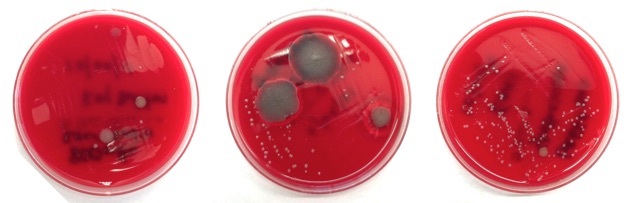
For the record, using the shared stethoscope in the jump bag is not an option. This is what grew from swabs Steph took off a stethoscope.

In my experience, the rubber necklace acts more like a police officers badge or firefighter’s helmet than a diagnostic instrument in the field, clearly identifying you as medical personnel. That’s a perfectly good reason to keep one with you though, so feel free. But if you’re like me, it usually stays in the truck.

All that said, the day they come out with a pocket defibrillator, I’ll be first in line.

~Amir

 336111_10151109792184545_1500950861_o (1)

Understanding the Origins of the Cincinnati Prehospital Stroke Scale

We all learned it in EMT-B class.  The Cincinnati Prehospital Stroke Scale (CPSS) is the core assessment tool for EMS providers to evaluate possible stroke patients in the field.  But, have you ever wondered where it came from?  Why does it have 3 parts? Why test speech and not eyesight?  What part of the brain is really injured? Let’s take a deeper dive.

What is the CPSS?

For a quick review, the CPSS is comprised of three individual tests, each of which get interpreted as either normal or abnormal by the EMS provider.   The tests as well as interpretation are summarized in the table below.

Components of the Cincinnati Prehospital Stroke Scale

Adopted from Kothari, et al, 1996 

Test

Normal

Abnormal

1


Facial Droop


Patient smiles or shows teeth Both side of face move equally One side of the face does not move as well as the other (or not at all)

2


Arm Drift


Patient extends arms out, closes eyes, and holds in place x 10 seconds Both arms move the same, or both arms stay in position One arm does not move or drifts downward compared to the other

3


Speech


Patient repeats “You can’t teach an old dog new tricks” Patient repeats back correct words with no slurring of words Patient can’t speak, says the wrong words, or slurs words

The CPSS is positive if any one of the three tests is deemed abnormal.  In studies comparing Physicians vs EMS providers when performing the CPSS, when performed by an EMS provider, if the patient scored positive for one component, the sensitivity was 59%, meaning just over half of the patients who indeed had a stroke were identified by the EMS provider as having a stroke.  The specificity was 89%, meaning that 89% of people who had a positive CPSS (1/3 components) indeed had a stroke.  In other words, they caught just over half of the true strokes, but they also obtained a positive CPSS on some patients that didn’t have a stroke. The best example is a patient who is intoxicated.  They likely have slurred speech, and therefore a positive CPSS, but aren’t actually having a stroke.  Most tests in medicine are like this, you miss some, and you catch some that don’t really have the disease.  We call these false negatives and false positives.  Oh, and did I mentioned that EMT-Bs scored just as reliably as the Paramedics in the study?

The CPSS intentionally misses some strokes

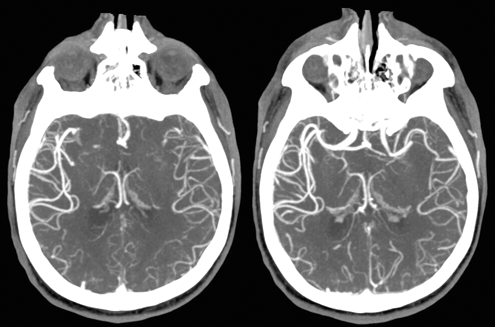
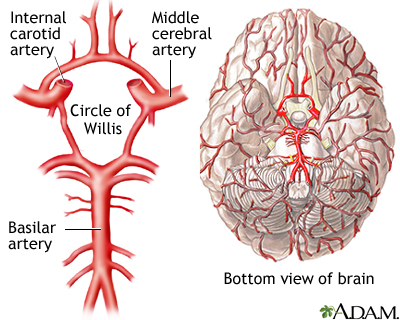
To understand what the CPSS is looking for, it’s important to know a bit about the history of how it was created and why.  The CPSS was developed at the University of Cincinnati Medical Center in 1997.  tPA had just been approved by the FDA in June 1996.  The CPSS is derived from the NIH Stroke Scale (NIHSS).  You can read more about it here, but simply put, it’s a 15 part assessment where the patient gets scored according to their symptoms.  The NIHSS was developed to identify neurological deficits that correspond to specific geographic tissue damage in the brain.  MDCalc offers a great online calculator for helping determine a patient’s NIH Stroke Scale score.  The NIHSS was condensed down, with some categories eliminated and some combined, to make the CPSS simple and easy to use, but also to help identify those patients who would be potential candidates for tPA.   Not all strokes are created equal, and not all strokes are elligible for tPA, even if identified within the 4.5 hour time window.  Strokes of the anterior cerebral artery and middle cerebral artery are better tPA candidates that other types of stroke.  The CPSS focuses on identifying those strokes, but not posterior strokes for example.

18009

The future of the CPSS and prehospital stroke identification

As I mentioned, the CPSS is not designed to detect things like posterior circulation strokes that affect the cerebellum, the balance center of the brain.  Historically, efforts focused on early identification of tPA candidates.  As new surgical and pharmacological advancements develop for other types of stroke, there’s a greater emphasis on early identification of all strokes.  As such, there’s a lot of research going on right now studying new or modified prehospital stroke assessment tools.  One front-runner is the B-FAST, which adds one more test to the CPSS to test for balance, and potentially identify posterior circulation strokes.  The posterior circulation (basilar artery in the diagram above) supplies blood flow to the cerebellum, the balance center of the brain.

B – Balance, tested by having the patient walk

F – Face, same as CPSS

A – Arms, same as CPSS

S – Speech, same as CPSS

T – Time, to remind us that time is brain

If you want to impress with your turnover on your next stroke patient, be sure to test for balance disturbances by (carefully) ambulating your patient.  If the patient stumbles or can’t walk without assistance, that’s a pertinent positive.  In the original Cincinnati study by Kothari, the CPSS missed 13 patients with stroke, but 10 of those were posterior circulation strokes, notoriously difficult to diagnose clinically, and often missed by even the best Emergency Medicine physicians.


As always, feel free to share any tips you have on helping assess for stroke in the field.

~Steph

Some references:
Kothari R1, Hall K, Brott T, Broderick J. Early stroke recognition: developing an out-of-hospital NIH Stroke Scale. Acad Emerg Med. 1997 Oct;4(10):986-90.
Kothari RU1, Pancioli A, Liu T, Brott T, Broderick J. Ann Cincinnati Prehospital Stroke Scale: reproducibility and validity. Emerg Med. 1999 Apr;33(4):373-8.