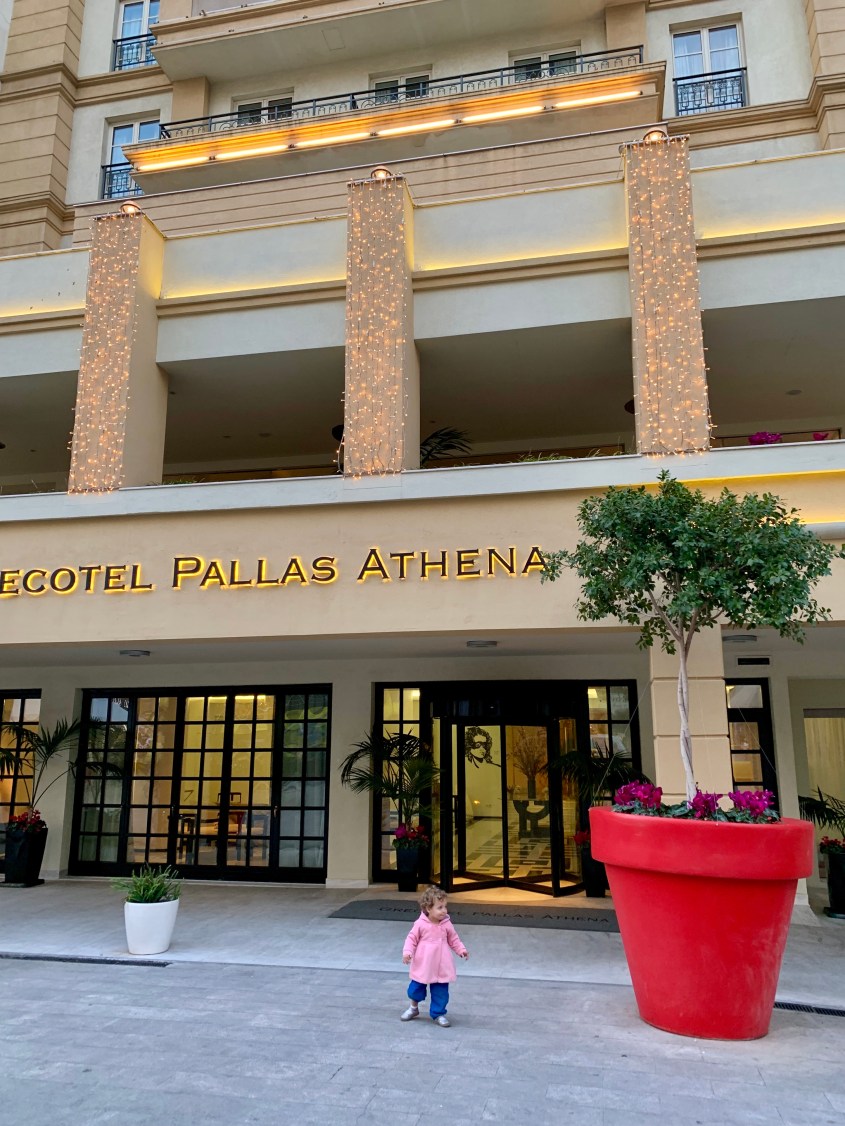
We’ve slept like rocks for two nights in a row now. We’re staying at the Grecotel Palace Athena, a small boutique hotel with modern, funky design. Evie sleeps in the pack n play provided by the hotel. We have a large balcony with a view of the square where we played with the pigeons yesterday.
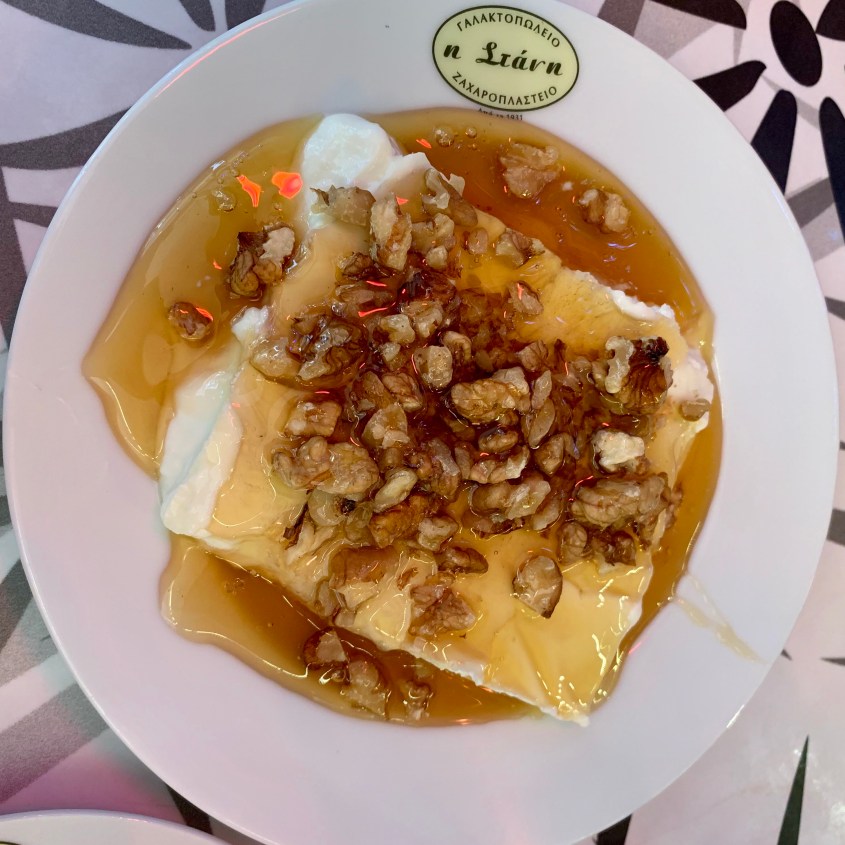
This morning we set out on a mission for breakfast. We binge-watched travel shows on Netflix and YouTube to plan our trip. One spot that surfaced on every show was Stani. Known for their fresh dairy and honey breakfast/desserts (fine line here), there are two staples to try. The Greek yogurt with honey and nuts and the simple cream with honey top. We didn’t even make it to the loukoumades or baklava.
Chilled cream with honey on topGreek yogurt with honey and nuts
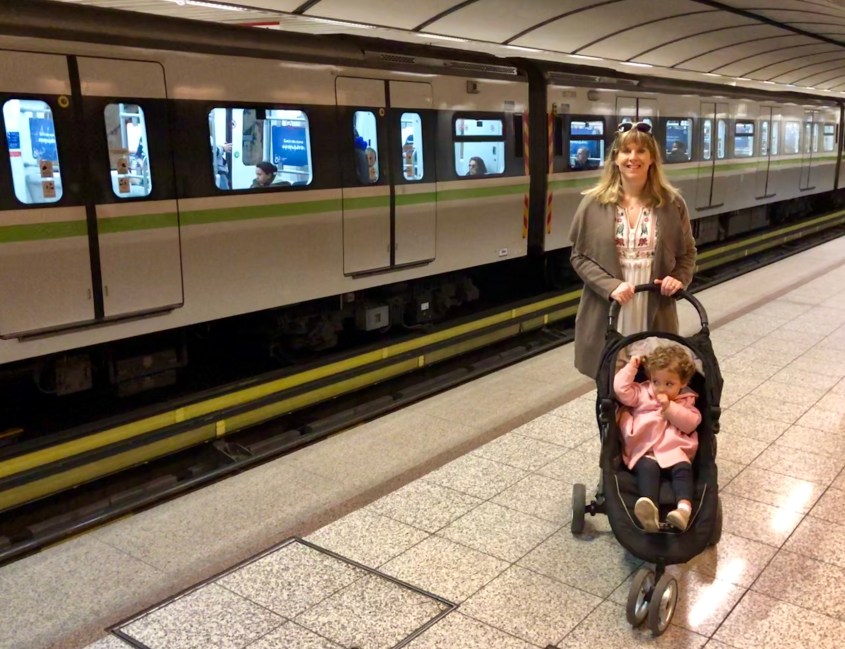
After breakfast, we walked to the metro station and rode it three stops on the red line to Acropolis Museum. The metro was easy to navigate, even with a stroller.
The metro is easy to navigate, even with a stroller
The Acropolis Museum opened in June 2009 and had won numerous well-deserved awards. As you enter, you walk atop a glass floor that lies above the ruins of the old city . There are circles within circles, rooms, fountains, walls, staircases. All of the functional elements reveal themselves if you look closely enough.
Ruins beneath the Acropolis Museum
As you enter the Museum and walk up the steep ramp to the exhibits, you get to peek at various frescos and statues – an amuse-bouche to the main course.
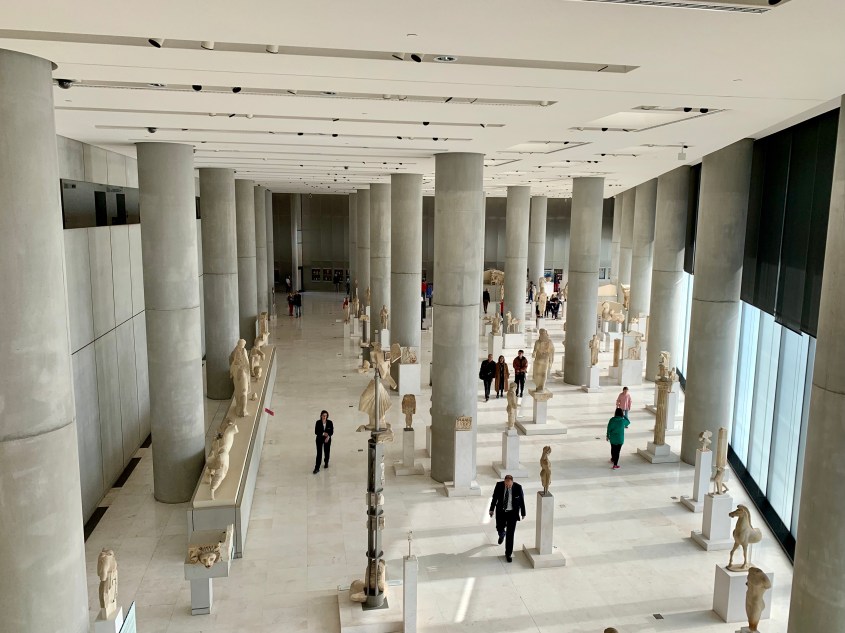
There are three main floors to the museum, with the first floor housing a visiting exhibit, the second floor endless sculptures, and the third floor an experience in an of itself.
These statues were originally painted with natural dyes
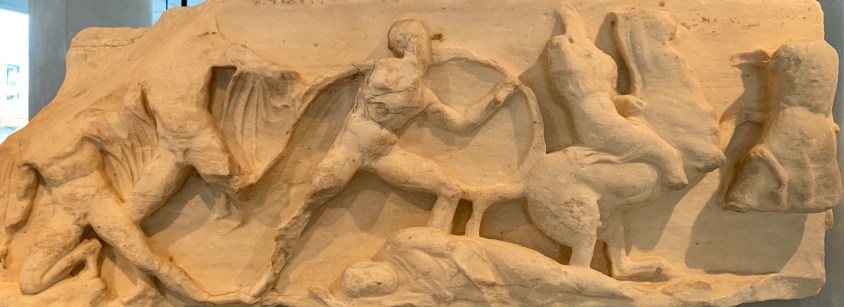
It’s interesting to think about how we view these ancient civilizations through the carvings they left behind. Why did they choose to carve what they did? they chose the story they left behind. Many of the fresco carvings depict romanticized versions of battle war or opulent feasts.
I was left wondering what wasn’t depicted. What was the boring day to day of life in Athens in 480 BC? We see only these romanticized scenes and snippets. Is what these artists did that much different than what we criticize people for doing today with social media? Showing only a glorified and glamorized version of ourselves?
Battlefield scene
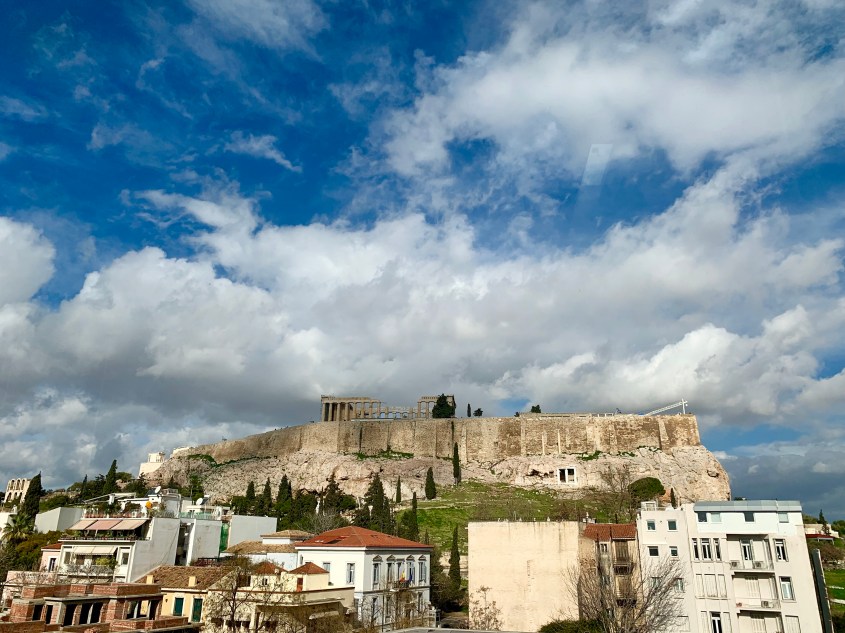
As you reach the top floor of the museum, you suddenly realize you are inside a modern rendition of the Parthenon. There are 17 columns spanning the longest side of the museum, and in between each are carved marble blocks which were once part of the upper ceiling of the inner portion of the Parthenon. The pieces were excavated years after the ammunition explosion that destroyed much of the structure. Also from the top floor, huge glass windows allow for parallel viewing of the real deal.
Photo credit: Amir LoukaThe Parthenon as seen from the top floor of the Acropolis MuseumView from the reading room overlooking the sculpture floor
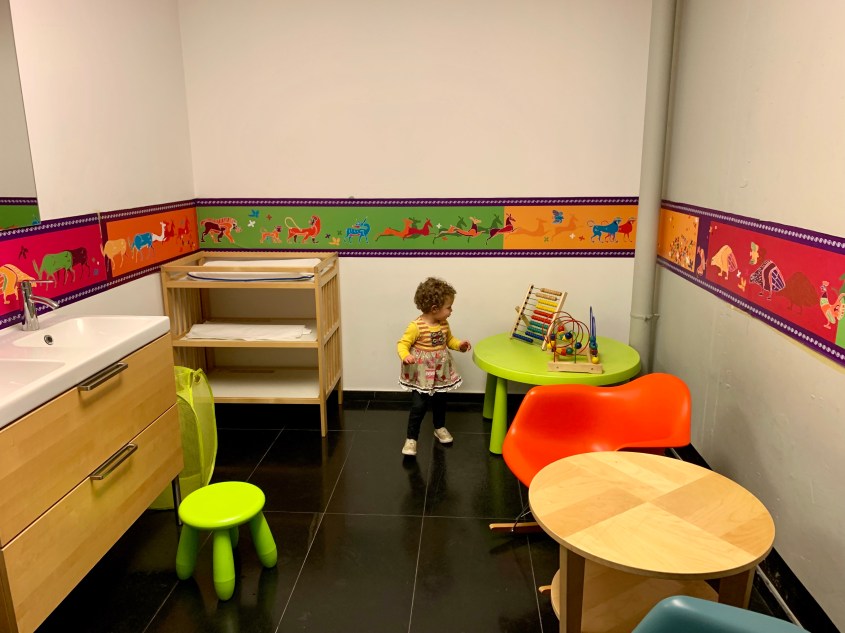
I do have to give a nod to the museum for having my all-time favorite family changing room on the first floor of the museum. Complete with changing table, toys, kids table and hand sanitizer, it was everything you need right in one room. It was also nice that all three of us could go in together since changing a diaper on a two year old often requires four hands.
Family changing room at the Acropolis Museum
We opted to walk back towards our hotel rather than taking the metro just so we could see some new sights and grab a small snack along the way.
Enjoying a game of “High 5”
Every hour on the hour, there’s a changing of the guard at the palace. We decided to catch the guards and then head to the National Garden before sunset. They have a large playground with swings and slides, and entrance is free.
National GardenNational Garden near sunsetHealthy, green palm trees in January
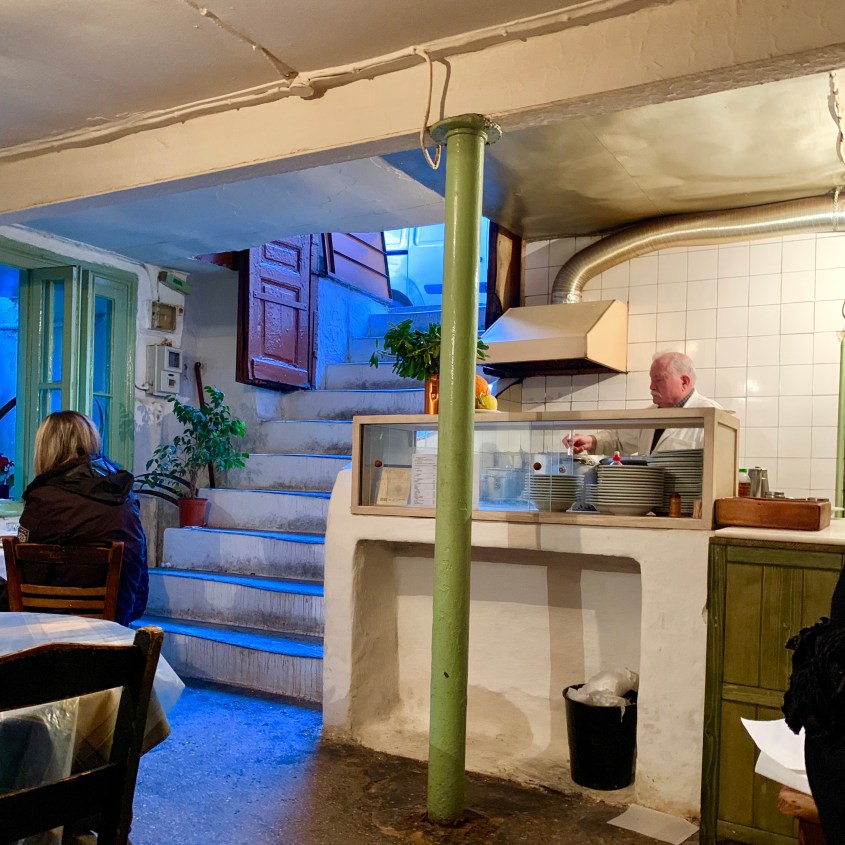
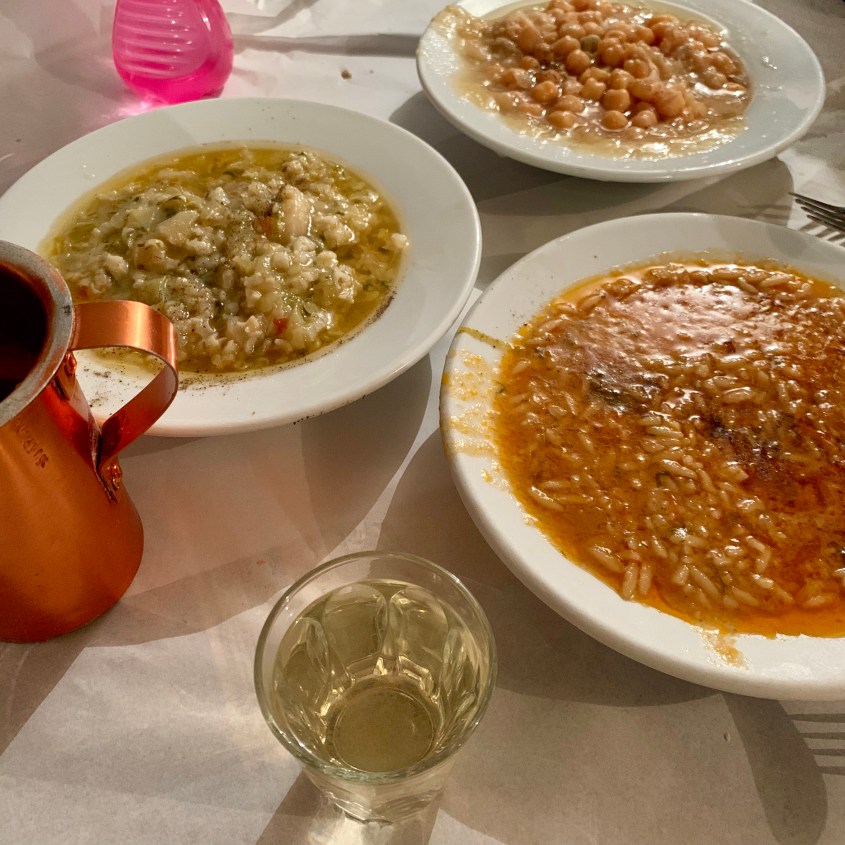
On our walk back from the National Garden, we stopped for dinner at Diporto, another hidden gem we discovered during our Netflix binge. There’s no sign and no menu. A true hole-in-the-wall place, you just walk down into a basement with paper-covered tables, wine barrels and not a word of English. You sit down and are served within 3 minutes, which is easy to do when there’s no choice of what to eat.
The kitchen at DiportoCabbage, orzo with tomato sauce and chickpeas- all served family style with bread and wine.
The only choice we made was to have “vino” with dinner or not. Not red vs white, just “vino.” We stuffed ourselves full for a mere €18.
And as the life of the toddler parent goes, we were warned by our little, “I need poop.” Diaper changes have been the rate limiter to a lot of things these past two years. Diporto for all its charm, didn’t have a restroom nevertheless a changing table. We settled up and headed back to our hotel. Tomorrow we’ve booked a food tour – as if we haven’t been eating enough already!
Trying the Turkish hot street drink, salep
Local mom & pop bookstore – the only book in English
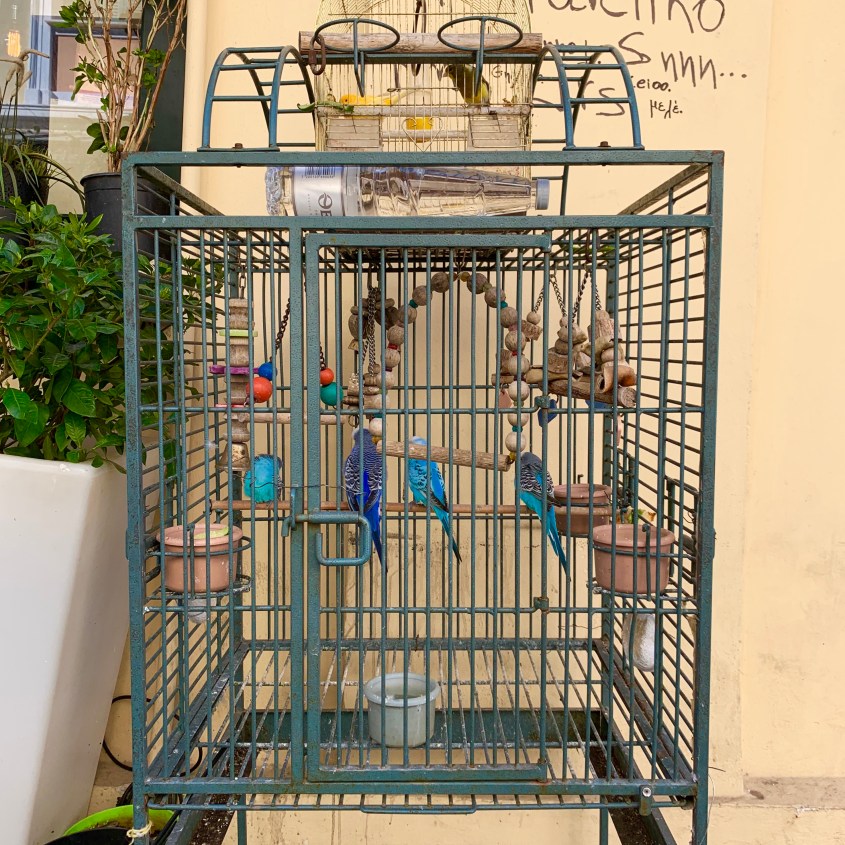
Many restaurant patios have nearby birds, perhaps for ambiance?
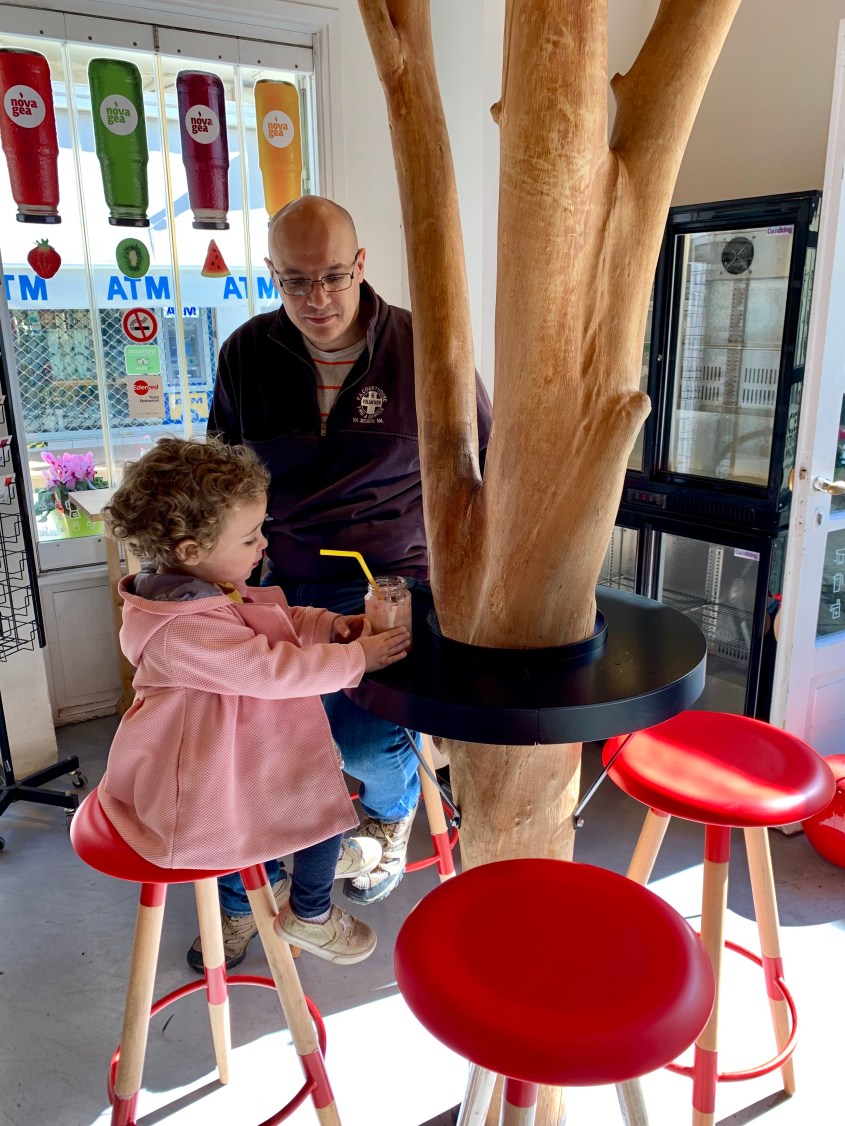
Every street has a fresh juice bar where you can pick your own fresh fruit and veggies and have them blended right in front of you
It turns out late January is an excellent time of year to visit Greece. Technically “off-season,” it’s still 60 degrees with sunny skies and greenery all around, just minus about 1/2 the tourists one usually encounters in peak season.
We flew Dulles–>Heathrow–>Athens with an itinerary we thought perfect for our almost 2 year old. An overnight transatlantic flight on British Airways followed by a shorter flight arriving early afternoon into Athens.
Don’t forget to download episodes of a favorite show in case of no internet accessAsleep on the floor while DaDa helps a stranger
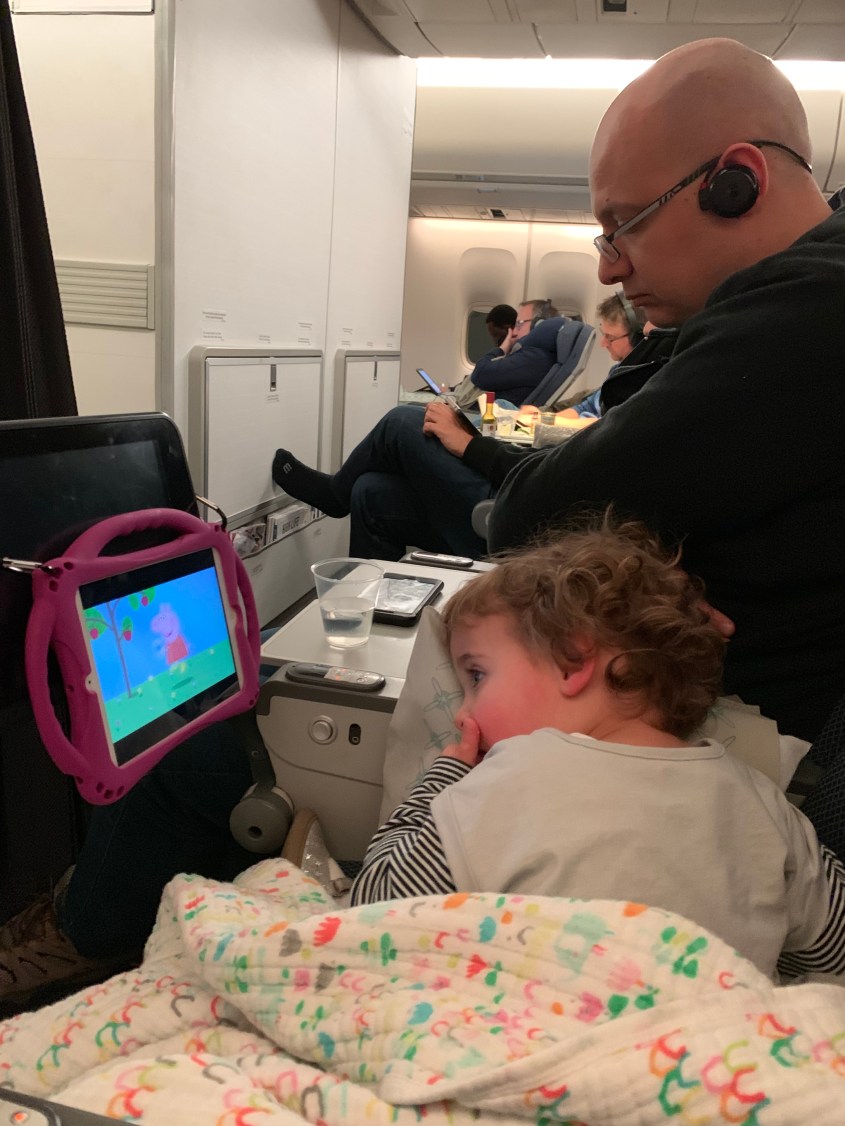
We’ve flown together as a family of three on at least 4 occasions in these two short years. Our daughter is usually a good flyer, but I still have PTSD from our trip last summer to Italy when she screamed for 6.5 hours straight. I’m happy to say she was a delight on the way here. Entertained by Peppa Pig and endless crackers, she hardly fussed a bit. What we didn’t expect however, was the call for help on the plane.
“If you are a Doctor of Medicine, please press your call bell.” I half thought I’d dreamt the overhead call. Just over halfway through our flight, my two co-travelers were both sleeping, and I’d just closed my eyes. I jabbed Amir. He awoke startled, pressed the button, and we waited. About 5 seconds. A calm but concerned flight attendant arrived and told us a man up front was having a medical event and they were attaching the defibrillator. What I had assumed was a simple syncope or low blood sugar event was clearly more serious.
“My wife and I are both emergency medicine doctors, we can go.” We decided that he would go, and I would stay to watch our daughter. After thirty minutes, a different flight attendant came to update me. “The man is 82. He stopped breathing. Your husband will be tired when he returns.”
I knew then what the outcome was. We were only 4.5 hours into our flight, still an hour away from the nearest airport where you can safely land a 747. The story of what happened in between is not mine to tell. We were required to stay in the plane for 2 hours after landing to give statements to police. As such, we missed our connecting flight to Athens. The British Airways crew were so apologetic, but we felt it a small price to pay to delay our holiday a few hours to have the opportunity to put our training to use. If only the outcome could have been different.
Amazingly we all were asleep by 10pm Athens time and slept all night and into the morning until 10am. We’d missed the delicious hotel breakfast of fresh coffee, yogurt and fruit, but we were well-rested and ready.
If you have a baby or a toddler, and don’t have a CitiMini stroller, you must be missing out on how easy getting around can be. We’ve taken this thing to California, the Bahamas, Italy and now Greece. It’s survived the pummel of airport baggage handlers across the globe and can even tackle the crooked sidewalks of The Fan District back home in Richmond. If you plan to travel with young kids, don’t be afraid to travel with a good stroller. Strollers and car seats are free to check.
CitiMini is easy to carry in case you hit unexpected terrain
Whenever we arrive in a new place, we like to walk around first to get a feel for the location, people, safety and maneuverability.
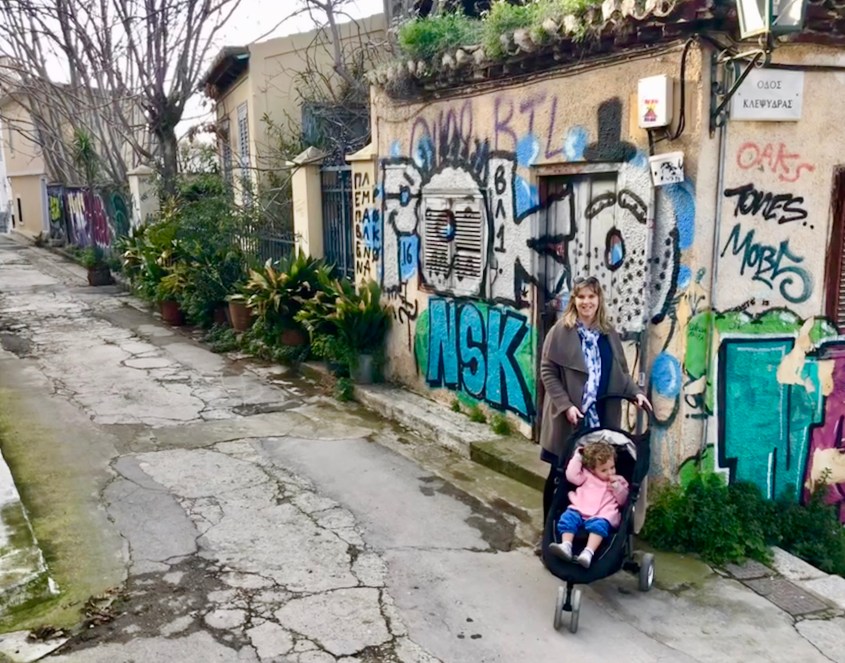
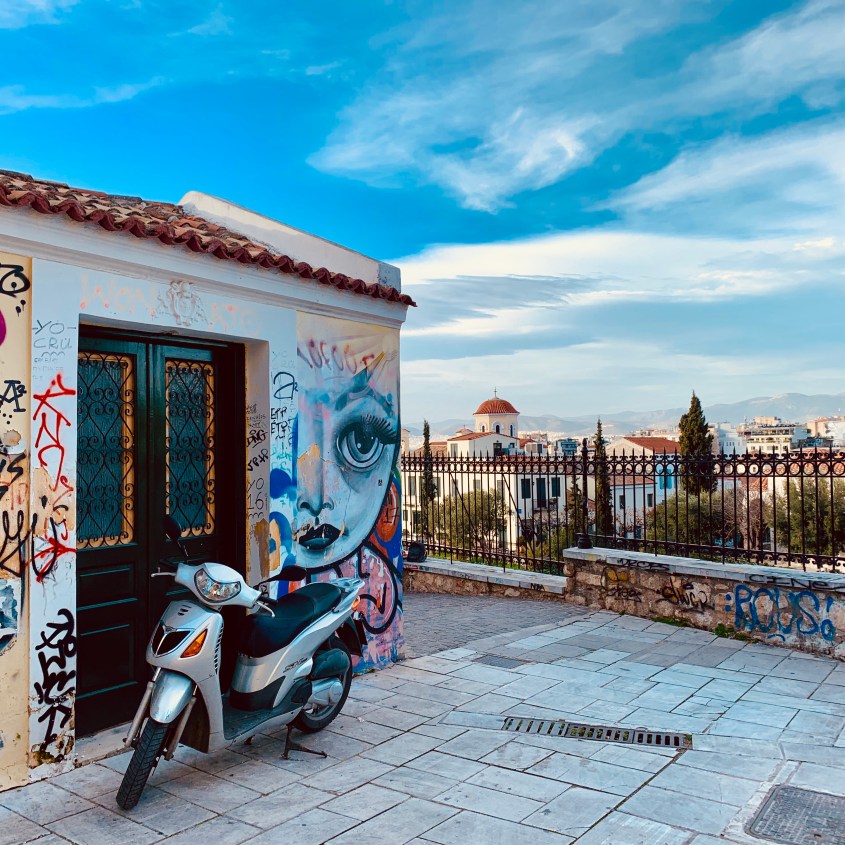
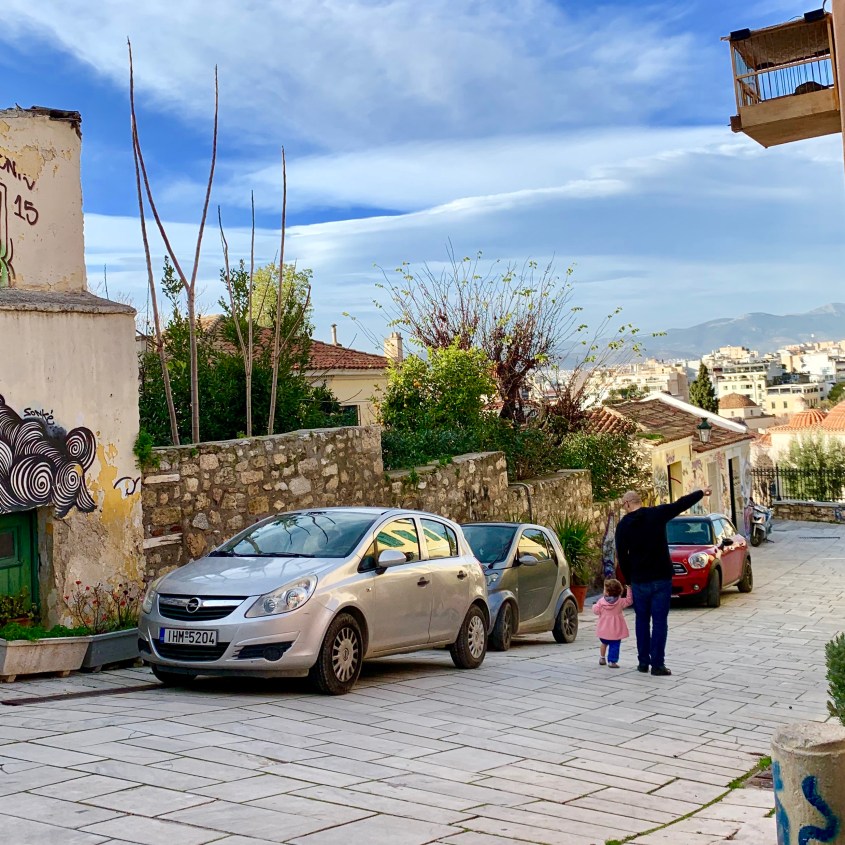
Athens has an insane amount of graffiti. Most cities attempt to take down graffiti as soon as it goes up. There’s a threshold you cross where once there’s a certain amount it’s accepted, just part of the area. It’s peculiar to see the juxtaposition of 2500+ year old ruins with this century’s modern art.
Graffiti, mural and cityscape
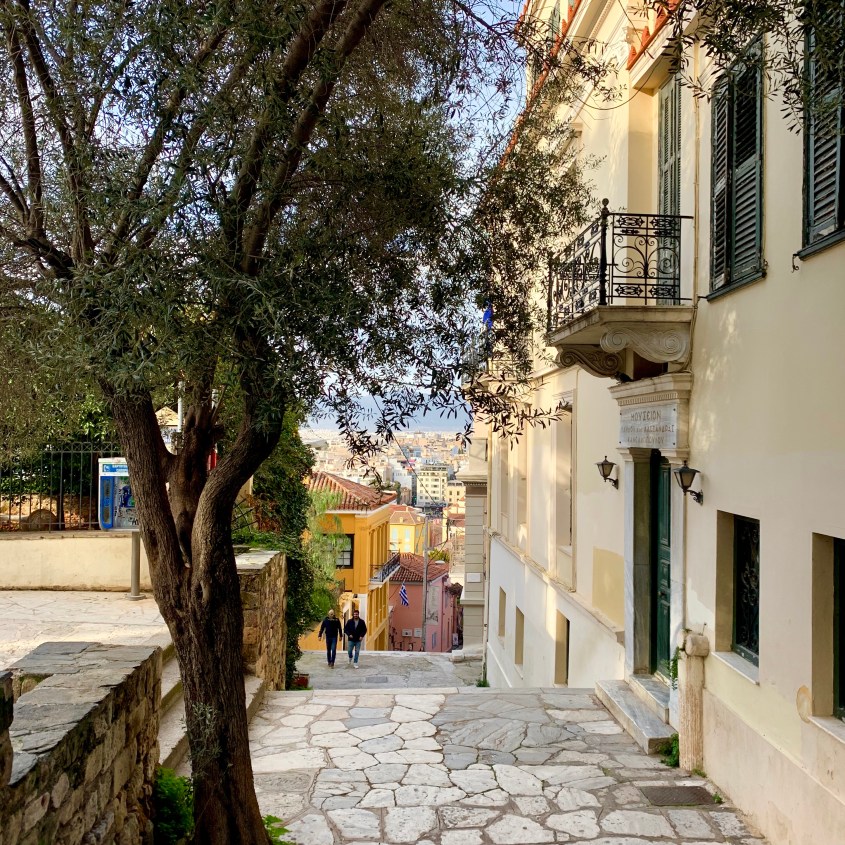
From down in center city near our hotel, we walked up towards the Acropolis. The incline wasn’t as severe as it seemed when looking up from below.
Walk up to the Acropolis, looking back towards city center
We stopped along the way to refuel and taste some local sweets. We enjoyed coffee and pastries hand-piped full of Nutella.
Amir teaching the finer points of coffee and donuts
We stopped to say “hello” to a few of the numerous kitties who live just outside the Acropolis. They are quite friendly and appreciate the music of the street musicians.
Making friends
We reached the top of the hill and the Acropolis. You can purchase a 5 site pass for $30 euro which lasts 5 days and gives you access to the major historic sites. We also opted to hire a guide to walk with us and narrate the history.
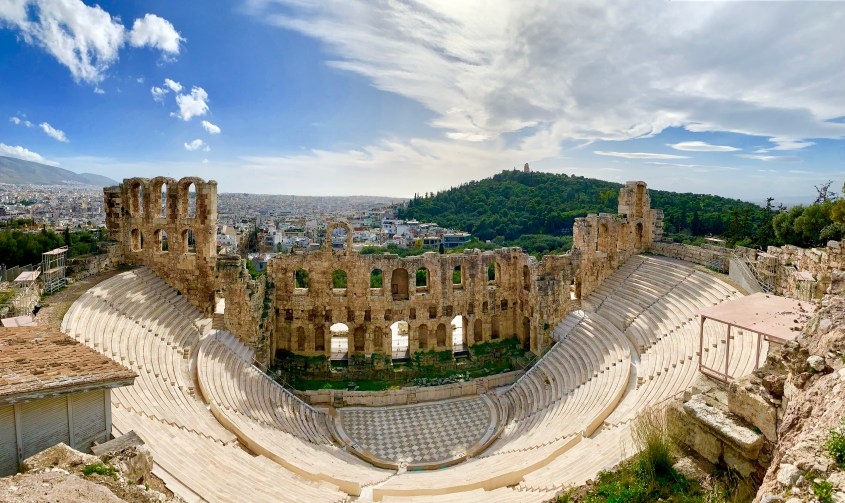
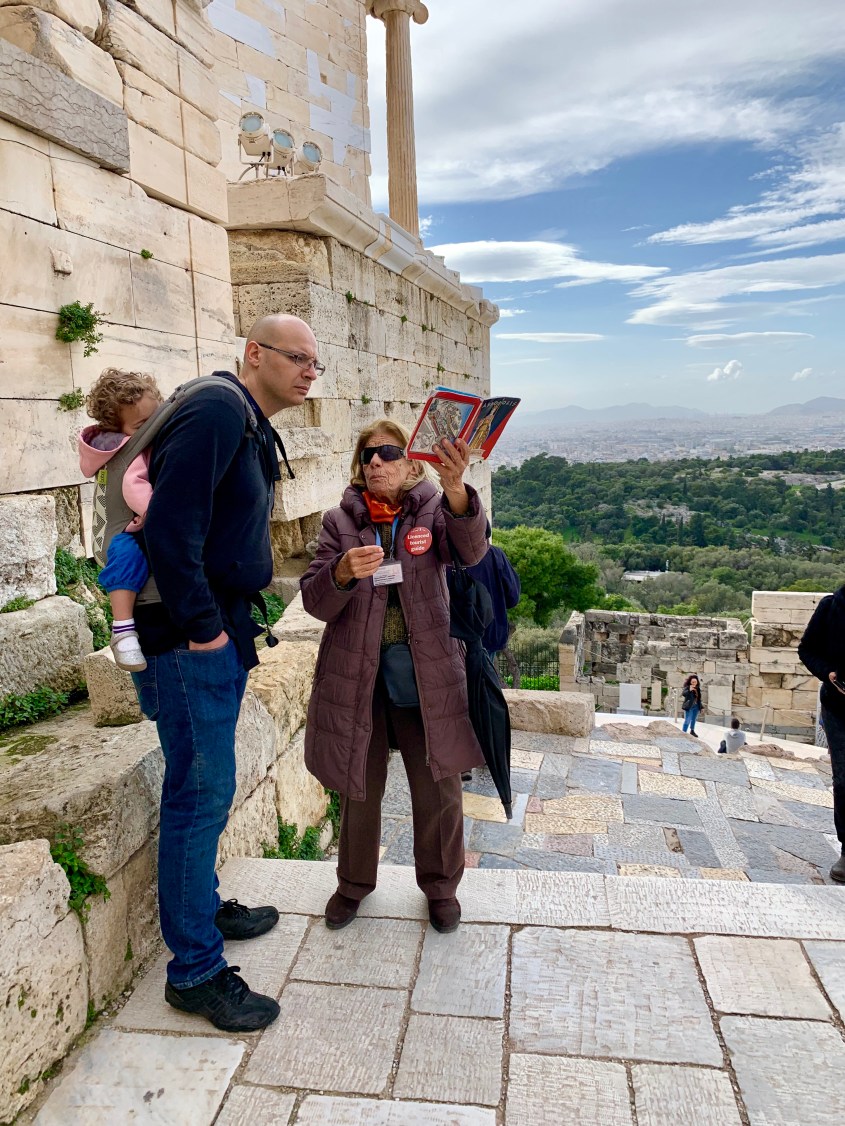
The Odeon of Herodes AtticusBoba carriers are good for up to 45lbs, so our 30lb toddler can rest comfortablyMaybe too comfortablyOur guide Cuina, a native Athenian, was a wealth of knowledge
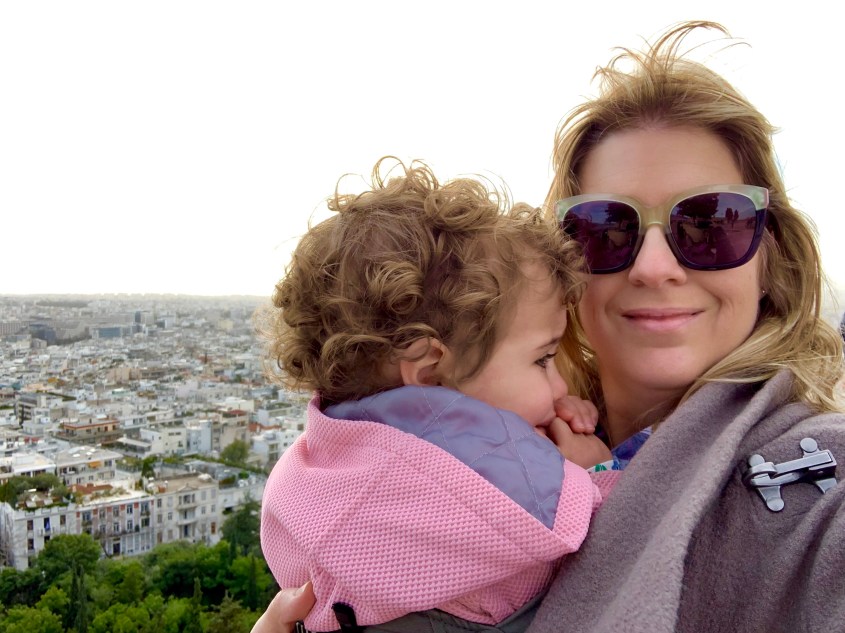
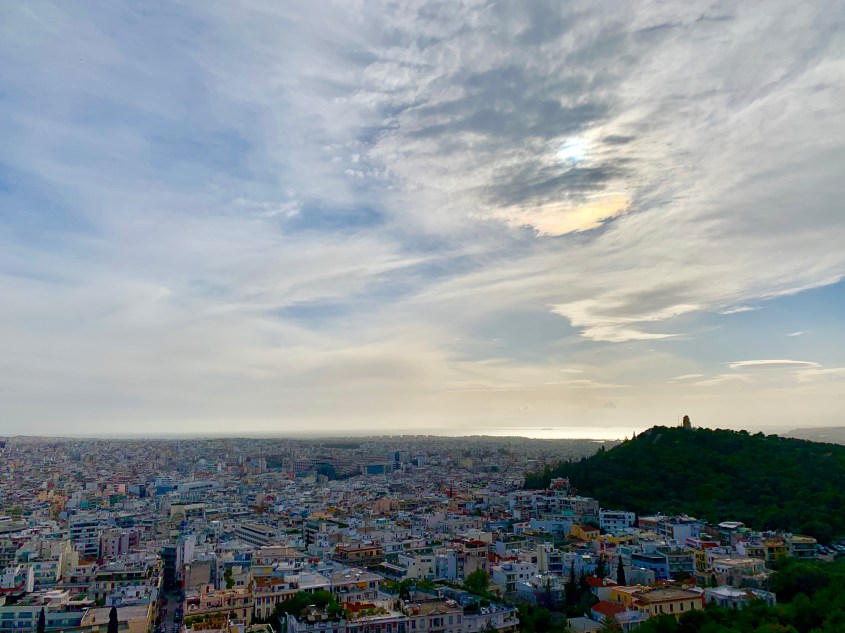
The views from here were amazing. You can see the whole city and even the Aegean Sea.
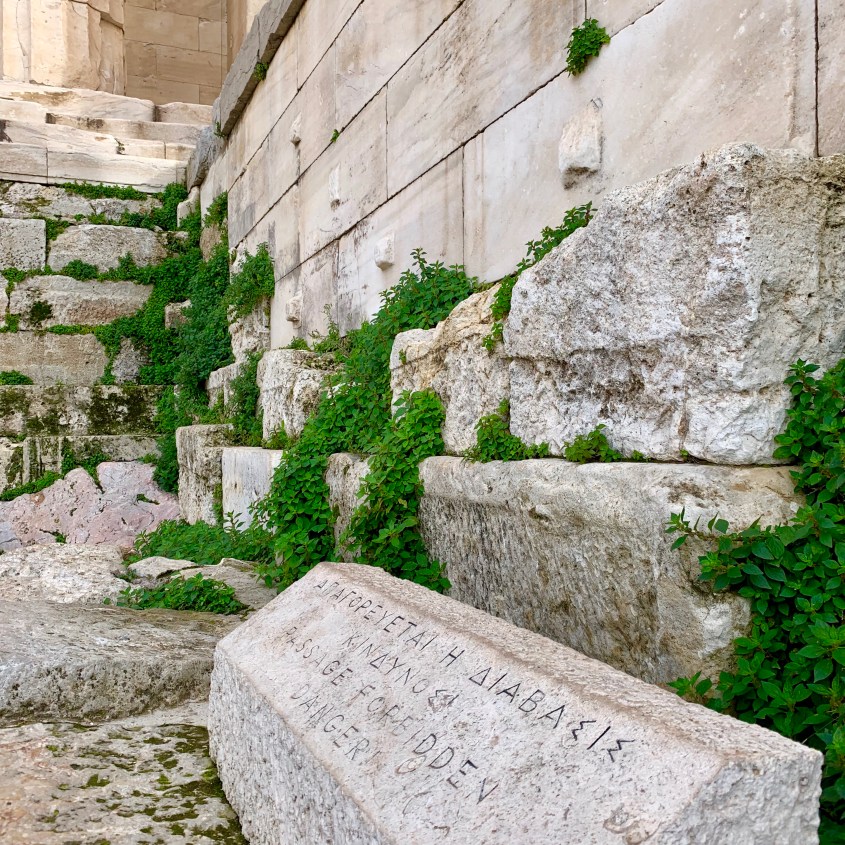
Throughout the millenia, the Acropolis has been rebuilt. Limestone is the older part on the bottom with marble more recent (400 BC)
They recently moved these statues into a museum we will see tomorrow. Replicas now sit where the originals once did. Our guide was kind enough to take photos for us along the way
While our guide said the tour was 1 hour, at hour 2 our daughter was getting restless, and we still had more to see. We politely cut our tour short and carried on by ourselves.
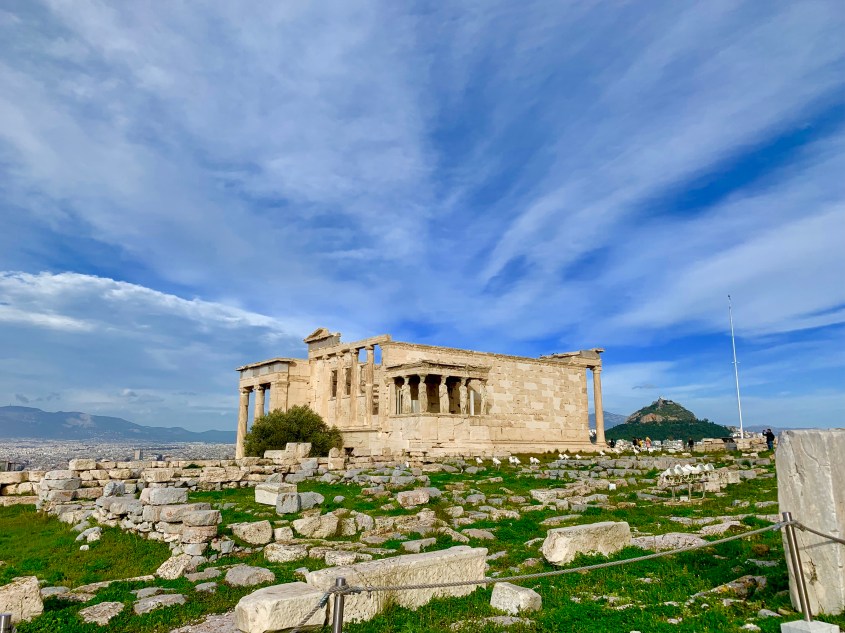
Aegean Sea Only 22% remains of the Parthenon
The rest of the day was spent tasting local cocktails, exploring hidden side streets and fresh seafood.
The restaurant owner eats outside near the kitties and the birds
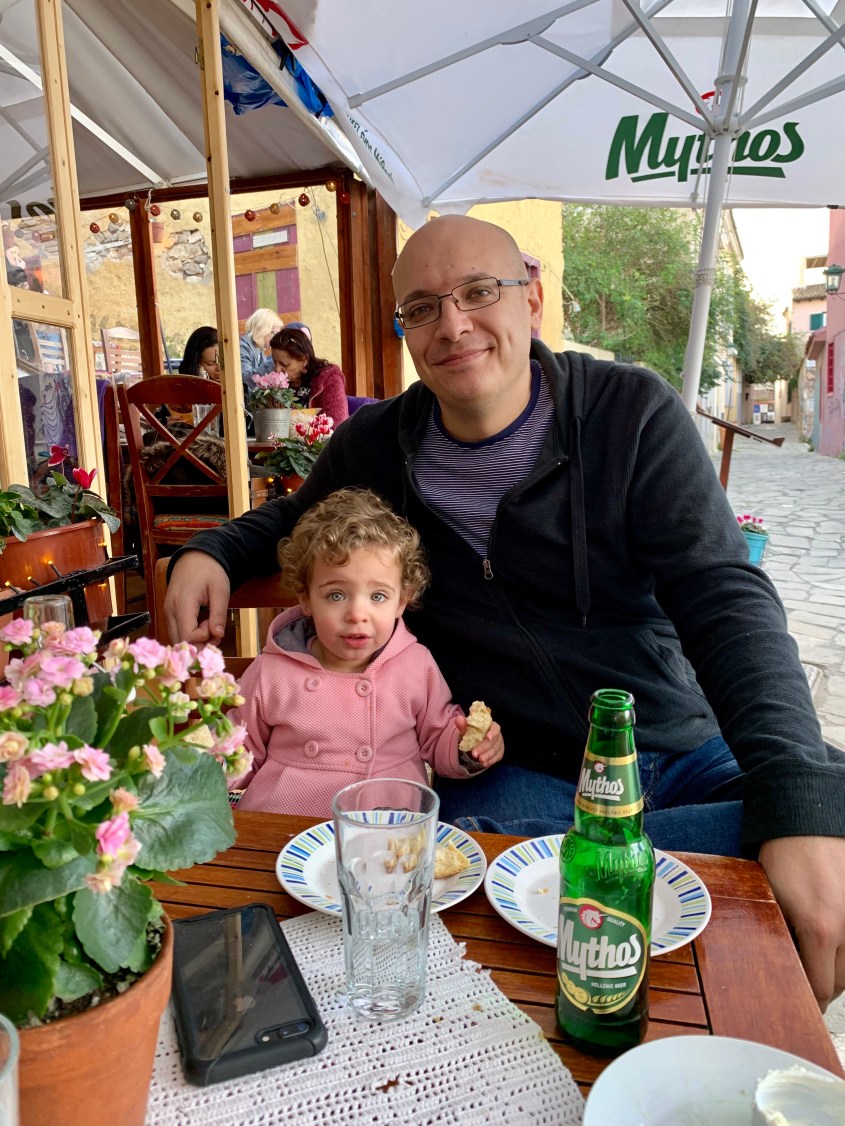
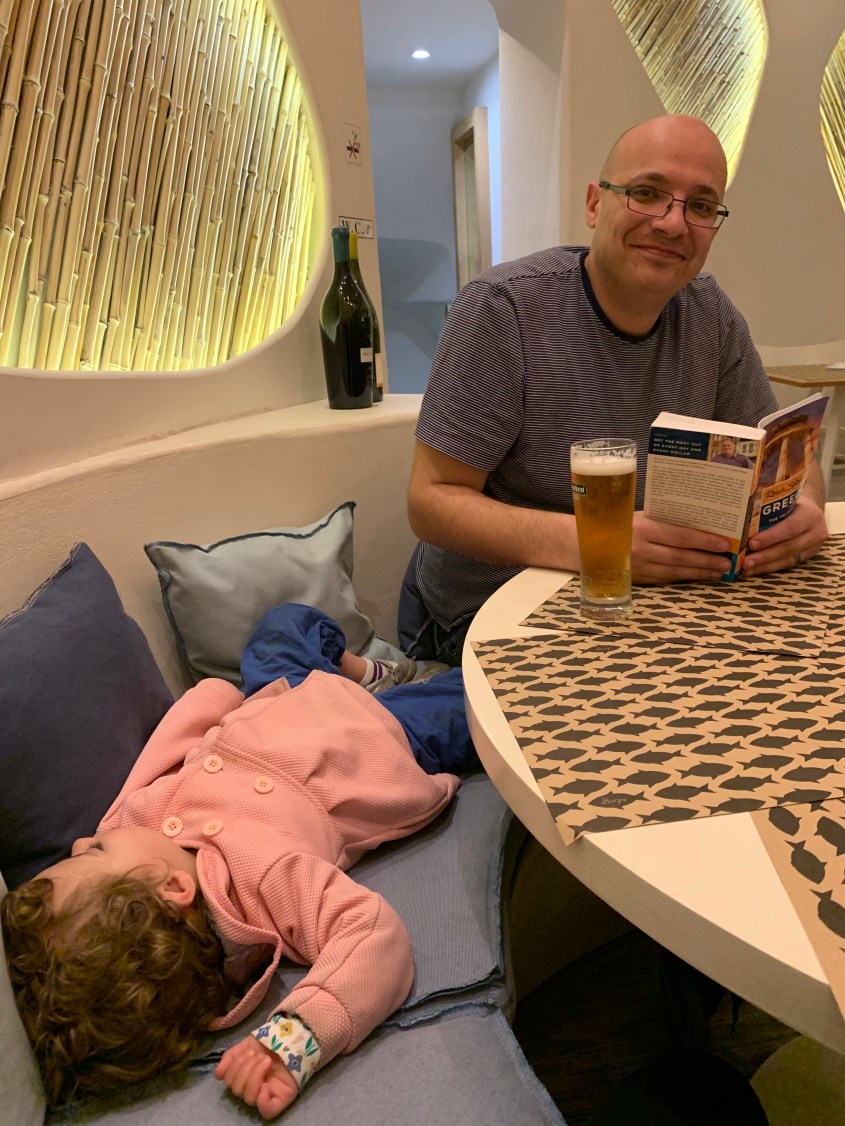
Amir providing a guided historical tourGrape leaves and local beerGrecotel Pallace AthenaSomeone was too tired for seafood dinner. More for us.
This morning we returned to the Lemigo Hotel for the last day of the trauma course taught by the students we trained last week. It was again inspiring to see these new educators helping to expand SAMU and improve trauma care throughout Rwanda. The goodbyes were difficult knowing I won’t likely come back to Rwanda. My husband, Amir, will hopefully be making the next trip towards the end of April if things go as planned. I’m excited for him to meet these wonderful people and share some of the same moving experiences. Travel is something we love to do together. In this case we are both sharing a travel experience, just 3 months apart.
The end of a trip is always a time for reflection. Interestingly, my goals in keeping this daily travel journal have expanded since I first started. Day 1 I was trying to capture my observations for the benefit of my own memory and perhaps to help educate my daughter. But what I found through the power of social media, was that the audience wanting to learn about Rwanda, SAMU and the efforts by VCU was much larger. As each day drew to a close, and I struggled to do justice to the beauty and energy of Rwanda with my photos and writing, I somehow received more feedback, more questions, more people engaged in learning about this unique place.
In full disclosure, I have chosen to make some edits to my earliest posts. As I learned more about the culture, tradition and pride of Rwandans, I realized that as a guest invited to their country, I wasn’t always respectful of that invitation. I haven’t written anything untrue, just adjusted my perspective and henceforth my words. Trust is a difficult thing for Rwandans (as expected when neighbors turn on neighbors), and I just want to give it due respect.
One of my major goals both personally and professionally was to understand Rwanda’s EMS system. I’ve written much about the training, equipment and staffing, but only briefly mentioned how their 912 (911) system functions. Mobile phones aren’t widely available in rural areas of Rwanda. The country has designated a team of laypeople as citizen responders throughout these regions. When someone requires 912, they often do not have a phone with which to call. Instead, they physically go to the citizen responder who does have a mobile and that person dials 912. As described in my Day 2 post, the call is answered by one to three individuals (staffing is variable) who have a single mobile phone that rolls to a single backup should the first be busy. Calls are tracked in an Excel spreadsheet where data is manually entered and then the information ultimately filed away by day. Ambulances do not call the hospital directly, rather they call the 912 dispatcher to provide their patient report. This can be problematic for many reasons. The 912 dispatchers vary in their medical training, anywhere from no medical training to Nurse Anesthetist. So, it is possible that a patient report could be called to a dispatcher without medical training, who then has to call the charge nurse at the receiving hospital to relay that information. It’s literally the telephone game.
Additionally, there is no formal process for online medical direction. Since the ambulances don’t speak with the nurses or doctors at the hospital, they can’t easily call and ask them questions or request orders. In speaking with many of the SAMU staff, often individual providers will have relationships with certain doctors and happen to have their mobile number. One nurse anesthetist described a case where a man had suffered a spinal injury during a motor traffic accident (MTA). On physical exam, he had an obvious step-off deformity of his thoracic spine and no movement in his lower extremities. Unclear how to safely immobilize him given the severity of the step-off, she dialed up the Neurosurgeon directly for guidance.
Everyone I spoke to had at least one story where they called a doctor directly to ask a question. But, if you are new or just don’t know the right specialist, you are on your own. Given the severity of injuries and frequency of polytrauma in this system, I feel bad these guys are out there doing it on their own, without the support of online medical direction. It’s a testament to their professionalism and ingenuity that they can do what they do without that support. The good news is that in speaking with the SAMU leadership, dispatching, online medical direction and protocols are a top priority for development. There are plans in place for SAMU to borrow best practices in dispatching from the Richmond Ambulance Authority, and work is underway to modify the ODEMSA protocols to fit the needs and challenges of Rwanda. After all, if you’ve seen one EMS system you’ve seen one EMS system.
Somewhat off-topic but of interest (at least to me), is the continuing education (CE) process for medical staff at all levels in Rwanda. Just like the US, Rwanda has category 1 and 2 requirements, with credits granted in 1 hour time blocks. Ahead of our trip, Dr. Sudha spent significant time working with the Ministry of Health to ensure our Trauma Care Course met all continuing education requirements for the nurses, nurse anesthetists and doctors taking our course. After passing the final exam for the course, students received a certificate of completion and an official government stamp in their CE books. The Medical, OB/Neonatal and Pediatrics courses the team will return to teach later this year will also count towards CE for the SAMU staff. Now if only it counted for physician or EMS CE for me.
Lastly, there’s something that’s been haunting me since visiting the Genocide Memorial. I’m the first to admit that unlike my husband who can recite dates and motives for every international conflict since the existence of man, I am not a history buff. Like most, I knew of various genocides throughout history, but I had never taken the time to truly understand how a nation and its people propel towards that tipping point. In visiting the Genocide Memorial, you see how the two ethnic groups at the time in Rwanda, Hutu and Tutsi, suffered under a systemic campaign to pit one group against another and eradicate the Tutsi. It didn’t happen overnight but rather over years.
Propaganda, which as a child of the 80s growing up during the cold war, I thought of as a Soviet, communist tool, filled the radio airwaves and newspapers across Rwanda. In April of 1994, I was finishing my sophomore year in high school. Privileged to attend one of the best public schools in Virginia, my biggest worries were whether or not Pearl Jam was going to break up, and how to best prep for my PSAT. Across the globe in Kigali, someone was importing thousands of machetes and distributing them to the Hutu, all while the government spread a message of hate and violence.
In one compelling exhibit, the Genocide Memorial features skulls of many of those killed, “hacked by machete” as the plaques read. Nearly all of the skulls have obvious fractures if not complete holes, the consequence of which is obvious, even to the untrained eye. Thousands of Rwandans, including babies and children, died from traumatic brain injury (TBI) during the Genocide. As I rounded this week in the hospital, I couldn’t help but note how TBI (now mostly from MTAs) still plagues this country. I felt like I had PTSD – my mind flashing between the images of the Genocide, heads wrapped in makeshift bandages, and now patients in CHUK, heads wrapped in gauze.
As I expected to be the case, multiple people I met on this trip lost multiple loved ones during the Genocide. I’ve deliberately not told those stories by request for privacy, but please know that they are real. How someone can survive a Genocide, recover from losing nearly every member of their family, and then devote their lives to helping others… it’s overwhelming to think about.
I am leaving Rwanda feeling honored. Honored to teach such resilient and passionate people. Honored for the opportunity to see and learn about genocide at the Kigali Genocide Memorial. Honored to have met the survivors themselves – been entrusted with their stories, and seen first hand how you can rise to inspire others, even after you’ve lost all hope.
If you are ever lucky enough to travel to Rwanda, visit the Kigali Genocide Memorial. Head east to Akagera National Park to enjoy the animals. If you see an ambulance or find yourself in hospital, say “thank you” to the staff. When you meet a Rwandan, don’t ask if they are Tutsi or Hutu. It’s not that it will offend them, but rather it is a waste of your time. Every answer you get, from the President to the street sweepers, will be “I’m Rwandan.”
This morning Jane and I returned to Central University Hospital of Kigali (CHUK) for Rounds and then to give lectures on Event Medicine, MCI and START triage. Here in Kigali SAMU is often called upon to staff everything from high profile international business meetings to football matches with 50,000 fans. They are challenged by short notice for the events, which sometimes leaves little time for planning. Fortunately everyone seems to recognize that Rwanda is growing and becoming more high profile, and with that the need for Event Medicine management increasing.
Dr. Noah and the team see patients on RoundsCoffee and tea at the ready in the SAMU office – a sign of a well-prepared EMS agency
The lectures were well received, probably because we started by passing out Toblerone chocolate bars Dr. Sudha bought in the Amsterdam airport. Free food at a meeting or lecture is universally well received.
USA far left, Germany back left corner and the rest CHUK ED staff, a diverse crowd discussing Event Medicine this morning.
After lectures at the hospital, Jane and I rejoined Dr. Sudha and Basil at the SAMU Trauma Course. Last week we taught this course to 25 of SAMU’s brightest providers with high potential to be great educators. Friday, Basil taught them fundamentals of medical education in the adult learner. Today and tomorrow, those 25 are now teaching the same course to 25 more SAMU staff from district hospitals all over Rwanda.
The change can be felt already. Yes, the test scores were significantly improved last week, but more importantly, the SAMU staff have already incorporated their trauma training into their regular practice. While at CHUK this morning, the residents told us that SAMU was no longer performing reductions on extremities with intact pulses. The residents asked for clarification so that everyone would be on the same page. The change in practice was apparent to the hospital staff.
Sitting back and watching these instructors teach was quite inspiring. Just a few days ago, they too were uncertain and had only a fragile confidence. The preparation they invested over the weekend was obvious. Switching between three languages to ensure they are meeting the needs of all students, they delivered the content with enthusiasm and grace.
It’s a good thing these new instructors are strong, because I can barely follow what they are saying in French or Kinyarwanda. Every few sentences I recognize words or phrases like “stay and play” or “scoop and run.” It’s amusing to discover that some of these expressions are universal no matter where you practice EMS.
One thing I’ve been asking myself is “how important is creating a culture of EMS?” What does a star of life patch signify? How do awards and recognition of heroic calls help motivate providers? In a line of duty death, the traditional funeral exercise that follows…
Are these traditions specific to EMS in the US, or are they something universally necessary to growing and sustaining a productive EMS system? Would SAMU of Rwanda benefit from connecting with other International EMS agencies? How can we help SAMU grow without imposing too many of our own values that may not be what’s right for SAMU. It will be interesting to watch the SAMU staff grow and develop over the next few years. I’ve seen them grow so much just this short week.
The very first class of course organizers and instructors
Sunday is a day of rest in Rwanda, with most people attending church or mosque and many of the businesses closed. I opted for the same. I’ve been going to bed around midnight each night and waking up between 5:00am and 6:00am each day, so sleeping in was a high priority. Last night I finished typing my safari recap and made a point not to set my alarm. I still woke up at 7:30am.
I threw on some clothes and headed to brunch before showering for the day. I couldn’t resist that morning latte much longer. Our table was much smaller this morning as both Basil and Frank attended local church services with their respective denominations. From the window in my room all morning, I’d been hearing an auditory collage of church bells, choir singers and the Islamic call to prayer, all layered atop the typical sounds of the city. In an attempt not to over-plan my day, I had committed to nothing, and now found myself with nothing to do all afternoon besides review my lectures.
Kids playing football in a field near Kigali
Eric, a student in our course, offered to give me a driving tour of the city. The rest of my team explored the city by taxi earlier in the week, but I had opted to take a nap and missed out. This seemed like a good opportunity. Not to mention I still needed to buy a little something to take back to my husband who has been holding down the fort at home with a sick baby.
Eric is the same age as me, 39. He grew up in a village not far from Kigali, the youngest of 10 brothers and sisters. When “1994 happened” (how he refers to the genocide), he was in art school studying drawing. Eric doesn’t say much about 1994. He’ll tell you he prefers to think of Rwanda’s bright future rather than dwell on the past.
What’s fascinating and admirable about Rwanda is its ability to heal. Years later, with prisons overcapacity and no way to sustain them, thousands of prisoners, convicted of both violent and non-violent crimes, were released back into their communities. For some this meant living next to the person who had killed their family member.
Prior to coming here, I read a great book based on the film “As we forgive,” which profiles a few of the family members faced with this uncharted challenge. Yet somehow, Rwanda healed. Eric explained that while things were difficult, the government made positive changes that gave people hope. The people started to be able to envision a new future, which helped them heal from the past.
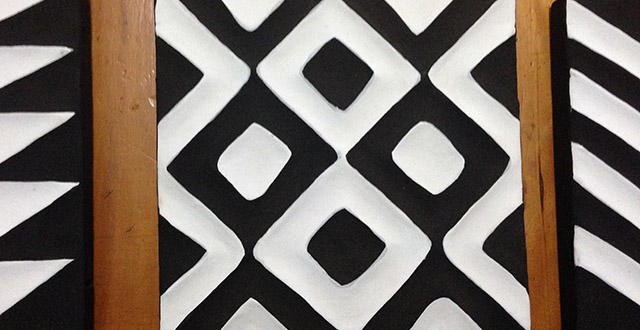
Various B&W patterns can be found on buildings, sidewalks and artwork across Kigali
There’s a palpable energy in Rwanda, as if everyone here knows something big is about to happen. The country is achieving unimaginable successes economically, and is on the radar of multiple multinational corporations as a hidden secret gem of opportunity, about to explode with growth. If I am lucky enough to return in a few years, I’d bet I may not recognize the place, but will still recognize its lovely people.

































 TeamLouka