Top 3 Ways EDs send mixed messages to EMS Providers

I think that on a whole, people who work in the ED (doctors, nurses, techs alike) really don’t know how much your average EMS provider is trying to do the best job with each call – recognize all concerning exam findings, make smart decisions on treatments, and communicate all of that in a useful way to the ED.  Being on both sides, I’ve noticed quite a few ways EDs send mixed messages that can be confusing to even the most seasoned EMS provider.

1.  Stroke – time is of the essence

Or is it?  At every level in EMS, we’re taught that a stroke is a “load-n-go” patient, that speed of arrival to the ED, potentially to receive tPA, is what counts as there’s a 3-4.5 hour window for the therapy to be administered safely (although more evidence surfaces daily questioning this).

Still, the standard of care is rapid transport, yet how many times have you transported a stroke patient and waited 5, 10, even 30 minutes to get a bed and give turnover?  Certainly obvious strokes get alerted and the patient assessed in the desired timeline.  But what about those that fall in a gray zone?  How does your ED handle these patients?  What message does it send to your EMS providers to have them drive lights & sirens (inherently dangerous in itself), only to wait wait wait?  Do you want them to start making decisions about patients with a positive Cincinnati Stroke Scale for say, slurred speech, but without hemiparesis?  As both an EMS Provider and an ED Doc, I’d rather let the ED make that call.

2.  Handwashing is the best prevention

Plenty of studies have proven this.  We hear it every year in Blood Borne Pathogens training, and it’s posted all over the hospital.  Yet, how many EMS workrooms at the ED have a sink in them, or even close by, to encourage convenient and frequent handwashing?  This is a no-brainer.  We’re not talking about adding free Red Bull or a Starbucks machine (I’m looking at you VCU), but something to keep everyone safer and healthier.

In all seriousness, VCU did do an awesome job with the EMS room (which does have a sink).  Now if only I could get access to the Starbucks machine…

3.  Removing patients from the backboard

I think this one is about to self-resolve with the trend to move away from spinal immobilization in the field.  Flash back to 10 years ago when I was a new EMT-B.  Somehow, somewhere in my mind, I got the impression that spinal immobilization was intended to immobilize not just the head and c-spine, but thoracic and lumbar as well.  Time after time I would transport a patient fully immobilized, and before I had finished saying “23 year old fema…” someone would be unclicking straps and removing the backboard.  This often left me wondering, why I had spent that extra time on scene carefully packing the patient, only to have my handiwork undone?  More groans and moans from nurses, “they could have gone to triage if it weren’t for this backboard.”  I was following my protocol, wasn’t I?  Was I doing the right thing?

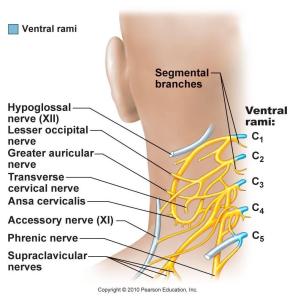
We care about cervical spine injuries more than thoracolumbar injuries because they can kill you.  cervical_plexus1342596044233The nerves C3, C4 and C5 in your cervical spine compose the phrenic nerve, which innervates and controls your diaphragm, the main muscle of respiration.  Damage or sever these, and you stop breathing.  Easy way to remember: “C3,4,5 keeps the diaphragm alive!”  In reality, the meat of immobilization is in the c-spine immobilization with a c-collar, and the backboard is more of a transport device to pick the patient up and safely transfer them to a stretcher and hospital bed.  EMS protocols have lagged behind in philosophy and approach to spinal immobilization in blunt trauma, but with current chatter surrounding its efficacy, I think we’ll finally close the gap.
What mixed messages have you seen where you practice?

~Steph

5 Things I learned in Medical School I wish I’d learned in EMT School

Granted, it’s been 10+ years since I went through EMT school, but I still remember the gist of it. I remember often thinking the course was being dumbed down – taught to the lowest common educational denominator, which at least in the State of VA can be a GED. I actually think that’s fine – someone with a GED can do a great H&P, start CPR when needed and fashion a pretty good sling out of cravats. But EMT class is often the entry point for many folks with capability and ambitions to continue well-beyond the EMT level. I’m a firm believer in setting expectations high – assume your students want to learn as much as possible, and believe that they can. Don’t assume that they can’t understand why. Looking back on medical school and a year of Emergency Medicine Residency, I’ve complied a few things I wish I had known earlier.

1. Appendicitis pain presents around the belly button for a reason

As an EMT, I never understood why appendicitis often presented as periumbillical pain. Understanding things helps me remember better than mere memorization – that’s true for many people.  The classic presentation (50-60% of patients) for appendicitis is pain that starts near the belly button and migrates to the right lower quadrant. To understand this migration, you just need to know a bit about how the abdomen is innervated. When the appendix first gets inflamed, it’s still small and isn’t pushing against other structures. The pain one feels is deep, visceral pain (think “gut”), which happens to follow a course along the midline of the abdomen, known as the splanchnic nerves. This is why patients perceive pain in the middle of their abdomen even though the appendix is located in the right lower quadrant.  As the inflammation and infection worsen, the appendix swells and begins to irritate the muscle and tissues of the abdominal wall, producing pain in the right lower quadrant.

2. Vitals really are as important as everyone says they are

15700449761_a5a063f9c7_b
Abby Hoobler, EMT-E auscultates to determine heart rate

I will concede that my EMT instructors definitely tried to tell us this. Often though, vitals are taught in the second lesson in EMT class, just after the chapter on consent and other medical-legal issues. It’s taught up front in a focused lesson, but really should be a longitudinal study. We spend much more time up front focusing on how to take those vitals, and less time as we go along learning how to interpret and act on those vitals.  Ask yourself – how long is your differential diagnosis for hypotension?  Bradycardia?

indexcards-planning
Vital Sign DDx Carry Cards

If you’re struggling for more than 5, try this: at the top of an index card, write “hypotension.”  List all the diagnoses you can.  Now make similar cards for hypertension, bradycardia, tachycardia, respiratory depression, tachypnea, hypothermia and hyperthermia.  Carry the cards with you on shift.  Ask colleagues to help expand your list.  Pay attention to which conditions appear on multiple cards.  You’ll be surprised how much you can learn.  And next time you feel like you are doing EMT-B&%$# work by taking vitals, you’ll realize you’re probably the most important person on scene.

3. If you communicate well, doctors and nurses WILL listen to your turnover

We want to hear your turnover, if nothing else because you’ve probably asked 70% of what we will, and that will save us time. Being assertive, confident and organized in your presentations is 99% of the battle. Believe it or not, we also really really wish we could have access to the patient care report you wrote. Those initial vital signs and early medication administrations can affect medical decision-making downstream, especially if your patient gets admitted.

4. Stomas, Fistulas, Ports & Other Medical Devices

The EMT curriculum fails to educate providers about common medical procedures and indwelling devices. I never learned about the pieces and parts of a foley, colostomy, mediport or dialysis fistula, yet in any given day, 40-50% of EMS calls can be to Specialized Nursing Facilities (SNFs) where patients have problems with any or all of these devices. We do an ok job with complex devices like LVADs, but there are tremendous gaps otherwise.  Here’s one to start:

Stoma – Any man-made hole through skin or tissue that connects a normally internal structure to the outside world. So, the hole in someone with a trach is a “tracheostomy;” the bag attached to the hole coming out of someone’s abdomen and intestines is a “colostomy,” just like the drain in the head of a kid with hydrocephalus is a “ventriculostomy.” If you want to know the grossest thing on the planet regarding stomas, look up “Philadelphia Sidecar” on UrbanDictionary.  Yes, it’s a thing.

5. Normal Values for Basic Labs

Along the same lines as above, many patients are sent to the ED by a doctor due to an abnormal lab value.  Arguably, if the lab is concerning enough that the doctor wants the patient seen emergently in the ED, then you should probably know the normal range for that value, and what to expect if it’s high or low.  If you responded to an urgent care center for a potassium of 8.2, would you think to call a Paramedic?  I know I wouldn’t have 5 years ago.  Turns out hyperkalemia can kill you, but you don’t get to learn that until Paramedic School.  Whenever I need something complex explained eloquently, I always turn to my friends at KahnAcademy.

Familiarize yourself with the components of a Basic metabolic Panel (BMP) and a Complete Blood Count (CBC) and you’ll be 95% of the way there.

Check out the follow-up to this post, written by my husband, Amir: “5 things I learned in EMT School that I wish I learned in Medical School.”

~Steph

1929583_22597559544_7910_n
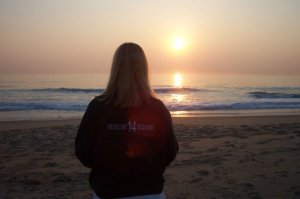
Oceanfront Sunrise, Virginia Beach, VA

DIY Wedding Invites: Start with a blank canvas & fancy it up

Pricey invitations got you down?  Like most people, the hardest part of planning our wedding was making the most out of the budget we had.  I had received some great advice to make a list of the Top 3 elements you care most about, and the 3 you care least about.  That way you can shift money away from low priority items and towards what you really want.

Dead last on our list was wedding cake, but just ahead of that were the invitations.  We wanted something cheap that didn’t look cheap.  Solution: Take a simple but elegant invite and fancy it up with specialty paper, silver leaf or other accents.

target invite
Simple ivory invitation set from Target

1. Pick a classic canvas

Simple is great and can give you a quality canvas for the base of your invite.  Target, Michael’s and other online retailers sell great print-your-own invitation sets that you can format to your home printer specs.  I really like the Gartner Studios collection at Target.  The plain invites also have the benefit of being cheaper, and there’s typically more quantity in stock.

2.  Find accents to match your colors

You can buy fine papers in any pattern you can think of online or at art & craft stores.  Think about the tone you want to set for your big event – you invites will set the stage.  Don’t be afraid to go bold.  The other benefit of a simple, classy canvas is room to really show your creative side.

19bab5cca7ba22f770c4aa12ba100bd9 c5b32119f1b90e59b092cbd70fa5efef mozart_plum_1

PaperSource.com has some great options, or check out Rossi1931.com for a breathtaking collection of fine Italian papers guaranteed to impress.

3.  Accessorize you invites

Adding a 3D element to your invites can really raise them to a new level.  Whether it’s a satin bow, wax seal, or a chrome paper clip, it’s the details that really make it your unique creation.

 10pcs-crystal-buttons-wholesale-wedding-crystal-flower-jewel-bouquet-craft-supplies-wedding-invitation-craft-bling-button-702fb2b6ea5eeb04fa540a436b785f5be95

Just Google “invitation accessories” and get ready to explore endless possibilities.  If you have good self control, consider breaking out your Bedazzler!  Also, don’t be afraid to decorate your envelopes.  Just make sure you check with the USPS regarding any increased costs or anticipated damage to your masterpiece.  Depending on the postage option you choose, invites may be hand or machine sorted, so it pays to ask.

wax seal
Silver wax seal and a satin ribbon

4.  Find that one thing to tie it all together

Your wedding correspondence is a great way to set the stage for your event.  Nothing says it has to be matchy-matchy, but before you get to work on production, try to identify at least one element to tie together your Save-the-Dates, Rehearsal Dinner Invites and Wedding Invites.  It could be as simple as using the same font, or repeating a central color throughout.  In our case we repeated our colors, and changed the design big time from event to event.

70a0f36612f90870d6846a7b6fbd9b91
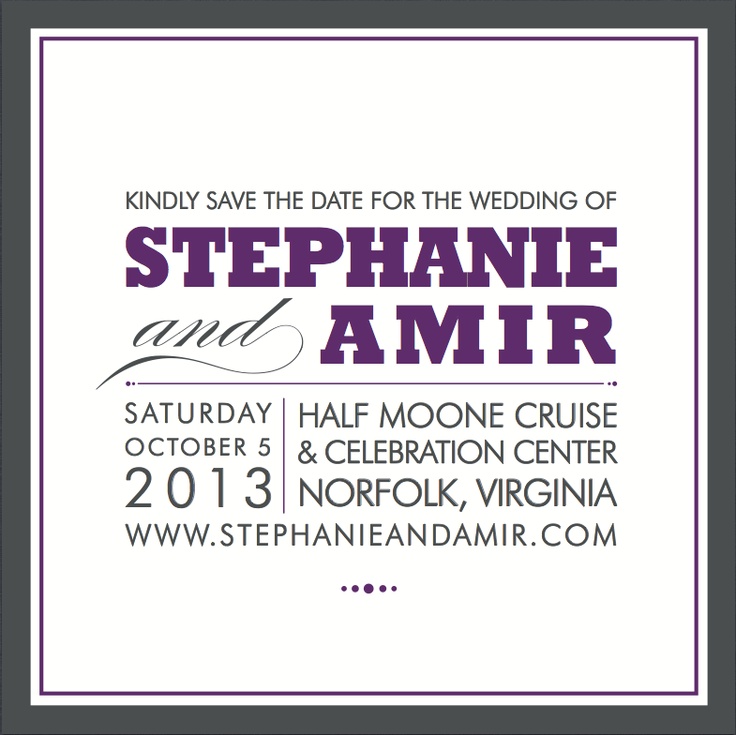
Save the Date
7e5a0fc996d21790f2397258f4a27ad7
Invitation for our Egyptian/Mediterranean Rehearsal Dinner
b67aab4ccb7ee9f75664f8f284ad9a4a
Bridal Shower Invitation

5.  Time to produce your masterpiece

I highly recommend recruiting friends & family to help with this step.  Create an assembly-line structure to ensure uniformity in each step and to keep things swift and fun.  Having multiple bottles of Prosecco on hand does’t hurt either.

4 frame
DIY Customized Wedding Invites – $1.06 each

Please feel free to comment with any questions or ideas that you’ve tried!  Special thanks to my mother, Kaye Krebs, and mother-in-law, Julia Louka, for creating all 240 of our invitations by hand.

~Steph

The patient who helped me understand that I really don’t understand pain

I often get asked about my “worst patient” or “most memorable call.”  Surprisingly, it’s really not the gory stuff that sticks out.  For me, it’s the patients that really make me think – that help me learn.

2103_image
Spinal halo traction device

I’ll never forget my patient that completely reshaped my view of pain.  It was 8+ years ago on the ambulance; my partner and I were dispatched for a “spinal injury.”  When we got on scene, we found a male in his early 40s wearing a spinal halo.  Apparently this man had been in a significant car accident 6 weeks earlier, suffering a spinal cord injury requiring surgical repair, and subsequent placement of a halo.

He had also been dealing with severe pain and resultant opioid dependence which was quickly turning into abuse.  His surgeon was aware of this and was closely monitoring his pain medications.  The patient had used the last of his pain meds that morning and called the surgeon for a refill.  The surgeon, concerned for addiction, denied his request.  His concern is legitimate.  For the first time ever, in 2013, more Virginians died from prescription overdoses than auto accidents.

It’s important to step aside for a second here and note how a halo actually works.  As you can see in the figure, there’s a metal brace that encircles the head, with metal rods pointing inward.  These metal rods have screws on the end which literally screw into the skull bone.  Desperate for pain medication, he unscrewed the metals rods from his skull, knowing that he would eventually be guaranteed to receive more pain meds. He would need the halo replaced, and it would be unethical to do so without analgesia.

I remember wondering how crazy and addicted this guy must be to do something so extreme to game the system to get what he wants.  It wasn’t until about 4 years later after taking Neuroscience in medical school that it finally made sense to me.  It was really much more simple that that.  I’ll deliberately use the word “discomfort” rather than “pain.” For this man, the discomfort of his addiction was more extreme than the pain of unscrewing metal from ones own skull.  In his brain, the screams for opioids drowned out any other pain, any other needs.  He had a singular focus. I realized then that whatever addiction discomfort he was experiencing was way outside my own personal context of pain.  I vowed never to judge people for their pain again.

On a side note, from an EMS standpoint, the call did present a difficult challenge: How do you stabilize c-spine and safely transport a patient with a known spinal cord injury but with a halo that’s not doing its job and blocks the use of any traditional stabilization devices?  We opted to use cravats and boxed 4x4s to fill in the gaps between the halo and the skull, and dedicated one provider to manual in-line stabilization.  He was transported to the Tertiary Care Center for Neurosurgical revision of his halo.  I don’t know what ever came of his opioid addiction.

~Steph

2015 CORD CPC & a Side Trip to Sedona, AZ

It’s been quite a number of years since I’ve attended a conference for work.  In fact, I think the last one may have been Search Engine Strategies in 2007 as a speaker.  So, when an email came out requesting volunteers to fly out to Phoenix to tweet the event, I jumped.  It didn’t hurt that Amir was already planning to attend to present his case in the competition.  At the Counsel of Residency Directors Case Presentation Competition (CORD CPC), residents present a rare patient case seen in the ED, and Attendings try to guess the diagnosis.  Presentations are judged and winners selected for future presentation at ACEP.

To prepare for the event, I spent a little time brushing up on tweeting; while I consider myself heavy into Social Media, I’m more of an Instagram and Facebook gal.  My Twitter handle still echoed my maiden name, and didn’t convey anything about medicine or EMS, so I created a new one.  

DAY 1

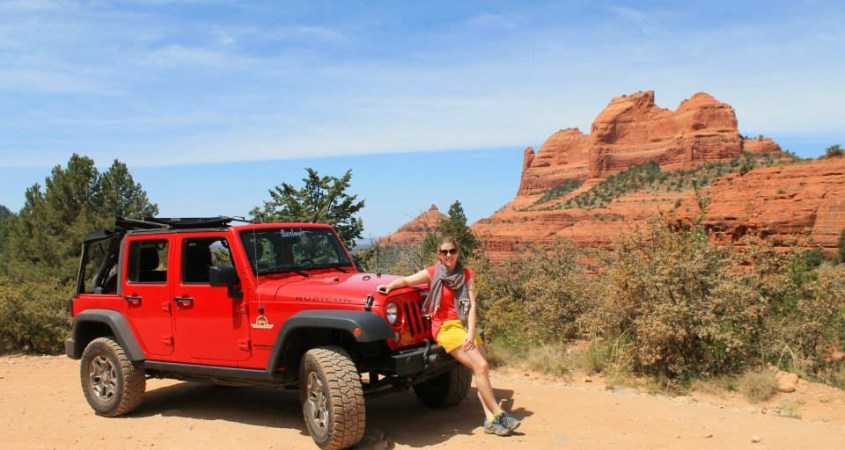
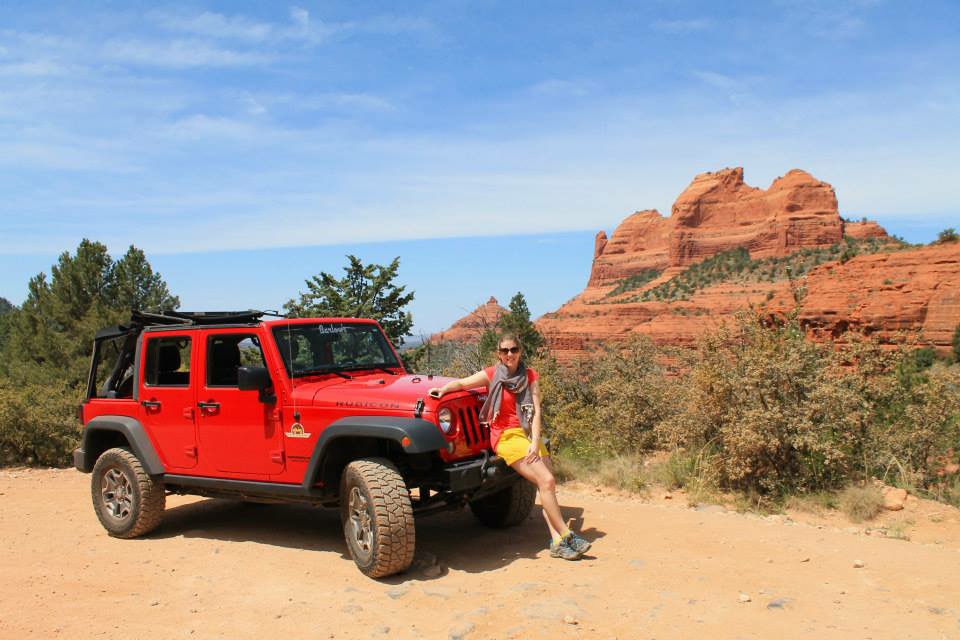
Amir and I both got into town a day early, so we decided to take a 1/2 day trip to Sedona and rent a JEEP to explore the trails.  Amir found a great place on TripAdvisor.com called Barlow’s.  We drove 2 hours north from Phoenix to Sedona, and even without a reservation, they were able to rent us “Jennie,” an awesome red, 4-door Jeep Wrangler Rubicon with very “knobbly tires” as Amir says.

IMG_0399

We started at the Schnebly Hills Trail which the folks at Barlow told was was good for beginners and probably had the best views.  Boy were they right.  It took about an hour to drive in and an hour to drive out.  We stopped along the trail and hiked up a bit to the Merry Go-Round Rock.

FullSizeRender (1) FullSizeRender

One of the best aspects of the Jennie was that she came with Sirius Satellite Radio (apparently all of Barlow’s Jeeps do).  On the way up we rocked out to the Classic Rewind channel, and on the way back down we enjoyed the Pearl Jam Station.  After conquering Scheneby Hills, we proceded on to Soldier Pass Trail which we were told was “much rockier and more advanced.”

The trail was very similar to our experience in Barbarella in England, in that the “road” was only wide enough for one vehicle at a time.  Fortunately it wasn’t very crowded, and we only had to pull off for others twice.

FullSizeRender (2) FullSizeRender (3)After our day of intense off-roading, we were starved.  Leave it to Amir to find the most random taco truck on the side of the highway.  Whenever he suggests an off-beat eatery, I always say yes.  He has a track record of success.  Sonora Taqueria kept his streak going.

FullSizeRender (6)

DAY 2

Day 2 the real work started.  Amir donned his suit, I gathered my 2 iPhones, iPad mini and 3 apple chargers, and we headed off to the Sheraton Wild Horse Pass for a day of CPC presentations.

The presentations were packed with tons of “nuggets” as Dr. Wills likes to say.  I did my best to capture some of the ones that resonated with me most.  Sometimes they were coming faster than I could type. And of course, I did a live broadcast of Amir’s presentation via periscope (unfortunately the link has since expired).

Trecia and I were both there representing VCU Emergency Medicine.  We swapped ideas on what tweets were getting the most traction, and provided tips on artful posture to optimize photogenicity.

Lunchtime was needed to recharge in more way than one!  I only managed to trip one attendee who was texting and not watching where she was walking.

Amir presented his case of a 54YOF with back pain.  The Attending response was so well-done that we all found ourselves questioning if a secondary diagnosis should be considered.

All-in-all it was a great conference and event.  We learned a lot, met some great people, and saw some great sites.  I am thankful that VCUEM allowed me to participate.

CCg-UNgUgAA-_oA
Michelle Troendle, MD – Alisha Johnston, DO – Pete Moffett, MD – Stephanie Louka, MD – Amir Louka, MD – Trecia Henriques, MD, JD – Joel Moll, MD

Here’s how the tweets stacked up in the end:

stats