
Author: Amir Louka

Extreme Rental: Jeep Rubicon – Sedona, AZ

Originally posted on JPFreek.com

I always prefer the window seat. Mostly because I will hold my urine to the edge of kidney failure rather than try to cram my 6’5″ frame into an airplane toilet, and having to get up repeatedly to let my weaker-willed neighbors past makes my eye twitch. But there’s more to it than bladder control. I control the shade, and at my leisure I can peer out and down, unobstructed, over the great expanse below. 

windowJust a few weeks ago, I found myself in that prized position, looking down on the vast Senoran Desert, on my way to Phoenix, Arizona. From twenty-thousand feet, it’s a wasteland. Seemingly random outcrops of red stone rise and fall away, separated by endless miles of nothing at all, except every few minutes we’d drift over one of those mega-farms with the funny patchwork of circular fields. With nothing else to do but think of the bone-crushing pain being inflicted by the seat in front of me, I found myself wondering, “Just how could those first settlers have made it all the way out here in their Conestogas?” Gold or not, it looked impassable. 

Soon after, we landed in Phoenix, a quilt of strip malls sewn together with massive highways. I was there for a conference, but arrived a day early to explore with my wife. We settled into our hotel and quickly planned a trip to Sedona, just a few hours north, and set off early the next morning with our GPS aimed for Barlow Adventures

 We arrived around ten, and our hearts sunk to find half-day rentals start at 8 AM or 1 PM. They were kind enough to squeeze us in anyway, and with just a glance at my insurance card handed over the keys to Jenny. Oh Jenny. A red four-door Rubicon with the hips of a belly dancer and treads of an M1 Abrams. To my wife’s mixed dismay and delight, I fell immediately in love. 

The folks at Barlow gave us a quick, but thorough, tutorial of the best trails to suit our style – an easy climb to get acquainted, culminating in stunning views, followed by a technical crawl down into a valley full of history. With that, we put the top down, turned the radio up and got rolling.

Immediately, with a blue sky above us and red rocks all around, we felt we could conquer the world, just my wife, Jenny and I. Within a mile or two, we made it to the first trailhead and checked our notes. “When you pass the gate, put her in 4-HI and reset the odometer.” Done and done. 

18830_10100612306449837_7816765944576347933_n

Schnebly Hills Trail is a winding, bumpy fire road up the side of what I can only assume was Schnebly Hill. Jenny plowed over everything in her path. The only thing limiting our progress was that we kept stopping to take photos because the scenery just kept getting better. Massive, imposing rock formations surrounded us with hardly another human in sight. Cacti, iron woods and the hot sun above us – it was the setting of every spaghetti western. At first, I tentatively wove my way along, afraid to test the limits of the $25 tire and glass coverage we’d added. But my lack of experience with off-road driving and the sharpest, most punishing rocks proved no match for Jenny’s sheer brawn. We made it to the top, where we went on foot to explore the “Merry-go-round,” a rocky outcrop boasting a jaw-dropping panorama of the entire valley. We sat down for a few minutes to soak in the sun and bask in the diem we were thoroughly carpé-ing. 

If the way up was a learning experience, the way down was an educatioAmirn in fun. A downhill slalom, probably at higher speeds than Barlow would have liked, with a Pearl Jam soundtrack provided by Jenny’s Sirius XM radio, Schnebly Hill melted away. At the bottom, once again on pavement, we consulted the maps provided to us to navigate our way to the next trail. 

Soldier’s Pass was an entirely different beast altogether. This time our notes said, “4Lo, nice and slow.” I dropped Jenny into low gear and flipped the sway bar disconnect switch, allowing the axles to move more freely. Free is good. Let’s go. 

11149437_10100612306839057_5446780083734526773_n (1)The first thing we came across was a sign telling us if we couldn’t make it down the first boulder crawl, not to bother with the rest of the trail. Needless to say, Jenny took it all in stride, and again more than compensated for my lack of having any idea what I was doing. We rumbled down the flight of rocks, coming to rest on a trail just a few inches wider than our Wrangler. For the next hour, Jenny took us back in time. We clambered up and down some gravity-defying inclines on our way to an enormous gaping sink hole exposing a few million years of sedimentary layering. On the way back we visited the Seven Sacred Pools, from where General Crook marshaled his campaign against the last of the Apache. Jenny never missed a step. From start to finish, all I had to do was point her in the direction we wanted to go, and our girl’s 285hp took care of the rest. Sadly, with our first two trails down, we were nearing the end of our four hour escapade. We turned back towards Barlow and, with heavy hearts, turned over the keys.

Needless to say, getting back into our rental car was rather disappointing. If it hadn’t been for the unbelievably good taco truck we found on the way back, I may actually have shed a tear to leave Jenny behind. The next day at our conference was even less exciting, but the last drops of adrenaline still had me feeling like Superman. I finally understood why people buy those burly, lifted, totally unnecessary vehicles – because they must turn even the most blasé commute into an experience

On the flight home, I thought again of the rugged pioneers who trekked across a continent in rickety wagons with every one of their earthly possessions in tow. I imagine they’d be pretty annoyed to know how easily some guy from the East Coast can do it now but undoubtedly proud that they paved the way. I tried to look out the window to catch one more glimpse of the great cactus strewn expanse where roads are once again optional, but I was stuck in an aisle seat. I didn’t care. We’d had an unforgettable adventure. And, more importantly, I was in an exit row. 


~Amir

10376278_10152942299094545_6761193363471758352_n

Celebrate the Small Stuff: Surviving the Marathon of Medical Training

In just two short months, thousands of newly minted young physicians will be walking into new hospitals, new jobs, and new responsibility. They’ll notice something unfamiliar tickling their calves on that first day – a long white coat having replaced the short one, which in our case went up in flames just days earlier. They’ll be excited and terrified, nervous and naïve.

A doctor’s “intern year” has become something of a legend in pop-culture, portrayed as twelve months of rude awakenings, sleep deprivation and verbal abuse, +/- a love triangle or two. Having been there, done that and proudly owning the t-shirt, I can say the reality couldn’t be further from the truth – at least it doesn’t have to be.*

To all the newbies out there – yes, there will be long hours and sleepless nights. You’ll occasionally go a full week without seeing your loved ones and eat whatever/whenever you can. Med school will seem a lifetime ago when you’re being asked at 3am what to do for a dying person, and you’ll wonder why they never taught you all the things that matter. But Steph and I have stumbled across the solution to all of that.

10258258_10152226340584545_6611748125605401302_o (1)
Champagne celebration for med school graduation | Photo credit: Amy McClure

We celebrate the small stuff.

Sure we popped champagne like we’d just won a Grand Prix on graduation day, but we’ve also raised a glass to finishing tough rotations, making a clutch diagnosis and running our first double cardiac arrest. We’ve made a ritual of rare Sunday mornings off together with a supply of cinnamon buns always available, just in case. Sometimes we just celebrate because it’s Tuesday and we can. By making a big deal of small victories, the roadblocks become surmountable.

https://www.instagram.com/p/BE2LZoYPaII/


Don’t get me wrong – residency is tough. In the past month, three of my patients have died, and I’ve told four others they have cancer. But for every bad day I have had there have been a dozen that left me thinking, “I have the best job in the world.”

I encourage all the newbies out there to approach this next chapter the same way. And remember: when the champagne runs out, there’s always more coffee.

https://www.instagram.com/p/91JrKjPaPL/


*Note: does not apply to general surgery residents. Your life will suck.


How do you like to celebrate the small stuff?

~Amir


https://www.instagram.com/p/6lCjdKlzlj/

Go Go Gadget Defibrillator: What I Do and Don’t Carry on Duty

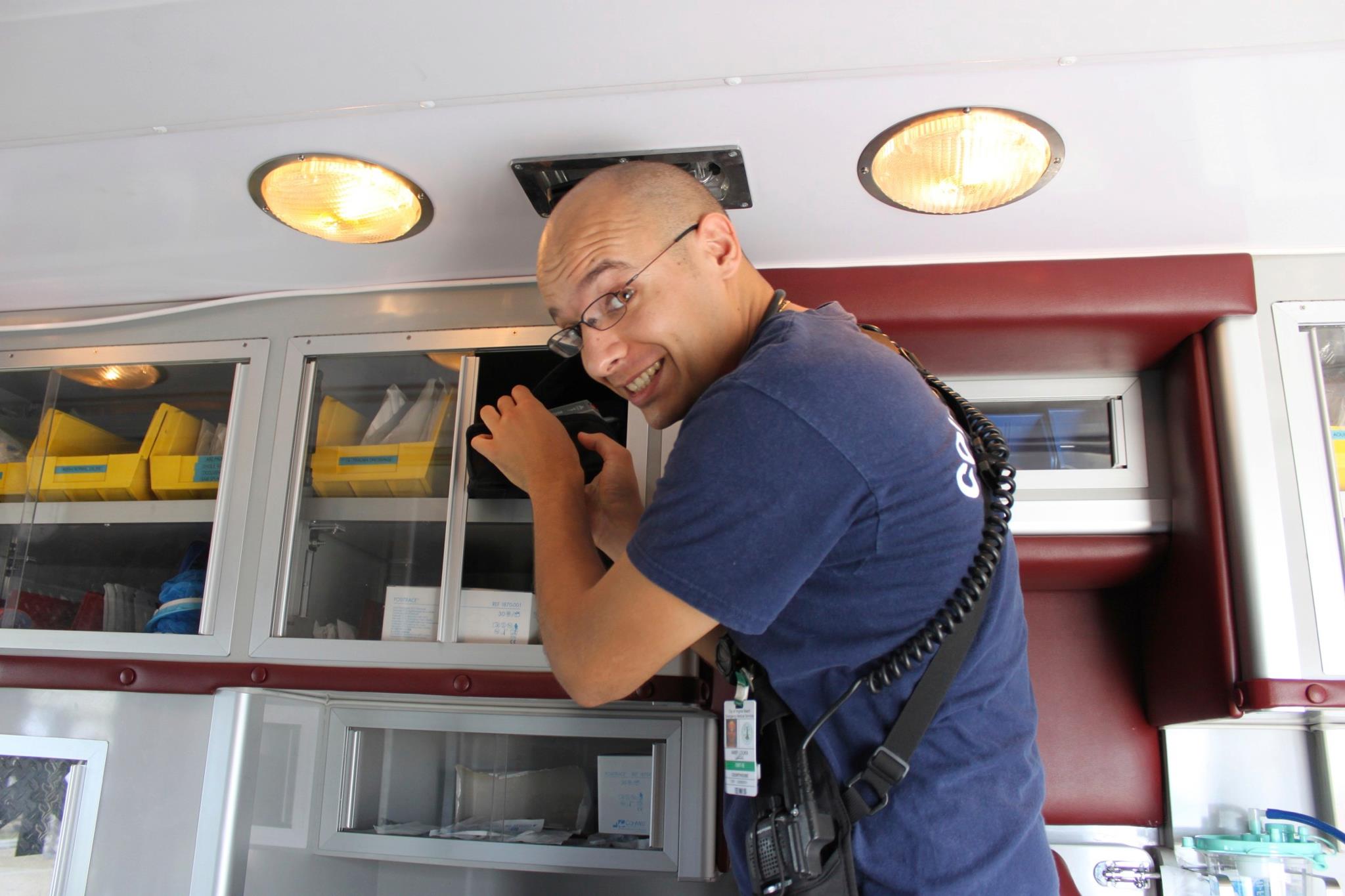
Everything lies on a spectrum, especially in the world of medicine, and a medic’s choice of personal kit is no different. From Mr. “I don’t care if it’s a rectal bleed, gloves are for rookies,” to your favorite Rescue Rambo, who would use a Medivac unit as his daily commuter if he could, we each choose a few (possibly) useful things to keep within arm’s reach while on duty. While Steph and I may work at the busiest Level 1 in the state, and have any and all imaginable technology at our disposal while there, being outside the hospital is a different story entirely. So here’s a look at what I choose to bring along and what I feel can make a difference when the tones go off.

ambulance rookie
Photo copyright: The Lonely Medic

1. My very own pulse ox

A few years ago these things could set you back a few hundred dollars, but now you can pick one up on Amazon for about $20 with free shipping. Beyond the general appearance of a patient (Again, a spectrum: from “Ugh, why 3am?” to “Oh… that can’t be good.”) few things can give you as much information about the person in front of you as this tiny device. Patient looks like he’s working to breath? Maybe it has something to do with that O2 sat of 65% – better call back the engine you just cancelled.

It’s part of my approach to almost every patient I encounter – I introduce myself while lowering myself to their level (standing over a patient is imposing and dominant, even if you’re not 6’5” like me, and not generally comforting to little old ladies). I slip on a pulse ox while taking his/her hand and wrist to feel a pulse. As well as instantly assessing perfusion, motor and sensory function, that simple, brief human contact goes a long way in gaining trust and establishing rapport. Fun fact: the servers at Hooters do exactly the same thing.

2. A radio

We take them for granted, but this thing is your ticket to unlimited resources on-scene and your lifeline when SHTF (like this day in Virginia Beach in April 2012). Need manpower? Engine’s en route. Leave something in the truck? Someone can grab it on the way in. When my partner had a seizure on duty and wasn’t breathing, I hit that little orange button and said a few words… You’d have thought WWIII had broken out. When every unit in a five mile radius was headed my way in seconds, I realized that motorola is more than a faceless voice that tells you where to go. I keep mine in a reflective shoulder strap for added safety, to which I also attach the pulse ox for quick and easy access.

dont_push_button

3. A knife/multitool/trauma shears

I carry one of the above, depending which I can find while getting ready for duty at 4am. I don’t carry all of them. I don’t carry multiples of any of them. No boot knives or ninja stars, no Ka-Bar combat bayonets. It’s volunteer EMS, not Vietnam. I use it to cut stuff.

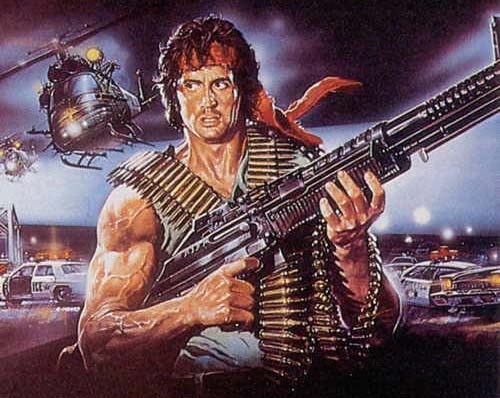
image (2) RAMBO
Every squad has this dude.  You know who I’m talking about.

4. A mini maglite

One of the things I love about getting outside the hospital are the places we go. We often see another side of society we otherwise never would – dark alleys, abandoned buildings, and deep ditches in the dead of night. I’ve had a mini maglite since day one, and it’s never let me down. If I have a funny feeling about a place, I might bring along one of the big D cells we keep in the truck, but 99% of the time the mini gets the job done.

5. Steel toed boots and well made pants 

Steph regularly wears shorts and sneakers on duty. I just don’t get it. Even if it’s 100F in the shade, you’ll find me sweating in my 5.11s. Who knows where you’ll find yourself, or what you’ll find yourself in, on the next call. Safety first.

image (3)

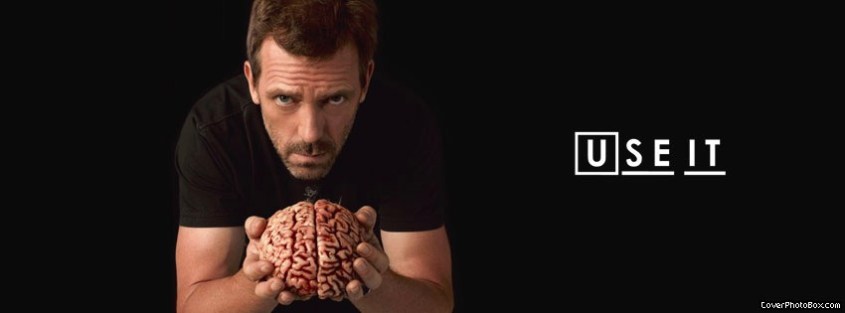
6. My brain 

Forget everything I’ve said up to this point. Brainpower is the only thing you NEED to bring along. This is how you’ll navigate tough problems, assess complex patients and choose the right interventions. Without it, you’re no good to anyone. With it, you’re a real-life hero. Signing up to take care of people in need is also a commitment to lifelong learning. You owe it to your patients to practice, stay up to date, to learn new things and continually improve. If you’re reading this, you’re probably on the right track. And keep in mind, your partner probably has one too, complete with its own experience, training and know-how. Use ‘em.

image (1) HOUSE

Honorable Mention: A stethoscope 

You might have noticed the most ubiquitous piece of medical equipment missing from the list above. Truth be told, these things are living dinosaurs. This year happens to be the 200th anniversary of the stethoscope’s invention, but contrary to what Mr. Littman would have you believe, they have barely changed in all that time. Too often, the scene is just too noisy and chaotic get an accurate exam, and in most circumstances requiring immediate intervention you can get the same information in other ways. Breathing difficulty with a history of both CHF and COPD? Try a neb while looking for other signs like JVD and pitting edema. It’s rarely exclusively one or the other. Tube placement? If you’re not using end-tidal you’re behind the times. Trauma and hypotension? Prepare to dart the chest and get moving.

3 dishes
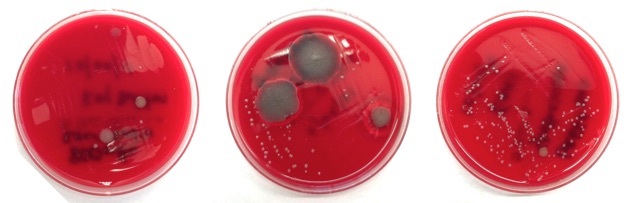
For the record, using the shared stethoscope in the jump bag is not an option. This is what grew from swabs Steph took off a stethoscope.

In my experience, the rubber necklace acts more like a police officers badge or firefighter’s helmet than a diagnostic instrument in the field, clearly identifying you as medical personnel. That’s a perfectly good reason to keep one with you though, so feel free. But if you’re like me, it usually stays in the truck.

All that said, the day they come out with a pocket defibrillator, I’ll be first in line.

~Amir

 336111_10151109792184545_1500950861_o (1)

Be Heard in the Bay: Tips for Turnover on Critical Patients

Apparently 12-1 is not an acceptable ratio when it comes to his & hers blogging… So in the interest of continued marital harmony, here’s a few thoughts to newbies on making yourself heard in the resus room.


It happens to the best of us. You’ve been sitting around the station all night and finally decide it’s safe to slip the boots off, only to be immediately reminded that the trauma gods do in fact enjoy tormenting you. On come the lights, quickly followed by a dispatcher’s pressured voice. As you glance at the clock reading 3am, a few words stand out. Gunshot wound. Bleeding. Unconscious.

For the next fifteen minutes you’re on autopilot – reflexively cutting away clothing, occluding that bubbling hole in the chest and dropping a needle down through the second intercostal space, just like you were trained. You watch the vital signs move back towards normal and you justifiably feel like a total badass. Time to load and go.

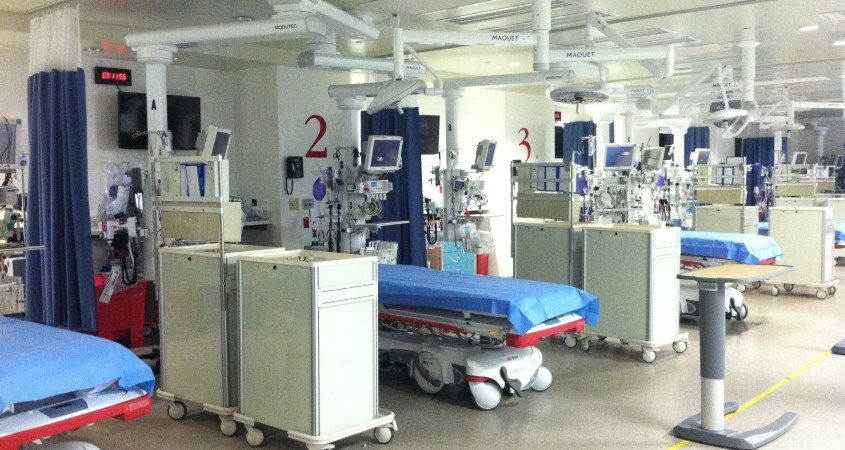
As you wheel into the trauma bay at your local Level 1, you’re confident you’ve done everything right. There’s the team, gowned and gloved, ready to take over.

IMG_1105 (1)

“………..”

Inside your brain is screaming, “Work mouth, you bastard!” Now is the time to prove to all these doctors how awesome you are, how you saved this guy’s life. “I’ve done all the hard work. Speak damn you!”

“Ummm.. This is Steve, he’s a male..”

“SPEAK UP.”

“Steve! He’s a male! And.. we found him outside the bar – the one over off Main, well Main and 3rd… closer to 4th. He has asthma and…”

“Airway’s patent! Breath sounds clear bilaterally!” It’s too late. You lost them.


Want to keep the brief attention of your ED colleagues and trauma team? Here’s how:

1. Figure out who’s doing the talking – most critical patients roll in flanked by a entourage of medics, EMTs, fire fighters and/or police. Add to that the near-limitless helping hands in a large ED and there’s usually no need for the AIC to be occupied with distracting tasks like moving the patient off the stretcher or switching O2 from the portable tank to wall supply. Instead, the AIC should be at the foot of bed, addressing the entire room. Yes, everyone – the doctors, nurses, techs, social worker, chaplain and ogling med students ALL need to hear what’s going with this guy, so be ready to project your voice and speak clearly.  And if you are the trainee, don’t disappear to clean the stretcher – stick around and listen.  It’ll be your turn before you know it.

2. Take a deep breath – You made it. Even if the patient is actively coding, you’re here and your job is almost done. The blood splattered sidewalk, flashing lights, noise and confusion are all behind you. It’s our job to shut up and listen, and we will – for about 30 seconds. Starting your turnover in a calm and collected manner is the first sign to us those precious seconds will be well spent.

3. Age. Sex. Chief complaint/most pressing issue. – The first two always go off without a hitch. The third seems obvious, but every now and then it just takes an inexplicably long time to get around to mentioning the multiple stab wounds or EKG reading ***STEMI***STEMI***STEMI***. By the end of your first sentence we should know who your patient is and what went so wrong with their day to now be spending it with all these highly trained individuals.

4. Stay focused – This is not the time for an exhaustive presentation of the history and physical. A remote history of paronychia isn’t of much interest in someone with hemiparesis, but the time of onset certainly is. We can wait to hear she takes 500mg of Vitamin C daily, but Coumadin is a med I want to know about up front. By far this is the most difficult thing to master, because it often means reading our minds, knowing what’s important and what isn’t. A few stand out items in no particular order would be: loss of consciousness yes or no, symptoms improving or worsening, mechanism of injury, relevant surgeries, and medications including blood thinners, cardiac drugs such as beta blockers, and insulin.

5. Vitals – What are they now? Were they different at any time? What do you mean you only got one set?

6. Injuries, EKGs, physical exam and what did you do about it? – This is your chance to brag. “Patient was altered and EKG showed sinus bradycardia. I gave 0.5mg Atropine x1 with improvement in heart rate and mental status.” “The right leg was shortened with deformity at the mid-thigh. I gave 100mcg of Fentanyl and applied a traction splint.”

7. Access – ET tube, King airway, NPA? What size IVs and where are they? Did you drill IOs instead? Kudos if you did.


That’s it really. In 15-30 seconds we should hear what’s wrong with this person, how did it happen, what changes happened while he/she was with you and what did you do about it.

Giving a concise, accurate turnover takes practice. The pressure is on and your adrenaline is already up. You’re mentally exhausted, but those last few moments before he or she is off your stretcher are often the only insight doctors get into what’s going on, so make them count. Once the dust has settled, feel free to pull any of us aside for some feedback.

~Amir

FullSizeRender (6)

5 Things I Learned in EMS I Wish I’d Learned in Medical School

Hello world. Mr. TeamLouka here.

I hear my wife started a blog… and in typical Steph fashion, three days later she has hundreds of viewers in 10+ countries?! Well, I can’t let her have all the fun, and its TEAMlouka afterall. So here’s my take on…


5 Things I Learned in EMS I Wish I’d Learned in Medical School

1. ABCs

Airway. Breathing. Circulation. Often boiled down to the ever-popular “air goes in and out, blood goes round and round, and any variation of either is bad.” Seems simple enough. You might even think such a simple, crucial concept would be covered on day one of medical school, just like it was in EMT class.

False.

I distinctly remember sitting in the auditorium at EVMS back in August 2010 and thinking to myself, “OK. Let’s do this. Doctor training, go!” The lecture topic? Intro to medical molecular cellular biology, of course! Because when that critical patient rolls in, all attention should be directed towards the golgi apparatus and endoplasmic reticulum first. Funnily enough, I didn’t leave that class feeling any more clever.

Now in all fairness, ABCs were covered in medical school. The problem is that the single most important concept in the assessment of an undifferentiated patient was sandwiched somewhere between memorizing The Krebs Cycle and the chapter on brain eating amoebas.

So out of four long, expensive years, just half a day was smushed in there for a shoddy BLS/CPR course. By that point, most of my compatriots had drunk the Kool-Aid – BLS was a boring day off for some and an unwelcome eviction from the library for others.

The effect? Time after time, I have watched medical students, residents, and even some attendings rack their brains for a diagnosis, visibly straining to remember what medicine or scan should be ordered next, when called to the bedside of someone going downhill. THE PATIENT ISN’T BREATHING. But is it multiple endocrine neoplasia type 1 or 2? THE PATIENT ISN’T BREATHING. Did she say her great-great-grandmother had psoriasis? I DON’T FEEL A PULSE. Did you do a rectal exam? MAYBE WHEN I FINISH THESE CHEST COMPRESSIONS.

(OK all you sticklers for AHA guidelines out there. I know it’s CAB now. But no one says that. It’s ABC. Forever).


2.  Acuity is just a number

In every ED there is some kind of triage coding system. Usually it’s a numerical assignment, 1-6 in ours, given to patients when they arrive, which roughly translate as:

  1. “We need a doc in here!”
  2. “Doc, my chest hurts since this morning.”
  3. “Doc, my belly hurts since yesterday.”
  4. “Doc, my toe hurts for the past 18 years.”
  5. “Need a med refill, Doc.”
  6. “He’s dead, Doc.”

We’ll that’s great when it works. But one EMS call in particular taught me to maintain a healthy dose of skepticism with those low acuity patients.

It was early in the morning. My partner and I had just signed on were still fueling up on coffee and pancakes. So when the call crackled over the radio for a priority 3 injury, “patient stubbed his toe,” we understandably finished our coffee and waited for the check. We drove to a house about 10 minutes away in no rush at all. Why the hell would someone call 911 at 6am for a stubbed toe?!

The question was partially answered when we walked into the house to find a pale, diaphoretic man sitting in his kitchen… holding a slightly bruised toe.

Turns out this guy walked outside to pick up his newspaper and collapsed down by the mailbox. He spent half an hour crawling back up the driveway, and at some point along the way managed to stub his big toe, much to his dismay. He also just happened to be having a massive heart attack.

Moral of the story: Lay eyes on the patient, then finish your coffee. Just in case.


3. Where Patients Come From

Well when diabetes and high blood pressure love each other very much…

No, that’s not what I mean. I mean physically, socially, emotionally. You see, most patients arrive to me looking more or less the same – propped up on a stretcher or in a wheelchair, clutching some form of puke receptacle, and flanked by a pair of overworked, underpaid EMTs and/or an overworked, underpaid nurse. They’ve usually been cleaned up a bit to meet some unwritten, undefined minimal standard and bare few traces from whence they came. By the time they get admitted upstairs, patients are in a standardized gown, on a standardized bed, eating a standardized turkey sandwich.

This creates a poorly recognized issue for us as doctors. We fail to see the idiosyncrasies of a patient’s life outside of the hospital and tend to place them into one of three broad categories: homed, homeless, or living in some kind of facility (nursing home, rehab, assisted living, jail – take your pick). Each of these then receives the ultimate American qualifier – insured or uninsured. That assignment basically dictates more about a patient’s care and treatment than their actual medical diagnosis. And it is horribly flawed.

Only through EMS did I have a first hand, and a first nose, perspective of just how different life can be for a fellow human being. I have clambered over mountains of hoarded garbage in what looked like a upper-middle class home from the street, been in nursing homes which would put North Korean labor camps to shame, and even pulled a young woman out of the bottom of a port-a-potty where she spent the night sleeping in a tub of chlorine and human waste. There is a spectrum to everything, and the circumstances of a person’s life leading up to his or her encounter with me can tell me as much or more about their condition, and what I can do about it, than the symptoms they describe.

I distinctly remember a call to assist a man complaining of some ambiguous pain complaint. He had just been discharged from the hospital that morning. But at well over 600lbs, he was entirely unable to care for himself at home. Never before, and never since, have my nostrils known such misery. He couldn’t fill his prescriptions, get a glass of water, or even get out of the bed to use the toilet. He was, literally, a mess.

The medics bringing me patients now have my full attention. I want to know what they know. They also have my respect – I know what their noses have been through.


4.  It’s their emergency, not mine.

This one is simple. Every person arriving in the ER is there because they feel that their condition – be it crushing, unbearable chest pain or thirty minutes of life-shattering hiccups – just cannot wait another moment to be addressed. But as a newbie EMT recruit, doing my EVOC and driver training, I was taught, on multiple occasions, a memorable and poignant philosophical lesson:

“Dude. It’s their emergency, not ours. Slow. The Fuck. Down.”

-Socrates, Field Training Officer

Now that might have had something to do with the pedestrians diving into the bushes every time we responded to a call, but it sticks with me. On a busy scene, with lights flashing, sirens of approaching units blaring, family and bystanders screaming in my ear, multiple patients and limited resources, the public looks to the collective “us” that is Police, Fire and EMS to take control of situation. In the ED that role shifts to the doctors.

Approaching even a critically ill patient, with nurses, medics and techs racing around grabbing equipment and medicines, my job is to remain calm, cool and collected. Allowing my own tumblr_ls44cgafCl1qaa241level of anxiety to meet that of my patient won’t get anything done more quickly and certainly won’t hasten the cure.
Unfortunately medical school does a terrible job of teaching this. Learning about the management of truly sick patients takes place more in the classroom than at the bedside. There is infinite time to think, weigh the options, and look up the answers. The student is usually sent to see the less acute patients, or tags along to observe when things get dicey. Then, day one, intern year, with that long white coat tickling the calves of someone who has never ordered morphine or a blood transfusion or called a surgeon in the middle of the night to say I need you down here now, many struggle when it comes to taking a step back. Looking. Listening. Thinking. Acting.

So when grandpa rolls in clutching his chest, don’t be alarmed if I’m not barking out orders like you’ve seen on TV. I’ll be at the bedside, taking his pulse, followed quickly by taking my own.

5.  Scene safe, BSI

If you had asked me five years ago for my thoughts about the pervasive mantra of EMT recruits everywhere, “Scene safe, BSI,” my response would have been an incomprehensible tirade of expletive filled muttering. I’ll wear gloves. I get it. STOP MAKING ME SAY IT. Every skills station, every practical exam, every day. As if the mannequin we were pretending to bandage had actually just escaped some Liberian Ebola quarantine zone and standing in the doorway with jazz-hands to show I remembered to put on my imaginary gloves would somehow protect me. F&*%#$#!

jazz-hands-o

For those of you who don’t know, BSI stands for “body substance isolation.” The idiom is a reminder to EMT students to look for potential danger first, to protect themselves and their partner before even attempting to help anyone else, and to wear gloves. One thing is certain – no one gets extra points for getting hurt on scene and doubling the number of patients, and if you get hepatitis, you lose.

While this definitely remains true in the hospital (i.e. Steph’s “nonverbal” psych patient who wasn’t talking because of the razor blade hidden in his mouth), it goes further than that. It’s a reminder to take care of ourselves, and each other, through the emotional and physical demands of our work. Believe it or not, watching people in pain and dying every day can be rather taxing on the psyche.

Medical school spends a lot of time teaching us how to help others through the process of aging, illness and, ultimately, death. We learn every aspect of disease, how various ailments ravage the body, each in their unique way. But little time is spent learning to carry the weight of our responsibility or dealing with the death of a patient.

In that respect, EMS excels. CISM (critical incident stress management) is a program which helps medics through the worst of calls. The team, staffed by members with specialized training, provides everything from one on one counseling to group debriefings. All hospitals should have such a system.

And for God’s sake put some gloves on when you go in the room. C diff is a terrible, terrible thing.


So that’s that. 5 things which make me a better doctor, all learned at the bottom of the medical totem pole. From the basics of taking care of someone else, to the more complicated task of watching out for myself, EMS has played a huge role in my training. Even as a doctor, I continue to learn on every shift, and that is what keeps me coming back for more.

~Amir

328441_817390815167_1572593932_o (1)