
This morning we packed up our chalet—another Airbnb win—and somehow managed to squeeze ourselves and all of our luggage back into the Hyundai Santa Fe. I’m still not entirely convinced the laws of physics weren’t temporarily suspended.

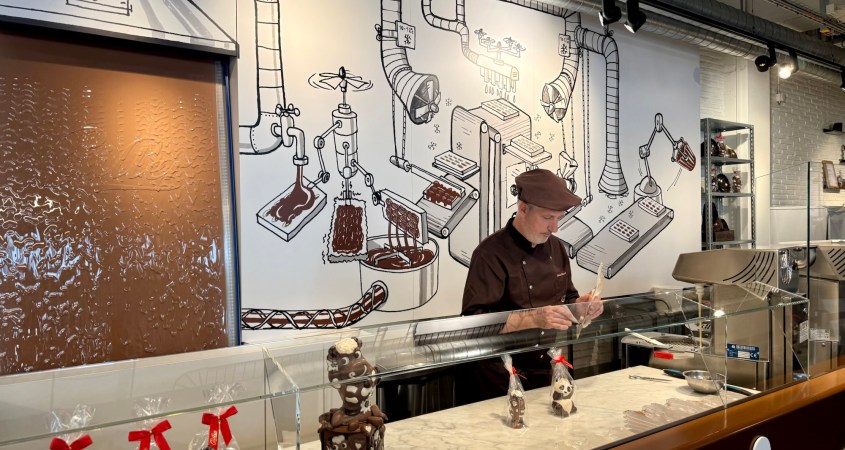
Before this trip, the one thing Lidia repeatedly said she wanted to do in Switzerland was tour a chocolate factory. She’s a bit of a chocoholic, so visiting Maison Cailler was at the very top of her Swiss bucket list. Fortunately, it was perfectly positioned to break up our drive from Les Collons to the Zurich airport.
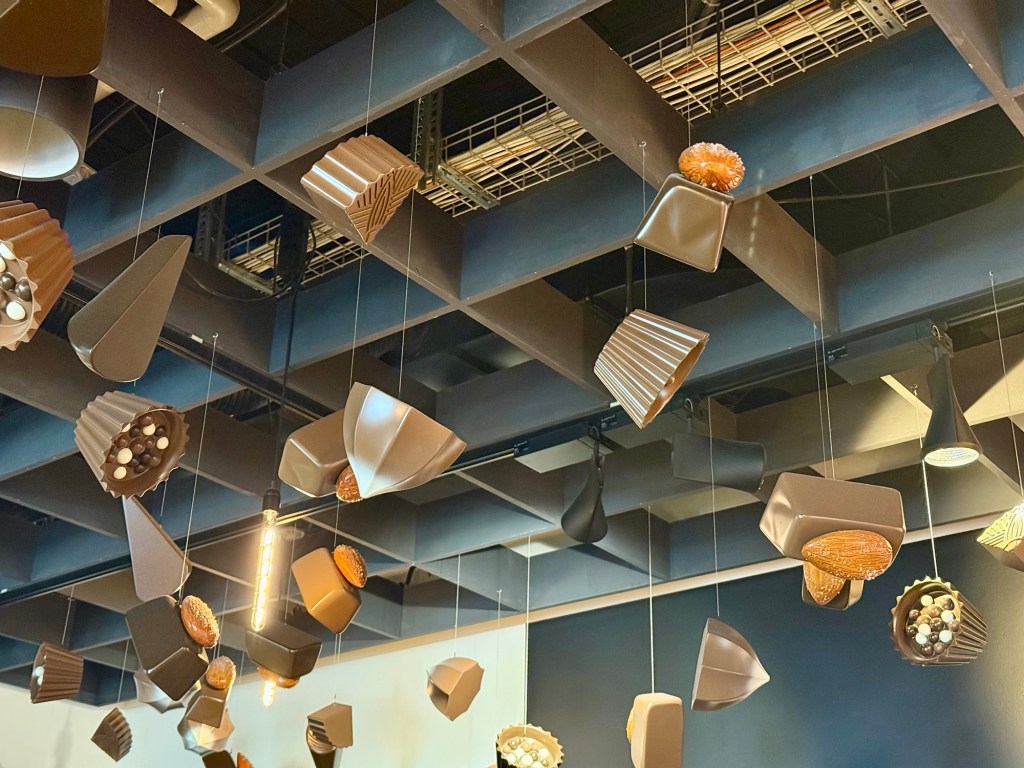
Admission to the tour is 17 CHF (about $21 USD) for adults, 7 CHF (about $9 USD) for children ages 6–17, and free for children under 5—a pretty reasonable price considering how much chocolate was waiting for us at the end.

The museum itself is exceptionally well done. Upon entering, you’re handed an audio guide in the language of your choice. As you move through the exhibits, you simply hold it to your ear and tap it against each display to hear the next chapter of the story. Rather than listening to a generic narrator, you hear from the people actually involved in making the chocolate—from machine operators and chocolatiers to the artisans who still hand-decorate many of the confections.

The tour begins thousands of years ago with the Aztecs, who considered cacao a sacred gift from the gods. Their chocolate looked nothing like the sweet treat we know today. It was a bitter, frothy drink flavored with spices and reserved primarily for nobility and warriors. In the early 1500s, the Spanish conquistador Hernán Cortés brought cacao back to Europe after encountering it in the Americas. Once Europeans began adding sugar, cinnamon, and vanilla, chocolate quickly became a luxury enjoyed by royalty across the continent.

The Swiss entered the story much later—but completely changed it. During the 1800s, Swiss chocolatiers transformed chocolate from an occasional luxury into the smooth, creamy confection we know today. Daniel Peter developed milk chocolate using condensed milk created by his neighbor, Henri Nestlé, while Rodolphe Lindt invented the conching process that gives chocolate its silky texture. François-Louis Cailler, the founder of Maison Cailler, was one of Switzerland’s chocolate pioneers, opening the country’s first mechanized chocolate factory and helping establish Switzerland’s worldwide reputation for producing exceptional chocolate.

After the educational portion of the tour, the real fun began.
Your admission ticket includes unlimited chocolate samples.
There is only one rule: you have to eat them there. No stuffing handfuls into your purse. No filling your pockets. No strategically loading up your backpack.
(I’m looking at you, Amir.)
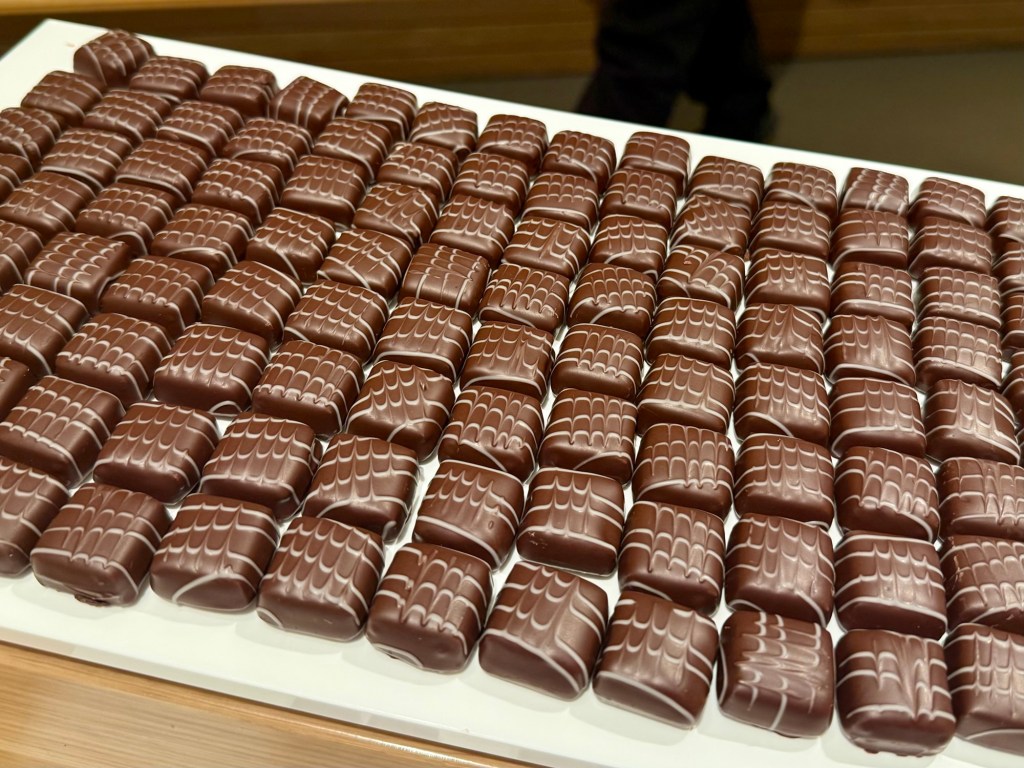
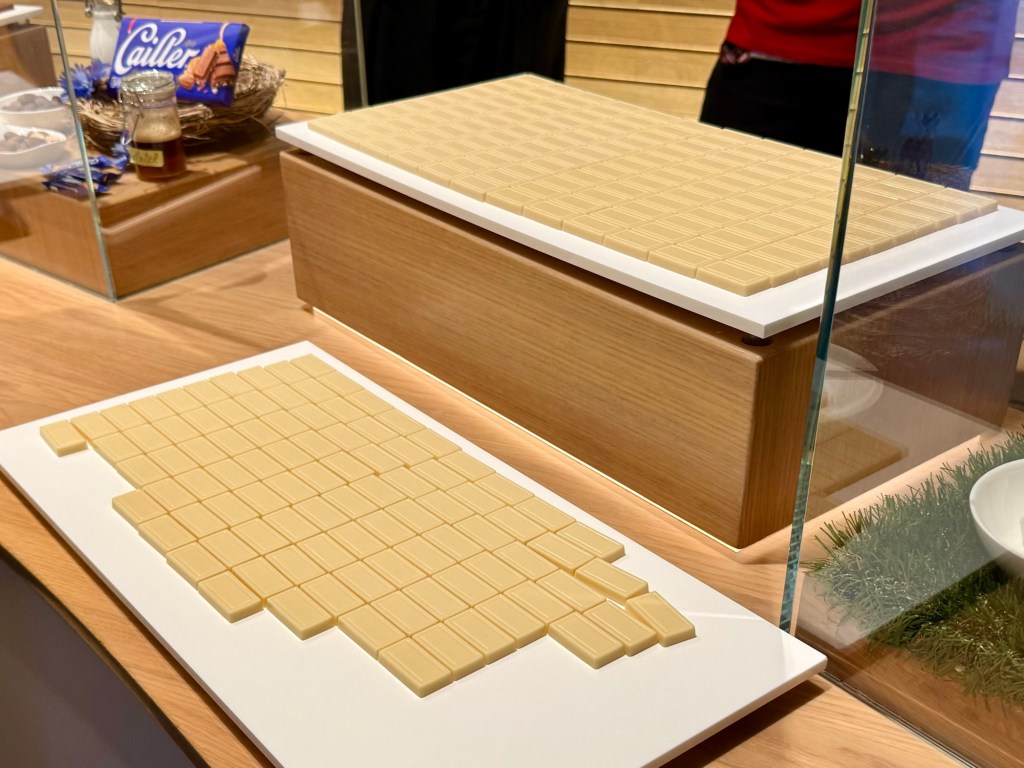

#1BigSister and I attacked the tasting room together. We started responsibly with small rectangles of white chocolate before moving on to creamy milk chocolate squares, hazelnut-filled logs, and adorable milk chocolate cups filled with white chocolate. Somewhere around that point, I realized I had reached my chocolate limit—a sentence I never imagined I’d say. I found myself desperately wishing for a cold glass of milk and actually saying, “No thanks,” to more chocolate. There simply wasn’t enough room left to give the dark chocolate the attention it deserved.

As if unlimited chocolate tasting wasn’t enough, the tour conveniently ends inside the enormous chocolate store.

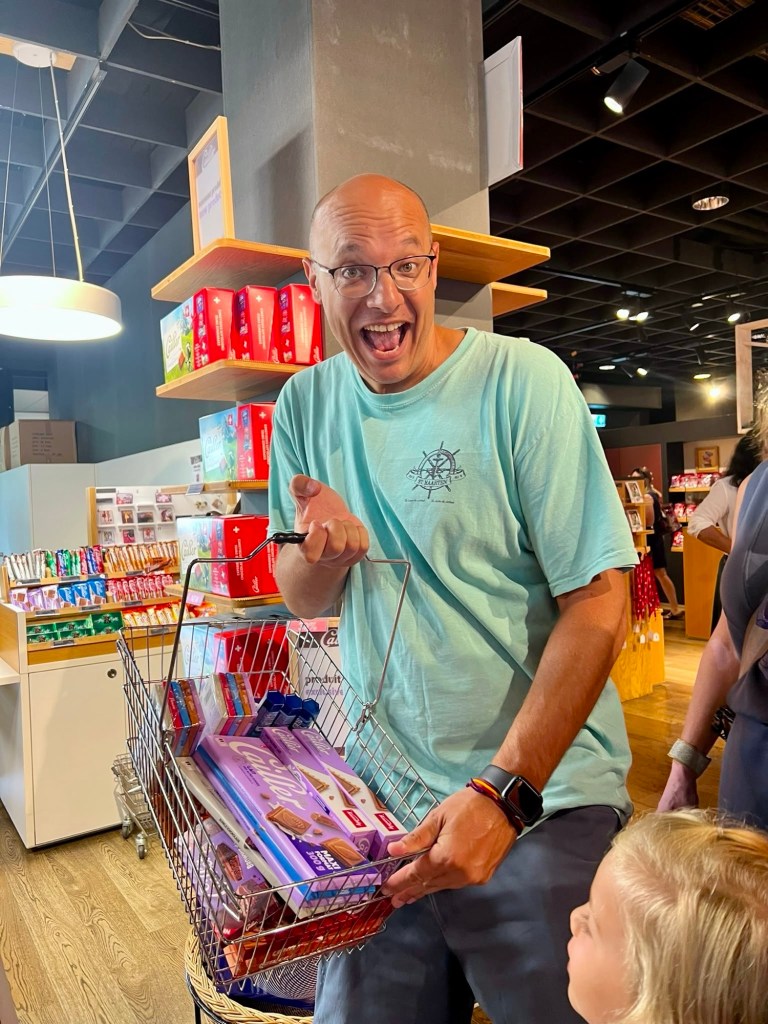
Amir grabbed a shopping basket and immediately began filling it with such enthusiasm that it looked like he was competing in one of those game shows where contestants have 60 seconds to throw as much as possible into their cart. Chocolate bars. Truffles. Gift boxes. Assorted pralines. If it contained chocolate, it somehow found its way into the basket.
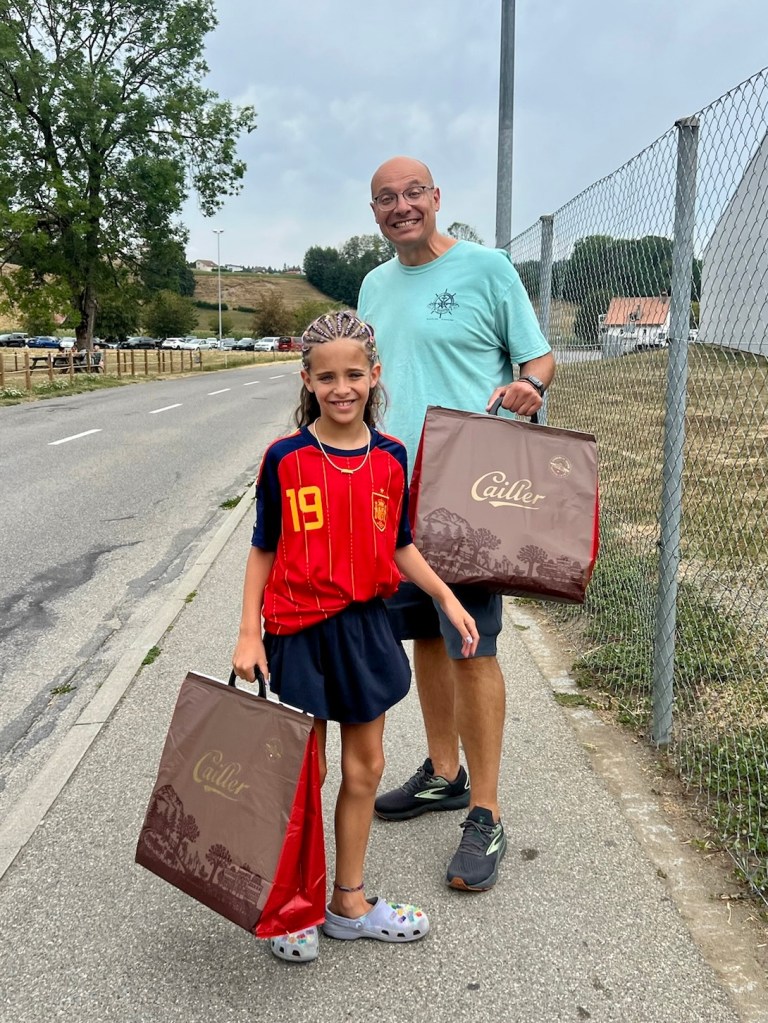
Needless to say, we may have picked up a few gifts for a few special people back home in Virginia.
…assuming Amir doesn’t eat them before we get there.
We hit a bit of traffic after the chocolate factory on our way to Zurich. One fender bender involving a car and a camper van added about an hour to our drive. Fortunately, we had bananas in the car to keep everyone from getting too hangry, and they bought us just enough patience to make it into the city.
For dinner, we set our sights on Hiltl, the world’s oldest continually operating vegetarian restaurant, as a nod to #1BigSister. She had been incredibly patient this trip. Spain is a paradise for meat lovers—jamón, chorizo, and every variety of sausage imaginable—but not exactly a vegetarian’s dream. She’s eaten more pasta with red sauce over the past two weeks than she probably cares to see again. Switzerland hasn’t been much easier, so tonight was her night.

The restaurant was heaven for her. The all-vegetarian buffet featured cuisine from around the world: Japanese udon noodles, tofu curry, falafel, vegan chicken nuggets, French fries, grilled vegetables, fresh fruit, desserts, and countless other dishes. There had to be over a hundred options. The concept was simple—you filled your plate, took it to the register, and paid by weight.


We were a little nervous the kids would enthusiastically pile their plates high only to leave most of it behind, but much to our surprise, every one of them cleaned their plate. Everyone was impressed by how convincing the vegetarian chicken nuggets were. We capped off dinner by sharing a dessert plate before making our way to the hotel.

Tonight we checked into the Holiday Inn Express near the airport, and I have to say, it’s probably the nicest Holiday Inn Express I’ve ever stayed in. Over the years, I’ve accumulated quite a stash of IHG points from staying at the Holiday Inn Express in South Hill while working shifts at VCU Health Community Memorial Hospital. Those points paid for all three of our rooms tonight, making the stay completely free.
The hospitality was exceptional. At check-in they welcomed us with complimentary beers, hot chocolate, Coke Zero, and what seemed like an endless supply of Swiss chocolate. Check-in was effortless, and after a long day of driving, that was exactly what we needed.

Breakfast is included tomorrow morning, although with a 4:00 a.m. wake-up and a 4:30 departure, I’m not sure we’ll be eating much. We’ll certainly take advantage of the coffee. From Zurich we’ll fly to Brussels, then onward to Dulles before making the final drive back to Richmond. Travel days home are always long. Between the time change, customs, baggage claim, and then several more hours on I-95, it’s a marathon. Thankfully, we were able to book lay-flat business class seats for the overnight flight, which should hopefully allow us to arrive with at least a little sleep under our belts.

Switzerland has been a fascinating country. More than once I found myself asking ChatGPT to explain some aspect of Swiss culture, beginning with the language. Switzerland has four national languages—German, French, Italian, and Romansh—and the country’s commitment to neutrality extends beyond international politics. Even domestically, they work hard not to favor one linguistic or cultural group over another. I even learned why Switzerland’s internet domain is “.ch” instead of something like “.sw.” It comes from the country’s Latin name, Confoederatio Helvetica, avoiding preference for any one of the country’s major languages.
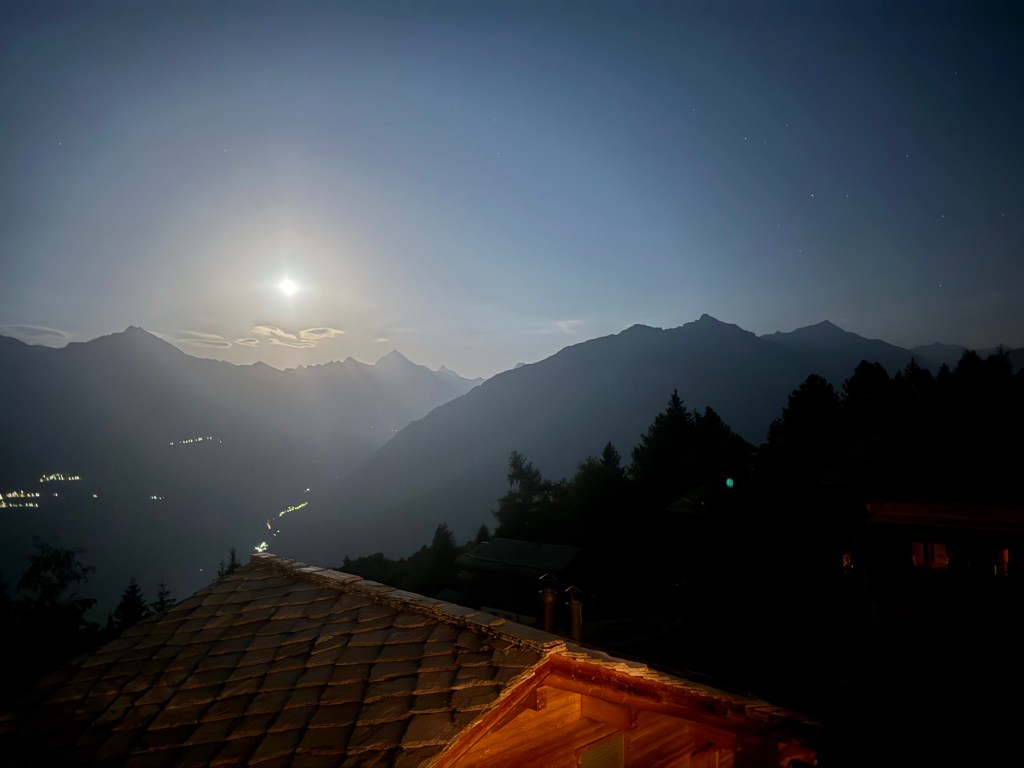
The scenery here has been breathtaking. Everything seems to function with remarkable efficiency. At times, the people have seemed a bit reserved, although that’s probably an unfair comparison after spending nearly two weeks in Spain being welcomed as family by Lidia’s parents, relatives, and lifelong friends. Switzerland, in its own way, has been incredibly family-friendly. There are activities everywhere for children, transportation is seamless, everything feels clean and organized, and traveling here with three kids has been far less stressful than I expected.
I’m looking forward to tomorrow’s flight home. Airplanes have always been a place of reflection for me. There’s something about being suspended somewhere between one place and another that makes it easier to process everything you’ve experienced. Every vacation has a re-entry period, but after an 18-day adventure through Spain and Switzerland, stepping back into everyday life will feel especially strange. Fortunately, I have at least a day or two before returning to work, giving me time to unpack, catch my breath, organize the house, and ease back into reality.
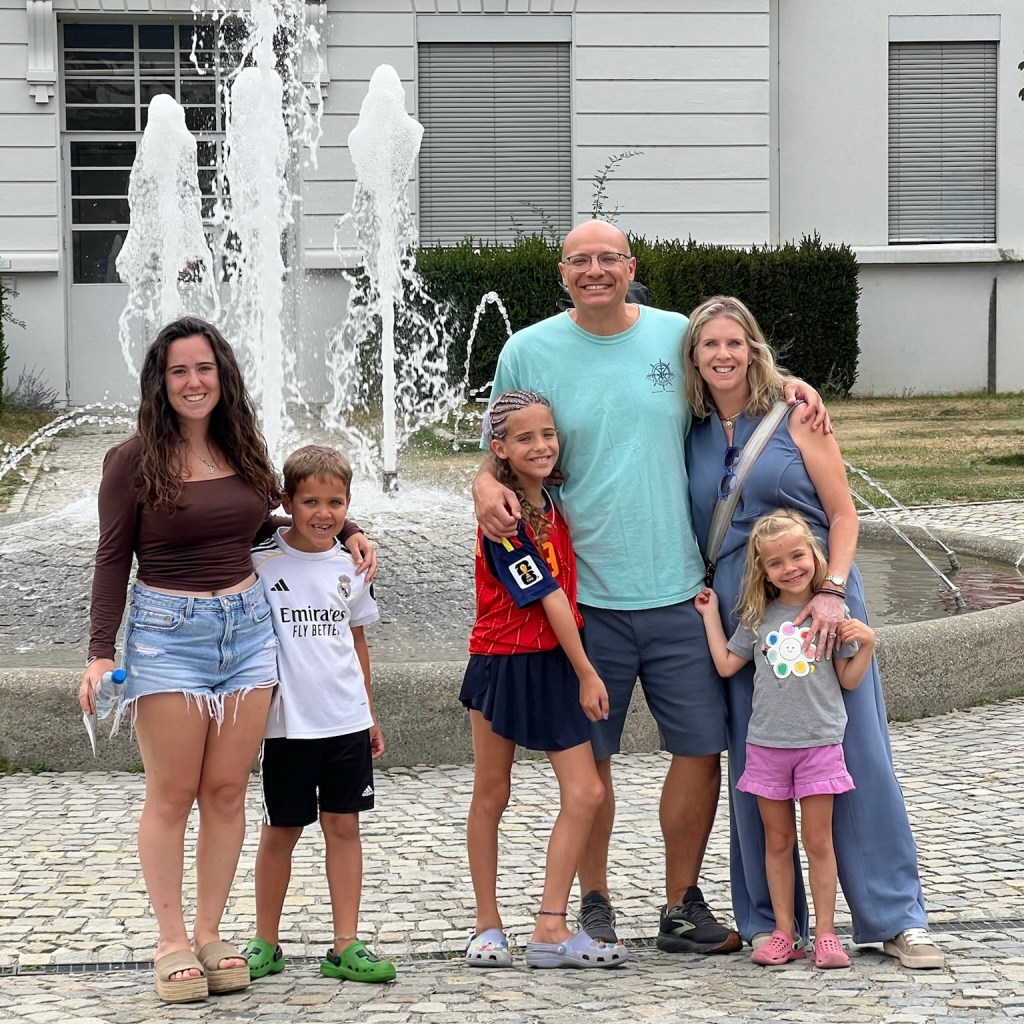
I may write a short post tomorrow about the trip home, although travel days rarely make for particularly exciting reading. Before we wrap up this adventure, though, I want to thank a few people.
First, Amir deserves enormous credit. He was the principal architect of this entire trip, handling nearly all of the flights, almost all of the lodging, the rental cars, and the endless logistics required to move six people through two countries over eighteen days. Trips like this don’t just happen. They require months of planning, flexibility, spreadsheets, patience, and countless hours behind the scenes. He created something truly special for all of us, and these are memories our children will carry with them for the rest of their lives.
Second, thank you to Lidia and her family and friends in Autol. They welcomed us with open arms and treated us like family from the moment we arrived. They shared their homes, their meals, their traditions, their stories, and their culture. They taught us about Rioja wines, mushroom farming, village festivals, and the rhythm of everyday life in northern Spain. They gave us an authentic experience that no guidebook, tour company, or hotel ever could.

And finally, thank you to everyone who’s followed along with these daily posts. I originally started writing them simply so our family would remember the little moments years from now, but knowing so many of you have been reading along has made it even more enjoyable.
Now, if you’ll excuse me, I have #1LittleSister to wrestle into bed before our 4:00 a.m. alarm goes off.
Thanks for coming along on this adventure. Until the next one.
~Steph


 TeamLouka