Exploring Virginia: A Day Trip to Tangier Island

Tangier Island has always been a place of intrigue in my mind – a mythical island of less than 500 people, disconnected from daily life. When we were young, my sister took an overnight boat trip there with family friends. A hurricane led to a near stranding and peaked my interest in visiting. In medical school, we learned of Tangier Disease, a genetic disorder causing reduced levels of HDL (good cholesterol), named after the island’s inhabitants who have a rather shallow genetic pool.

https://www.instagram.com/p/BFaK4H-vaCb/


So when Amir suggested a day trip, I Googled “tangier ferry” and discovered Tangier Rappahannock Cruises, a 2 hour ferry service that leaves from the coastal fishing town of Reedville, VA. I recommend selecting the same-day return trip, and skipping the suggested lunch at the Chesapeake House (more on that in a bit).   Total cost round-trip for the two of us was just $57.24 including all taxes and fees. While you can just show up at the dock and buy tickets the same day, I recommend booking online to save yourself time and ensure your reservation.

We sat on the bow to get the best vantage point of blue skies and glassy seas. Osprey, fishing boats and crumbling barns float by, demanding the attention of your camera lens. I, as usual, captured them through the lens of my iPhone, Amir through his Canon DSLR.

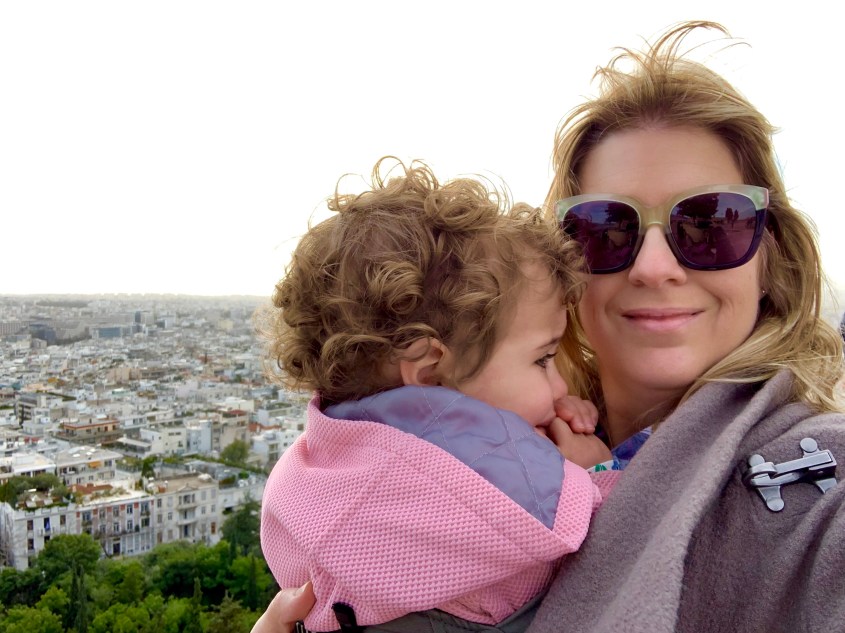
13243687_10100865341864837_3669921110039460590_o

Tangier soon turned from a distant mirage to a beautiful green world just ahead. The skyline was low, consisting mostly of simple two-story houses with a rare deviation in height for a church steeple and a water tower. As we entered the man-made channel lined with little white houses and docks, our ship’s captain revealed that Tangier is the world’s source for soft shell crabs. The crabbers live in these tiny white shacks – shacks that are filled with blue crabs, checked diligently on the hour in anticipation of the golden moment when the crab molts its shell. The crab is then scooped up and placed on ice or into a freezer and sold to restaurants for a feast later that day. It’s a practice as unique as the island itself.

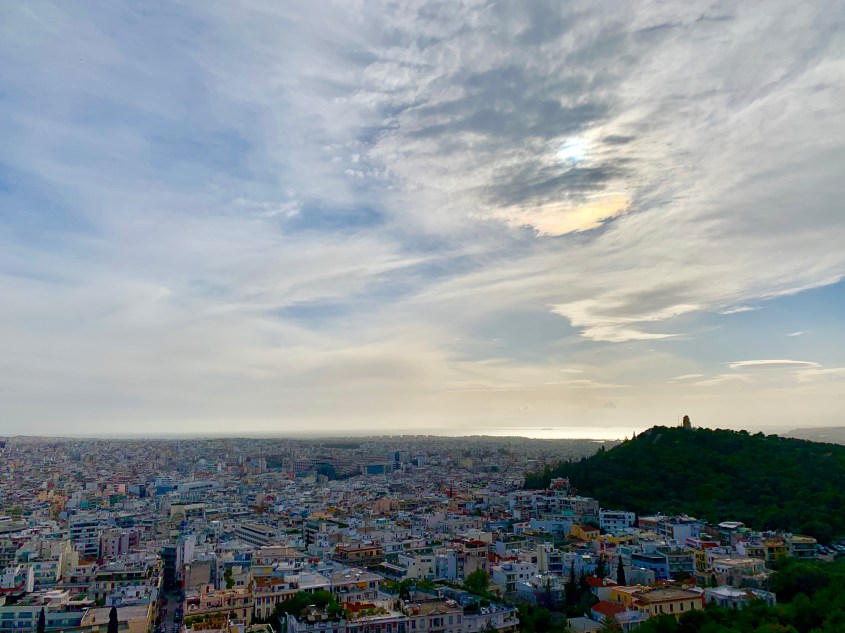
13235547_10100865342084397_626236739158255780_o

We stepped off the boat and onto the dock, the end of which was lined with locals in golf carts offering 15 minute tours of the island, and friendly women with sun-aged skin offering coupons for the best lunch spots (there are only 7). We opted to skip the carts and create our own walking tour.

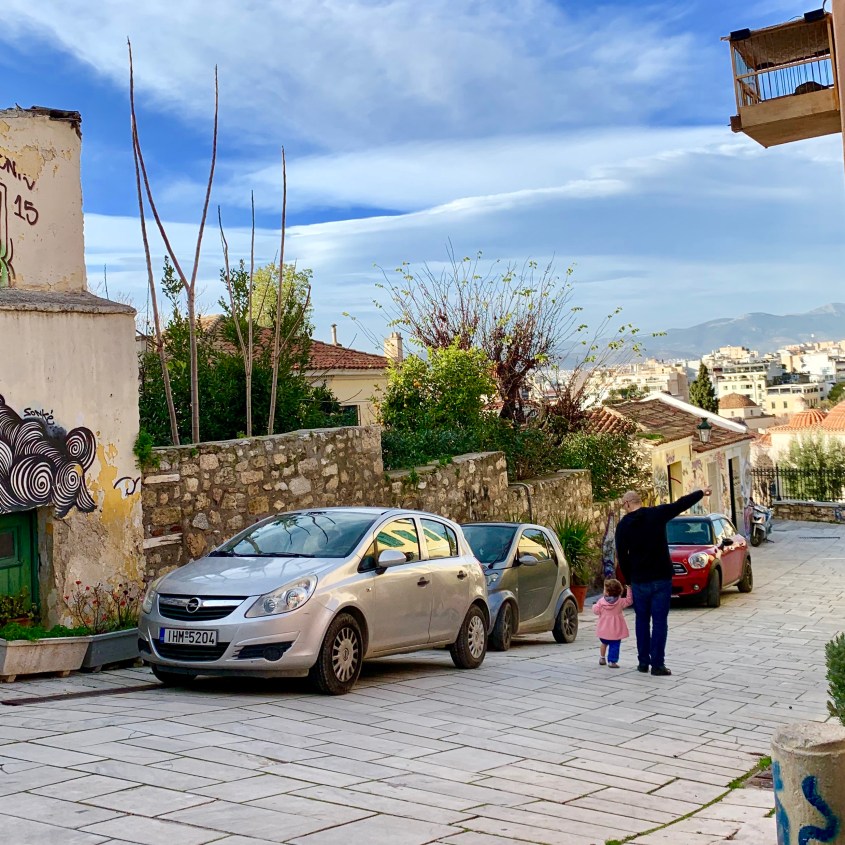
13221544_10153801053444545_7794347530904128486_n

Instantly we were struck by the strange collision of worlds. Tangier is part what you would expect – fishermen, boats, flip flops and simple life at a slow pace – everything I love about Chesapeake Bay living. But it’s also part Cuba, part 3rd world country. For an isolated island, bringing goods in is expensive, so you see signs of old everywhere you turn. 1970s motorbikes, rusted chain link fences, refrigerators from 3 generations past. If you want new and shiny, this is not the place for you.

And while old often equates with charm, there’s something a bit off in Tangier. Like bringing things to the island, disposing of them is also a costly task. So, garbage is everywhere – broken down golf carts, bottomless boats, and 20 year old Pepsi cans littering the land and the water. It makes you cringe. It doesn’t fit. A proud people so dependent upon nature for their existence, so careless in protecting it.

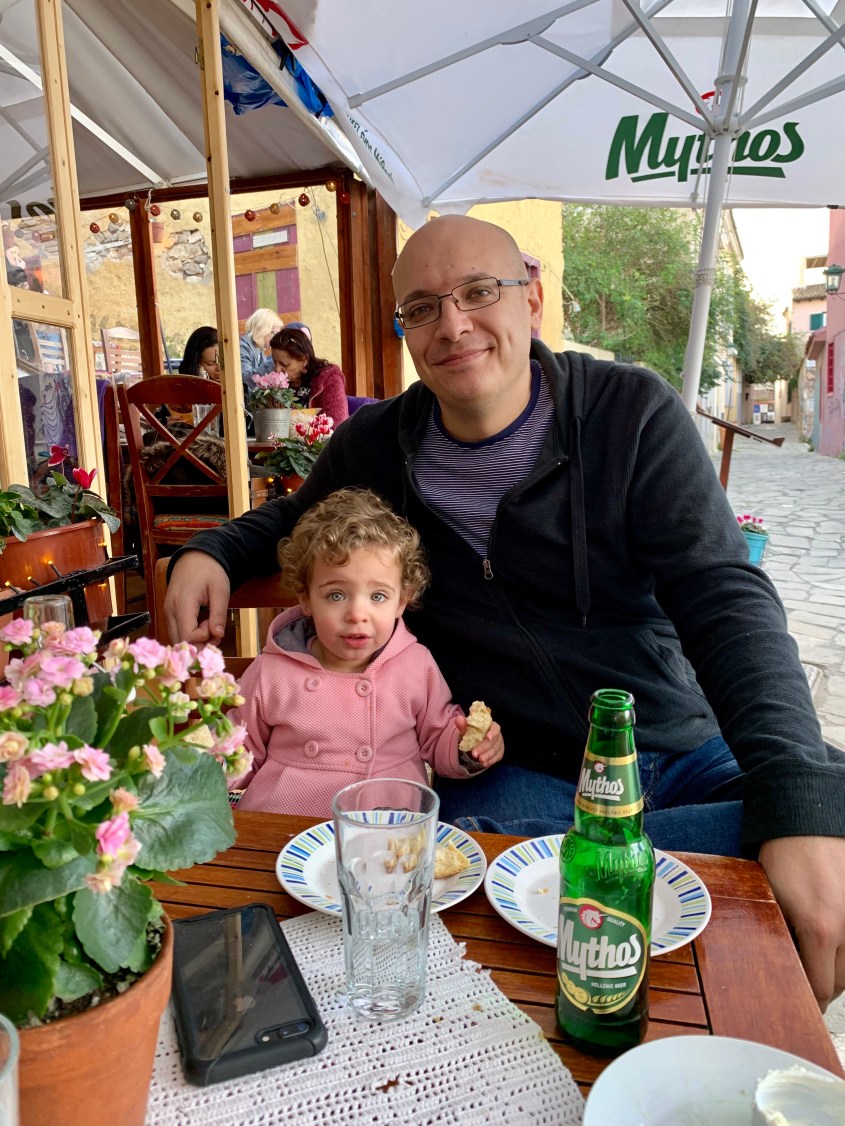
13177970_10153801054994545_5461536485648666861_n

For a half second my mind contemplated the missed opportunity – “What if they just picked up the trash?” “What if they had some eco-friendly activities?” I imaged the potential for increased tourism, and the subsequent revenue that could benefit this island and its people. And then I wondered, maybe this is deliberate.

13165857_10153801054574545_3377203835629798658_n

We decided to try Fisherman’s Corner for lunch. We entered the brightly painted, simple square building to find a bustling room tightly packed with tables of both tourists and locals. The menu was typical Chesapeake Bay fare – she crab soup, crab dip, fried shrimp, crab cakes and soft shell crabs. Clearly we had to try the soft shells. The food was simple, home-cooked and a tad pricy, but delicious. My soft shell crab was sandwiched between two slices of white Wonder bread. While I was initially skeptical of my minimalist bun, when topped with the zesty tartar sauce, the flavors combined perfectly. We skipped dessert since we’d already cheated and devoured hand-dipped ice cream cones on our earlier walk.

13239438_10153801054394545_6915909811607786207_n
Soft shell crab sandwich at Fisherman’s Corner | Tangier, VA
We continued our ambulatory tour of the island, scoping out the picturesque little houses and the oddly placed graveyards in each front yard. Tangier is only 4 feet above sea level and losing 10-15 feet of land mass per year, so space is limited. A brief scan of graves reveals repeating names – Crockett, Pruett, Pruett, Crockett, Crockett. I begin to better understand the origins of Tangier Disease.

There are two churches, one fire station, one police officer and one school. On an island with 450 people, you make do. The sign outside the fire station explains that until very recently, every household was provided with a single leather bucket. When a fire broke out, the entire town would arrive and form a bucket brigade. I wondered what hurricane preparations took place today.

In just 3 short hours, we’d experienced 90% of what Tangier has to offer. We heard a dialect I can only describe best as Old English garble. We marveled at the eccentric locals like bird watchers spotting a never-before-seen species. Tangier is a dichotomy of beautiful and ugly, but special none-the-less.

~Steph

Extreme Rental: Jeep Rubicon – Sedona, AZ

Originally posted on JPFreek.com

I always prefer the window seat. Mostly because I will hold my urine to the edge of kidney failure rather than try to cram my 6’5″ frame into an airplane toilet, and having to get up repeatedly to let my weaker-willed neighbors past makes my eye twitch. But there’s more to it than bladder control. I control the shade, and at my leisure I can peer out and down, unobstructed, over the great expanse below. 

windowJust a few weeks ago, I found myself in that prized position, looking down on the vast Senoran Desert, on my way to Phoenix, Arizona. From twenty-thousand feet, it’s a wasteland. Seemingly random outcrops of red stone rise and fall away, separated by endless miles of nothing at all, except every few minutes we’d drift over one of those mega-farms with the funny patchwork of circular fields. With nothing else to do but think of the bone-crushing pain being inflicted by the seat in front of me, I found myself wondering, “Just how could those first settlers have made it all the way out here in their Conestogas?” Gold or not, it looked impassable. 

Soon after, we landed in Phoenix, a quilt of strip malls sewn together with massive highways. I was there for a conference, but arrived a day early to explore with my wife. We settled into our hotel and quickly planned a trip to Sedona, just a few hours north, and set off early the next morning with our GPS aimed for Barlow Adventures

 We arrived around ten, and our hearts sunk to find half-day rentals start at 8 AM or 1 PM. They were kind enough to squeeze us in anyway, and with just a glance at my insurance card handed over the keys to Jenny. Oh Jenny. A red four-door Rubicon with the hips of a belly dancer and treads of an M1 Abrams. To my wife’s mixed dismay and delight, I fell immediately in love. 

The folks at Barlow gave us a quick, but thorough, tutorial of the best trails to suit our style – an easy climb to get acquainted, culminating in stunning views, followed by a technical crawl down into a valley full of history. With that, we put the top down, turned the radio up and got rolling.

Immediately, with a blue sky above us and red rocks all around, we felt we could conquer the world, just my wife, Jenny and I. Within a mile or two, we made it to the first trailhead and checked our notes. “When you pass the gate, put her in 4-HI and reset the odometer.” Done and done. 

18830_10100612306449837_7816765944576347933_n

Schnebly Hills Trail is a winding, bumpy fire road up the side of what I can only assume was Schnebly Hill. Jenny plowed over everything in her path. The only thing limiting our progress was that we kept stopping to take photos because the scenery just kept getting better. Massive, imposing rock formations surrounded us with hardly another human in sight. Cacti, iron woods and the hot sun above us – it was the setting of every spaghetti western. At first, I tentatively wove my way along, afraid to test the limits of the $25 tire and glass coverage we’d added. But my lack of experience with off-road driving and the sharpest, most punishing rocks proved no match for Jenny’s sheer brawn. We made it to the top, where we went on foot to explore the “Merry-go-round,” a rocky outcrop boasting a jaw-dropping panorama of the entire valley. We sat down for a few minutes to soak in the sun and bask in the diem we were thoroughly carpé-ing. 

If the way up was a learning experience, the way down was an educatioAmirn in fun. A downhill slalom, probably at higher speeds than Barlow would have liked, with a Pearl Jam soundtrack provided by Jenny’s Sirius XM radio, Schnebly Hill melted away. At the bottom, once again on pavement, we consulted the maps provided to us to navigate our way to the next trail. 

Soldier’s Pass was an entirely different beast altogether. This time our notes said, “4Lo, nice and slow.” I dropped Jenny into low gear and flipped the sway bar disconnect switch, allowing the axles to move more freely. Free is good. Let’s go. 

11149437_10100612306839057_5446780083734526773_n (1)The first thing we came across was a sign telling us if we couldn’t make it down the first boulder crawl, not to bother with the rest of the trail. Needless to say, Jenny took it all in stride, and again more than compensated for my lack of having any idea what I was doing. We rumbled down the flight of rocks, coming to rest on a trail just a few inches wider than our Wrangler. For the next hour, Jenny took us back in time. We clambered up and down some gravity-defying inclines on our way to an enormous gaping sink hole exposing a few million years of sedimentary layering. On the way back we visited the Seven Sacred Pools, from where General Crook marshaled his campaign against the last of the Apache. Jenny never missed a step. From start to finish, all I had to do was point her in the direction we wanted to go, and our girl’s 285hp took care of the rest. Sadly, with our first two trails down, we were nearing the end of our four hour escapade. We turned back towards Barlow and, with heavy hearts, turned over the keys.

Needless to say, getting back into our rental car was rather disappointing. If it hadn’t been for the unbelievably good taco truck we found on the way back, I may actually have shed a tear to leave Jenny behind. The next day at our conference was even less exciting, but the last drops of adrenaline still had me feeling like Superman. I finally understood why people buy those burly, lifted, totally unnecessary vehicles – because they must turn even the most blasé commute into an experience

On the flight home, I thought again of the rugged pioneers who trekked across a continent in rickety wagons with every one of their earthly possessions in tow. I imagine they’d be pretty annoyed to know how easily some guy from the East Coast can do it now but undoubtedly proud that they paved the way. I tried to look out the window to catch one more glimpse of the great cactus strewn expanse where roads are once again optional, but I was stuck in an aisle seat. I didn’t care. We’d had an unforgettable adventure. And, more importantly, I was in an exit row. 


~Amir

10376278_10152942299094545_6761193363471758352_n

5 Things I Learned in Business School I Wish I’d Learned in Medical School

These days, many people enter medicine as a second career.  I am no different.  I was an undergraduate business major and worked in the corporate world of internet marketing for 6 years prior to medical school.  Perhaps a science major would have been more practical when I was spending 7 hours struggling to understand some fundamentals of molecular biology; however, my business background did occasionally give me a leg up. Going back to school at 30-something, surrounded by recent college grads, I realized a few lessons I picked up along the way weren’t necessarily obvious to others.

1. Everyone has a job, and they all matter

Despite modern movements away from it, medicine is an extremely hierarchical world.  Medical students pine for that long white coat.  Doctors bark orders at nurses without introducing themselves or asking nicely.  Phlebotomists, lab techs, housekeepers and others largely go unnoticed.

medical hierarchy
Copyright: Michelle Au | theunderweardrawer.blogspot.ca

One beautiful reality of capitalism is that jobs don’t exist unless they are vital… IMPORTANT.  In medicine, we need janitors, doctors, accountants, secretaries.  Everyone with a title has responsibilities and is therefore necessary for the organization to function.  Companies with excess overhead from superfluous staff don’t stay in business very long (VA Hospitals aside). So when the surgical consultant steals a computer terminal from the ED Tech so she can finish her note, this disrupts work flow, and sends a message that somehow the doctor’s work is more important than the ED Tech’s.  It’s just not true.  Be mindful that everyone on the team has a job to do and people will want to be on your team.

2. “For-profit = evil” is not always the case

Yes, pharmaceutical companies are responsible for their reputations as greedy, evil, for-profit companies.  Just ask Martin Shkreli.  And while it would be great to provide free medications to any and all who truly have need, research and development (R&D) of new medications is risky and costs money.  A lot of money.


On average, a new drug takes anywhere from 11-14 years to make it to market, and that’s IF the drug makes it that far.  Of any new drug developed in a lab, there is an 8% chance that drug will actually make it to market, meaning it’s prescribed by doctors for actual patients.§ The money spent on R&D for 92% of unsuccessful drugs is a true cost, and those bills still need to be paid.  Smart R&D focuses on modular development, so that one lesson learned developing a drug that failed can be applied to new research that will hopefully help a different drug get to market.

Yes there is excess and greed.  Yes Big Pharma develops drugs based on profitability, not strictly based on need.  People with “orphaned diseases” have to create non-profits and raise funds for R&D since the pharmaceutical companies won’t do it.  It’s not ideal.  Attracting the brightest minds to develop major pharmaceutical innovation requires paying people well, and I’ve yet to hear anyone tout how well-paid they are at their non-profit organization.  In the end, it’s not as simple as saying “just lower the prices or make it free.”

3. Product perception is reality

Marketing is everything.  You can have the best product in the world, but if no one knows it exists, or if consumers don’t understand what it can do for them, they won’t buy it.  Similarly, you can get all the science right in medicine, but if results, diagnoses and plans aren’t communicated, getting it right doesn’t matter.

If anything this is even more applicable in medicine than business.  While people have some innate understanding of what makes a good vacuum cleaner, they probably need more help understanding their liver failure and what treatment they need. I never assume patients understand their disease.  Taking 5 minutes to explain the relation between the liver and ascites goes a long, long way.

4. Dress & Look the Part

Being a medical professional requires knowledge, honesty and altruism.  Most people get that part right.  But professionalism in medicine also means being on time, dressing professionally, and remembering that people are always watching.  So for the EMT: put down the cigarette, tuck in your shirt and wear your gloves when needed.  For the medical student: be the first one arriving to rounds, wash your white coat (not just once a semester either), lose the stubble and open toed shoes and ditch the piercings for the day.  Doctors: wash your hands, put down your iPhone and give patients your undivided attention. All the knowledge in the world can be quickly overshadowed by a distracting or detracting exterior.

The_Doctor_Luke_Fildes
“The Doctor” by Luke Fildes

5. Listen to Customer Feedback

This is not “The customer is always right.” Medicine is different.  Just because a patient thinks he needs antibiotics for his cold doesn’t mean he should get them.  But your customers do know their bodies best and how they are feeling at the time.  If you are handing a patient discharge paperwork and they “still don’t feel right,” stop and listen.  In this case, the customer feedback is critical, and the price to pay may be high – both for the patient and for your wallet.  Any seasoned Paramedic will tell you, “When the patient says they are going to die, I believe them.”  We’ve all been there.  And if you haven’t yet, it’s just a matter of time.


So that’s it, 5 small things.  What lessons have you borrowed from an earlier career and applied to medicine?

~Steph

Screen Shot 2016-05-04 at 10.42.59 PM


§ http://www.fdareview.org/03_drug_development.php

Celebrate the Small Stuff: Surviving the Marathon of Medical Training

In just two short months, thousands of newly minted young physicians will be walking into new hospitals, new jobs, and new responsibility. They’ll notice something unfamiliar tickling their calves on that first day – a long white coat having replaced the short one, which in our case went up in flames just days earlier. They’ll be excited and terrified, nervous and naïve.

A doctor’s “intern year” has become something of a legend in pop-culture, portrayed as twelve months of rude awakenings, sleep deprivation and verbal abuse, +/- a love triangle or two. Having been there, done that and proudly owning the t-shirt, I can say the reality couldn’t be further from the truth – at least it doesn’t have to be.*

To all the newbies out there – yes, there will be long hours and sleepless nights. You’ll occasionally go a full week without seeing your loved ones and eat whatever/whenever you can. Med school will seem a lifetime ago when you’re being asked at 3am what to do for a dying person, and you’ll wonder why they never taught you all the things that matter. But Steph and I have stumbled across the solution to all of that.

10258258_10152226340584545_6611748125605401302_o (1)
Champagne celebration for med school graduation | Photo credit: Amy McClure

We celebrate the small stuff.

Sure we popped champagne like we’d just won a Grand Prix on graduation day, but we’ve also raised a glass to finishing tough rotations, making a clutch diagnosis and running our first double cardiac arrest. We’ve made a ritual of rare Sunday mornings off together with a supply of cinnamon buns always available, just in case. Sometimes we just celebrate because it’s Tuesday and we can. By making a big deal of small victories, the roadblocks become surmountable.

https://www.instagram.com/p/BE2LZoYPaII/


Don’t get me wrong – residency is tough. In the past month, three of my patients have died, and I’ve told four others they have cancer. But for every bad day I have had there have been a dozen that left me thinking, “I have the best job in the world.”

I encourage all the newbies out there to approach this next chapter the same way. And remember: when the champagne runs out, there’s always more coffee.

https://www.instagram.com/p/91JrKjPaPL/


*Note: does not apply to general surgery residents. Your life will suck.


How do you like to celebrate the small stuff?

~Amir


https://www.instagram.com/p/6lCjdKlzlj/

If pages came as emojis

Right now there’s a whole new crop of medical school students graduating in a month who will start their careers as doctors on July 1. There are two things every medical student looks forward to receiving as an Intern – a long white coat and a pager. But any Resident will tell you: after your first night on call, you want to throw that pager against the wall and then stomp it into little pieces.

But what if pages, instead of boring B&W text, arrived as an emoji puzzle to decipher? That just might make getting 84 pages in a 12 hour Trauma shift slightly more tolerable.  See if you can figure out these common pages.


The “Frequent Fliers” of Pages

1.FullSizeRender_1

2.FullSizeRender_2

3.FullSizeRender_3

4.FullSizeRender_4

5.FullSizeRender_5

6.FullSizeRender_6

7.FullSizeRender_7

8.FullSizeRender_8

9.FullSizeRender_9

10.FullSizeRender_10

11.FullSizeRender_11

12.FullSizeRender

13.FullSizeRender (22)


Answers to “Frequent Fliers” Pages

  1. Mrs. Jones has a headache, please order tylenol
  2. Mr. Smith has post-op pain, please increase his pain meds
  3. Code Blue, Mr. Jones
  4. Please renew Mr. Smith’s order for restraints
  5. Mrs. Jones needs a diet order
  6. Baby Davis is febrile and has no PRNs
  7. Mr. White needs zofran for nausea
  8. Another ED admit
  9. The transfer from the OSH is on the floor
  10. Please call Pharmacy, you messed up your order again
  11. Who is going home today? -Bed Flow
  12. Mr. Smith needs a laxative
  13. Mr. Jones needs CIWA scoring

And, just for fun, some not some common but ridiculous (and true) pages:

FullSizeRender (23)

FYI: 3AM page for a “fever” of 99.0F

FullSizeRender (21)

Mr. X had a nightmare. He’s awake now.


Add your own favorite pager stories (and emoji puzzles) in the comments!

~Steph